History History 7 min read

The reason the Oval Office has such an iconic shape
Image: Gorodenkoff

Some traditions seem to have been around forever. The Easter egg hunt at the White House, or the Teddy bear in most kids’ bedrooms. A turkey is pardoned every Thanksgiving. As it turns out, some traditions and food items trace back to a single president having a very ordinary, human moment: a soft spot for a scared animal, a craving from a trip abroad, a wife tired of watching her husband go unnoticed. Here are the real stories behind them.

1
The White House Easter egg roll
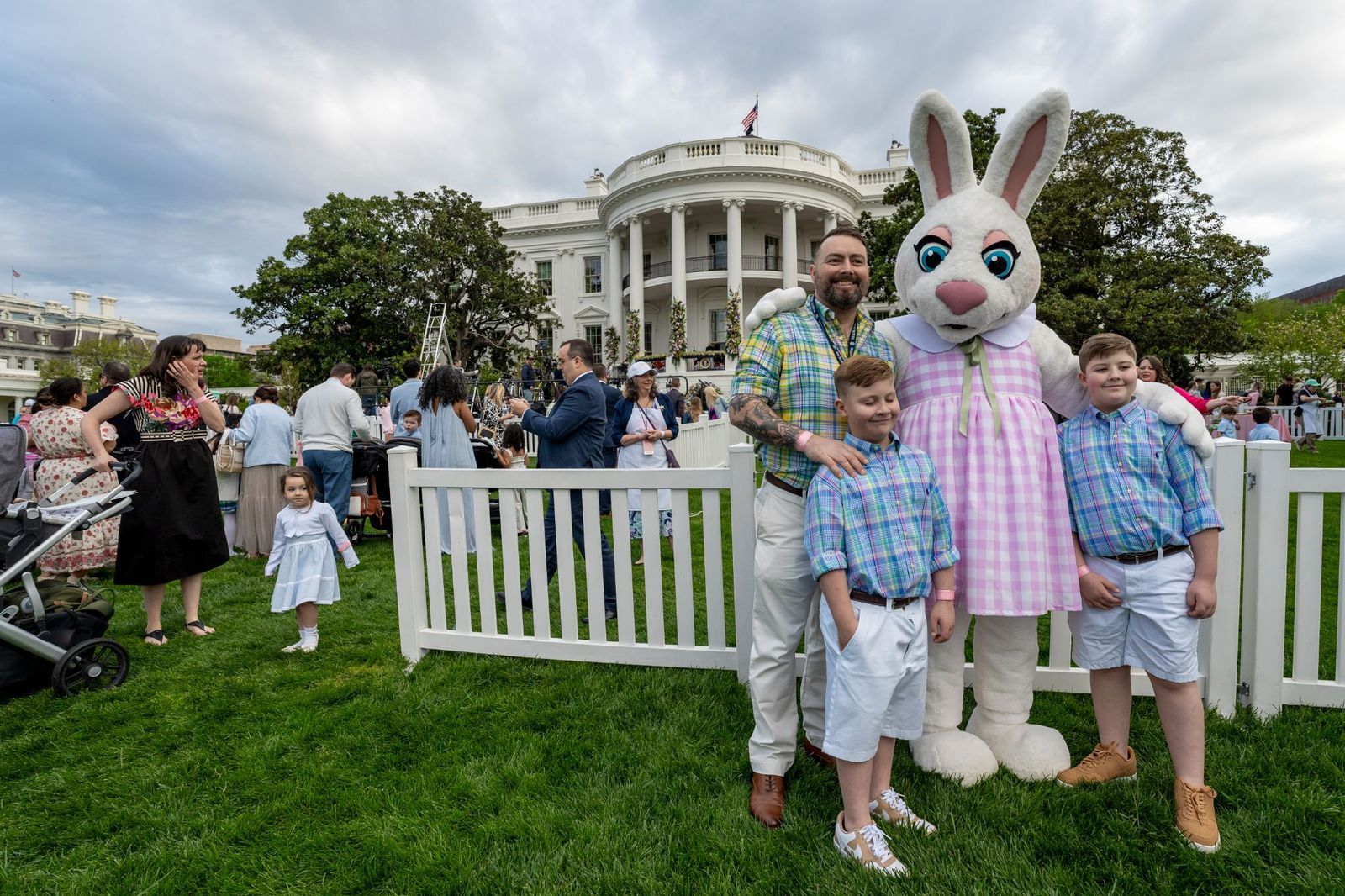
Image: The White House, Public domain, via Wikimedia Commons

In the 1870s, Washington kids rolled colored eggs on the Capitol lawn every Easter Monday until Congress banned the practice in 1876 to save the grass. On Easter Monday 1878, a group of those disappointed children walked up Pennsylvania Avenue to the White House gates. President Rutherford B. Hayes told his guards to let them in , and the South Lawn became their new playground. Word spread fast, and by the following year, hundreds of families showed up expecting the same welcome. Hayes never announced a policy; he just opened a gate for some kids with nowhere else to roll their eggs, and a White House holiday tradition was born, with future presidents dutifully continuing it.

2
The "Teddy Bear" stuffed animal
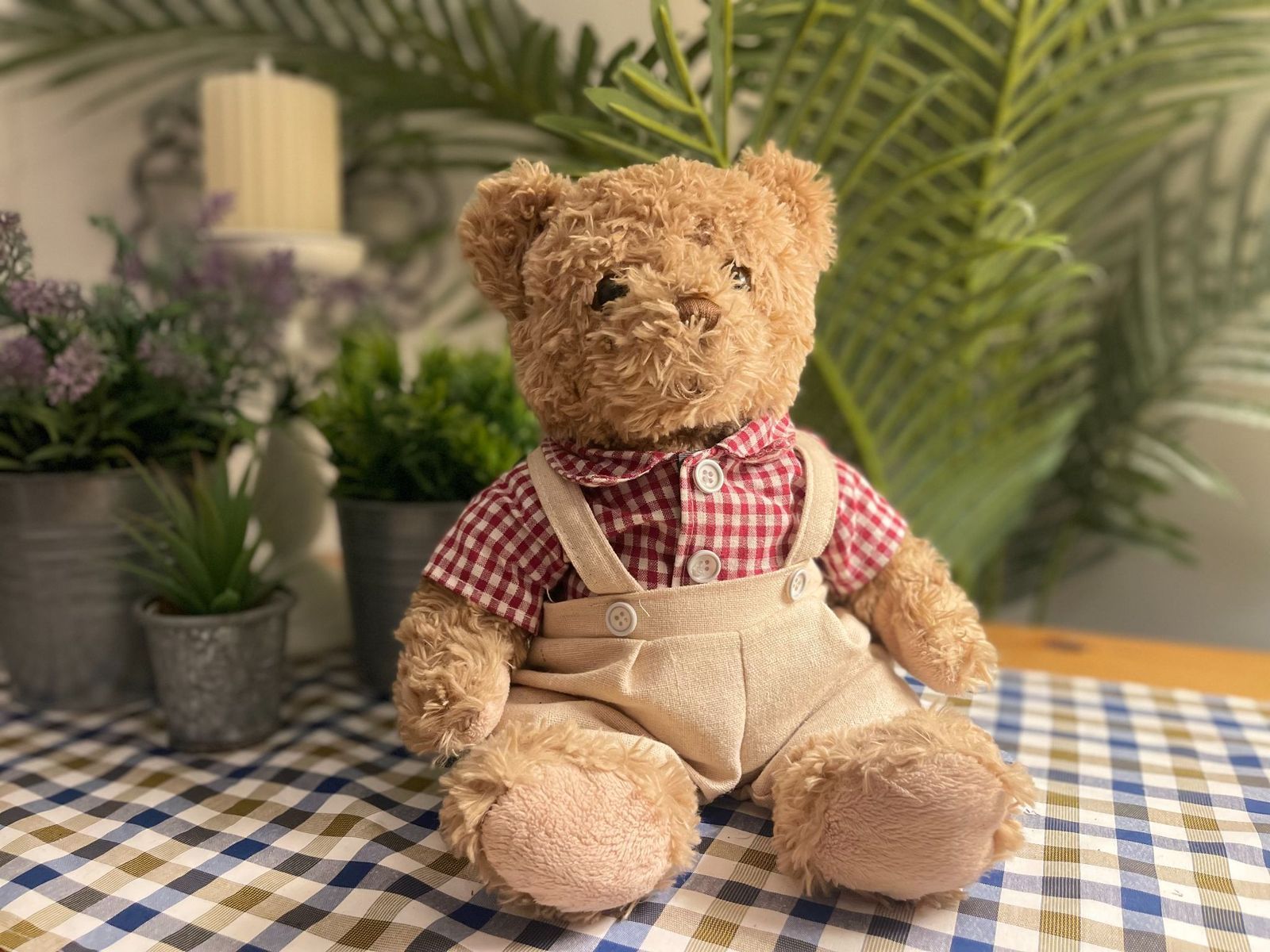
Image: Jimmy Parker

That stuffed bear tucked in with a grandchild owes its existence to a presidential hunting trip gone sideways.

In November 1902, Theodore Roosevelt traveled to Onward, Mississippi, hoping to bag a bear as the rest of his hunting party had. After days with no luck, his guides cornered an exhausted old bear, tied it to a tree, and invited the president to take the easy shot. Roosevelt refused, calling it unsportsmanlike. The story ran in the newspapers nationwide, and Washington Post cartoonist Clifford Berryman turned it into a sketch titled "Drawing the Line in Mississippi." Brooklyn shop owner Morris Michtom saw the cartoon, sewed a small stuffed bear, and displayed it in his windows as Teddy’s Bear. Customers wanted one immediately, and a toy industry was born from a single act of mercy.

3
The official Thanksgiving turkey pardon
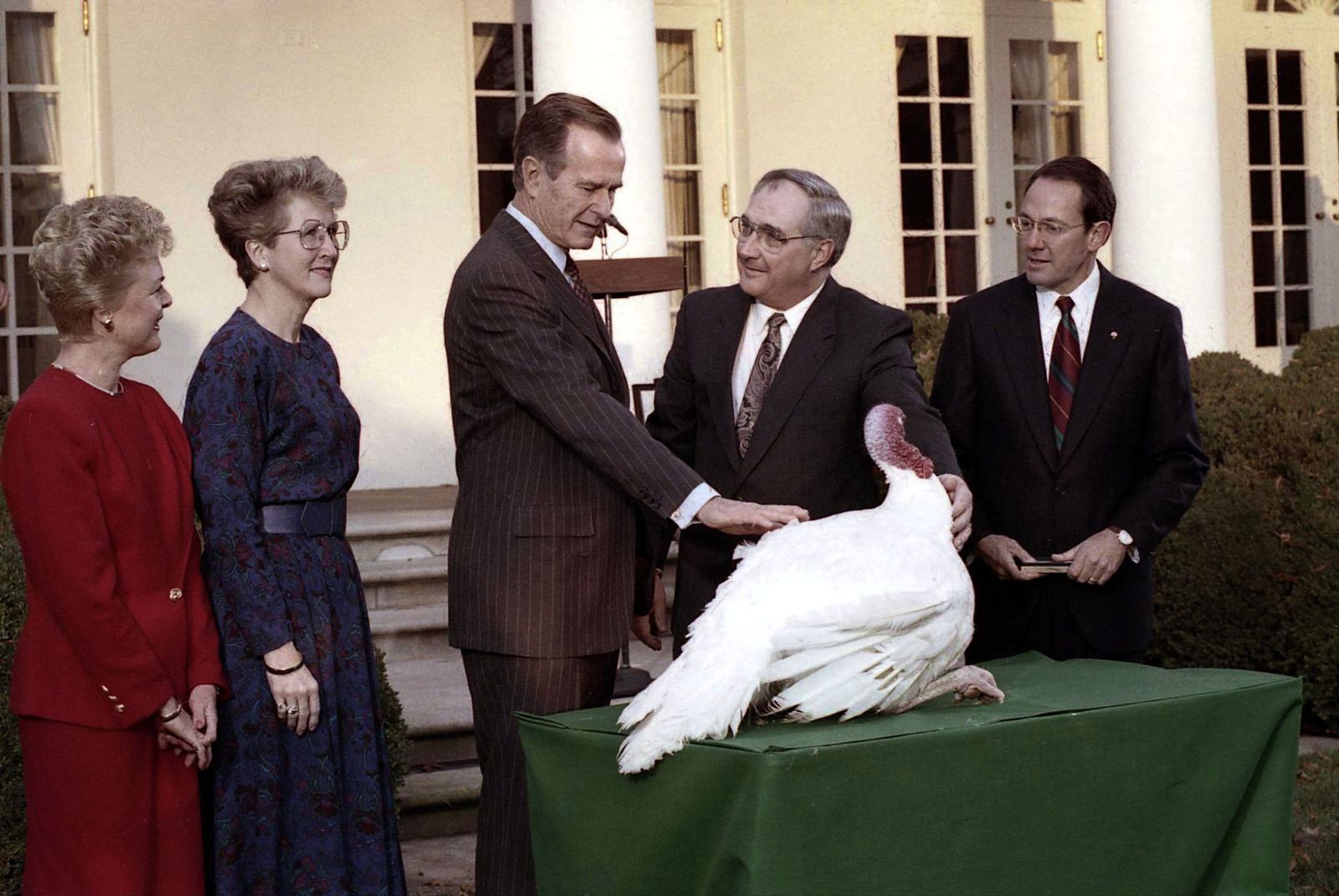
Image: Credit: George H.W. Bush Presidential Library and Museum, Public domain, via Wikimedia Commons

Every November, cameras gather in the Rose Garden to watch the president spare a turkey from the Thanksgiving table, a moment that feels as old as the holiday itself. But the origin of that ceremony is very recent.

For decades, presidents from Truman onward accepted a ceremonial turkey each year, and most of those birds ended up exactly where you’d expect. That changed on November 17, 1989. As animal rights activists picketed nearby, President George H. W. Bush looked at a visibly nervous tom turkey and improvised , telling the crowd he’d granted the bird a presidential pardon on the spot and that it would live out its days on a farm instead. The line got a laugh, but Bush kept it going the next year, and the year after. What started as a spontaneous joke became the official ceremony every president has repeated since.

4
The shape of the Oval Office
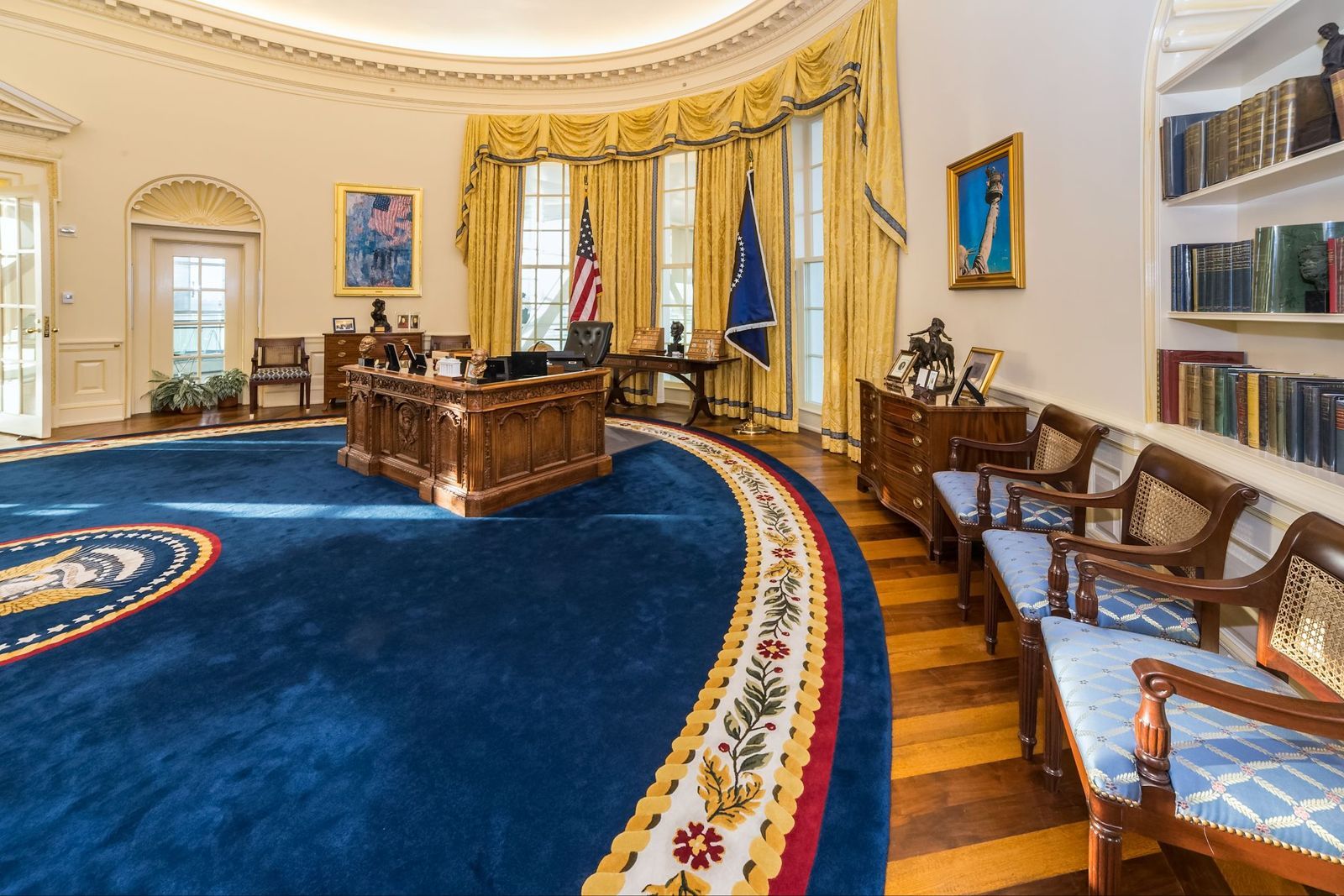
Image: amadeustx

The Oval Office is instantly recognizable: the presidential seal carpet, that famous desk, the flags and busts. But the curved shape itself traces back to one president's frustration with cramped quarters.

When William Howard Taft took office in 1909, he found the West Wing, built as a temporary fix under Theodore Roosevelt, too small and too disconnected from the rest of the White House. Taft held a competition for architects to expand it into something permanent. The winner, Nathan Wyeth, looked to the White House's own Blue Room, an oval-shaped parlor where presidents had greeted guests since the early 1800s, and echoed its shape for the new presidential office. Construction finished that same year. Every president since has worked inside walls first curved to match a room built more than a century before any of them took office.

5
Modern gourmet macaroni and cheese in the U.S.
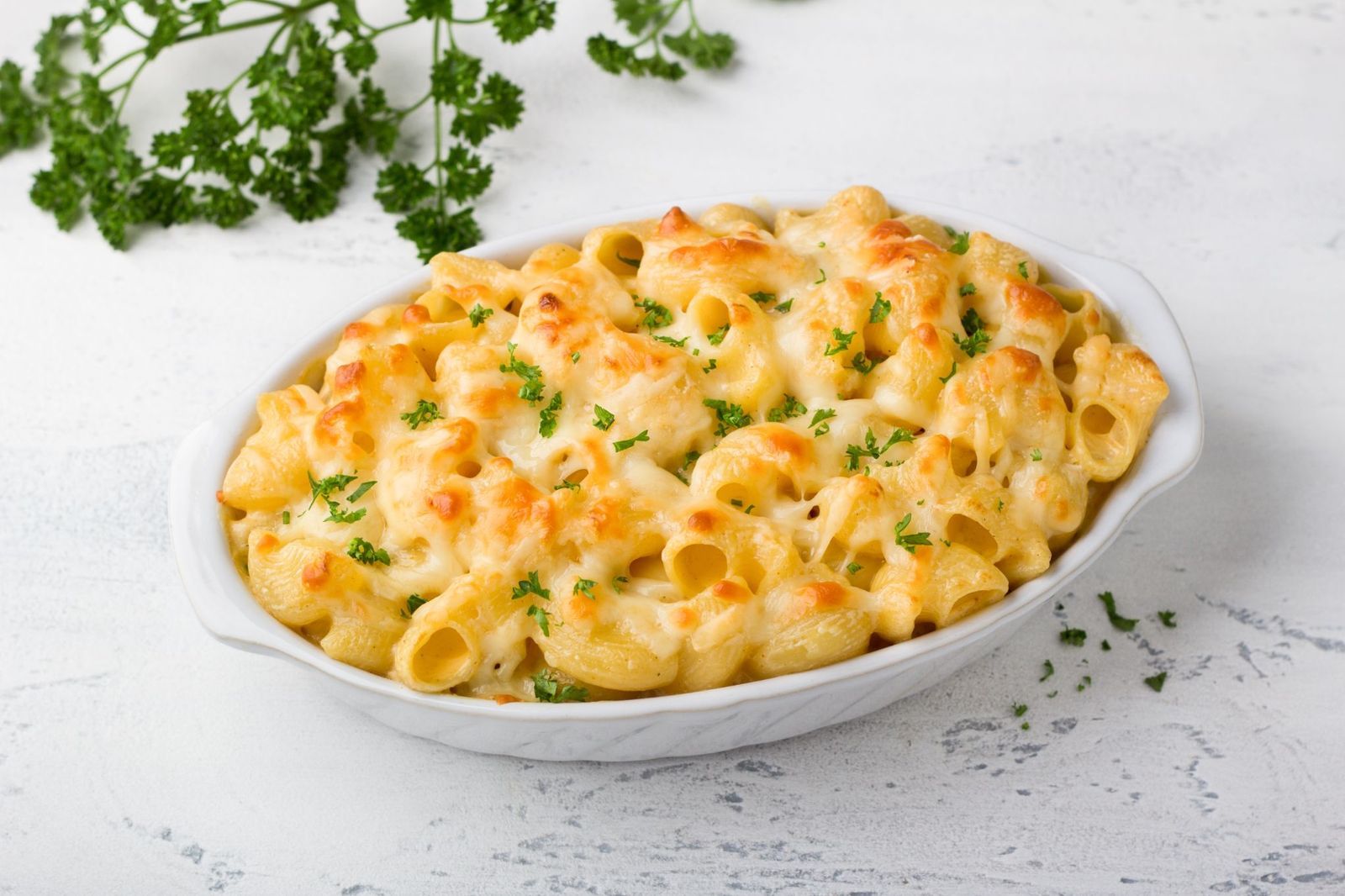
Image: olepeshkina

Mac and cheese shows up at potlucks and holiday tables across the country, but its American debut came from a president with expensive European taste.

While serving as minister to France in the 1780s, Thomas Jefferson fell for the pasta dishes he encountered in Paris and Italy. He had a pasta press shipped home, but kept importing macaroni and parmesan from Europe for years. In 1802, as president, Jefferson served a baked macaroni dish at a formal White House dinner. Not every guest was impressed. Congressman Manasseh Cutler called the pie disagreeable, mistaking the pasta for onions until a fellow diner explained what it was. Cutler’s confusion didn’t stop the dish from catching on, and it’s been a comfort food staple ever since.

6
Presidential marching music: "Hail to the Chief"
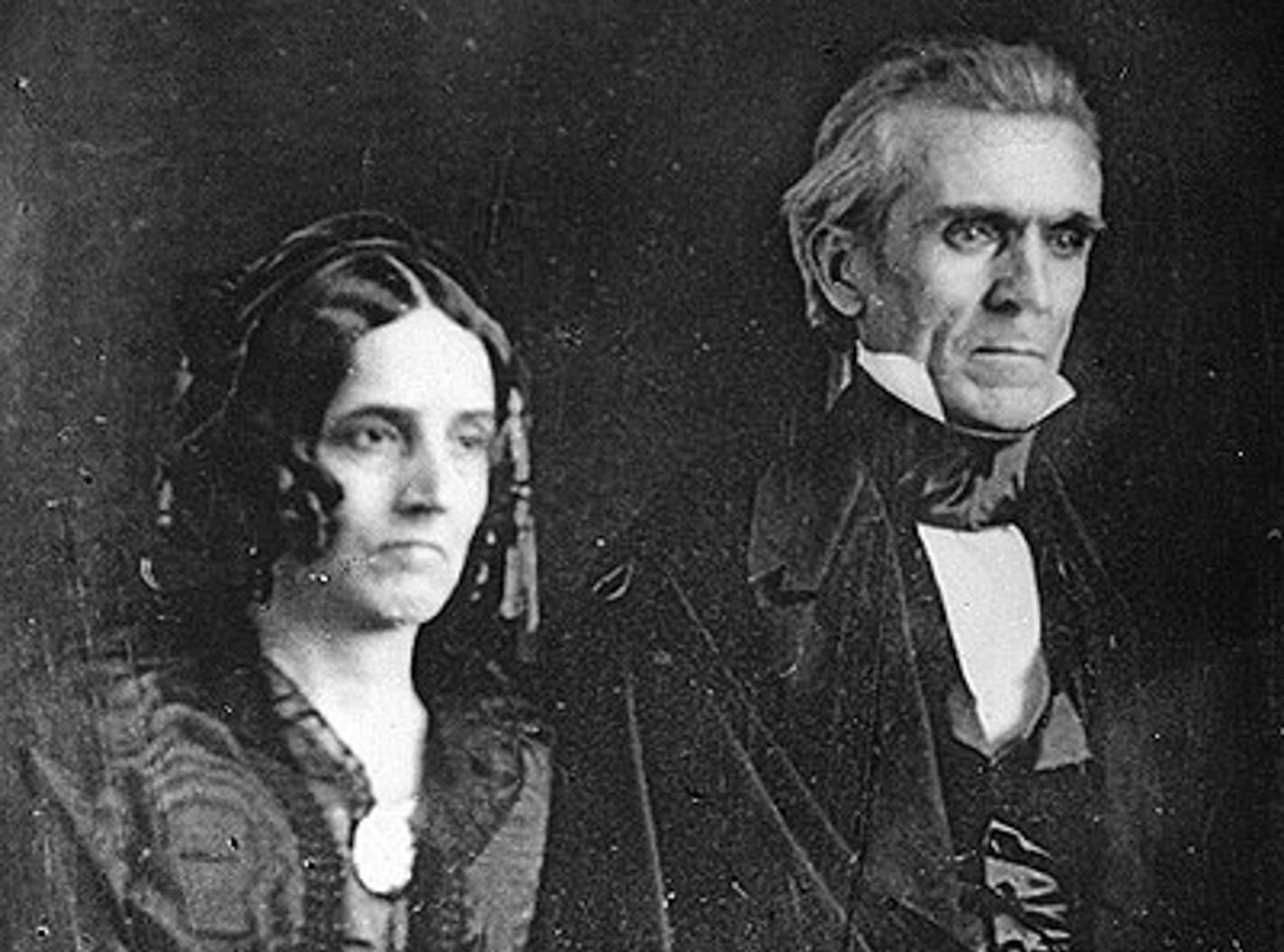
Image: alamy, Public domain, via Wikimedia Commons

Whenever a president walks into a room for a major event, the Marine Band strikes up the same tune, and the crowd knows exactly who just arrived. That entrance music exists because James K. Polk had the opposite problem.

Elected in 1844, Polk was famously soft-spoken and easy to overlook in a crowded hall, the kind of president who could walk into a reception and have half the room not notice. His wife, Sarah Childress Polk, decided that wouldn’t do. She arranged for the Marine Band to play "Hail to the Chief" whenever her husband entered a room, giving guests a clear cue that the president had arrived. The tune, written by English composer James Sanderson and reserved for special events like inaugurations, had been around for 40 years prior to Polk’s taking office, although it was during his presidency when it started opening the door for every Commander-in-Chief.

7
The national Christmas Tree Lighting ceremony
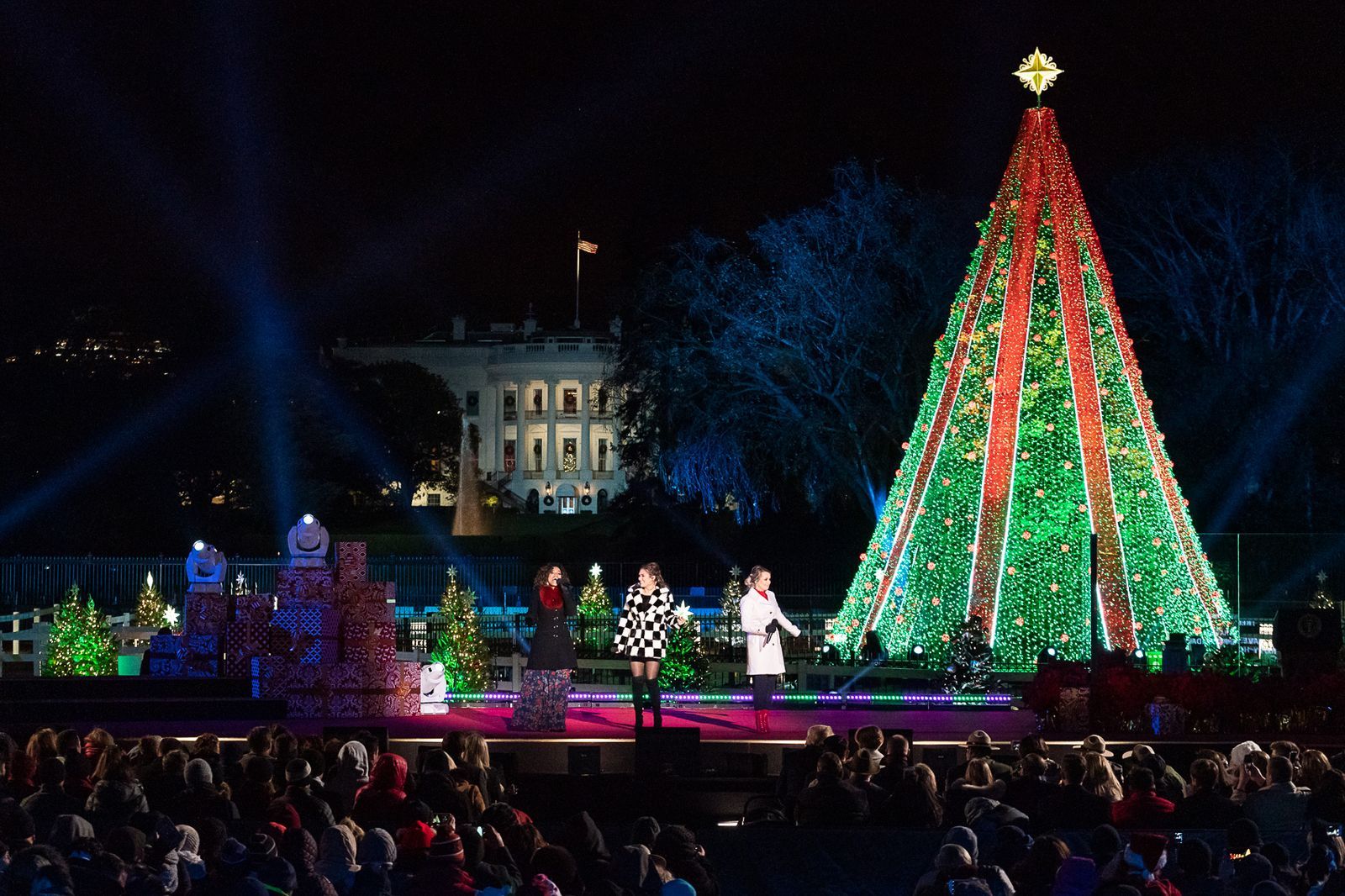
Image: The White House from Washington, DC, Public domain, via Wikimedia Commons

The National Christmas Tree Lighting each December draws crowds to the Ellipse just south of the White House, but the very first one almost happened somewhere else entirely.

In November 1923, organizers asked First Lady Grace Coolidge for permission to put a community Christmas tree on the White House grounds. She already had a carol sing planned for the North Lawn and didn’t want two events competing, so she suggested the Ellipse instead. On Christmas Eve, President Calvin Coolidge walked over from the White House, pressed a button, and lit a 48-foot balsam fir donated by his home state of Vermont in front of thousands of spectators. True to his famously quiet nature, Coolidge said nothing and simply flipped the switch, letting the lights be the show.

8
The presidential "First Pitch" at Major League Baseball games
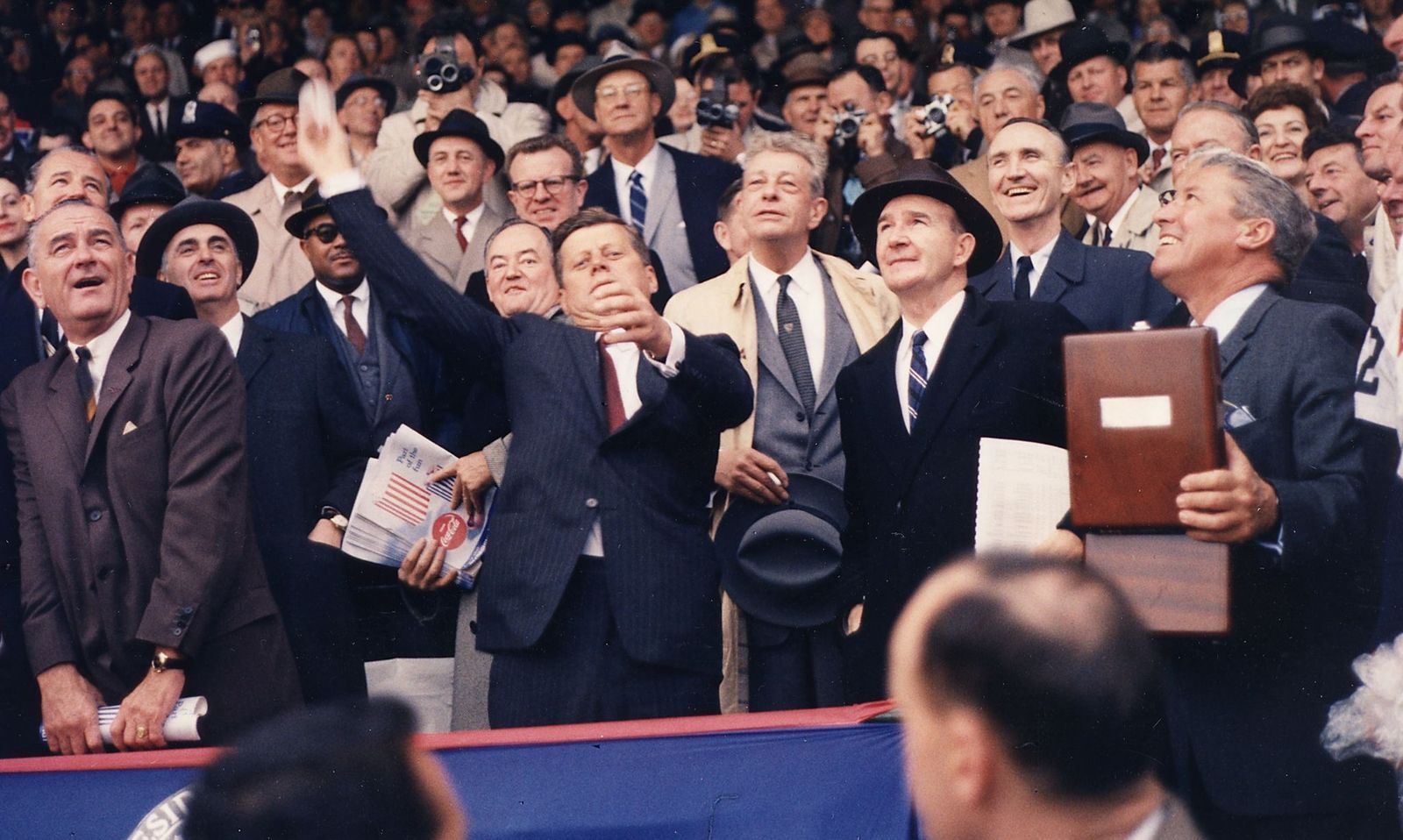
Image: Robert LeRoy Knudsen, Public domain, via Wikimedia Commons

Every baseball season still opens with someone tossing a ceremonial first pitch, a tradition that dates back to a president who almost wasn't invited.

On April 14, 1910, William Howard Taft attended the Washington Senators' opener against the Philadelphia Athletics, in Washington, D.C. The plan was for him to throw to Washington Senators catcher Gabby Street, since ace pitcher Walter Johnson had shyly turned down the honor. Taft had other ideas. From his box seat, he turned and fired the ball straight to Johnson instead, who caught it, kept it as a souvenir, and later had the president autograph it. Johnson went on to pitch a one-hit shutout that afternoon. Taft returned to throw another first pitch in 1911, and the ceremony has opened baseball seasons for presidents ever since.

9
Blueberry Jelly Belly Beans
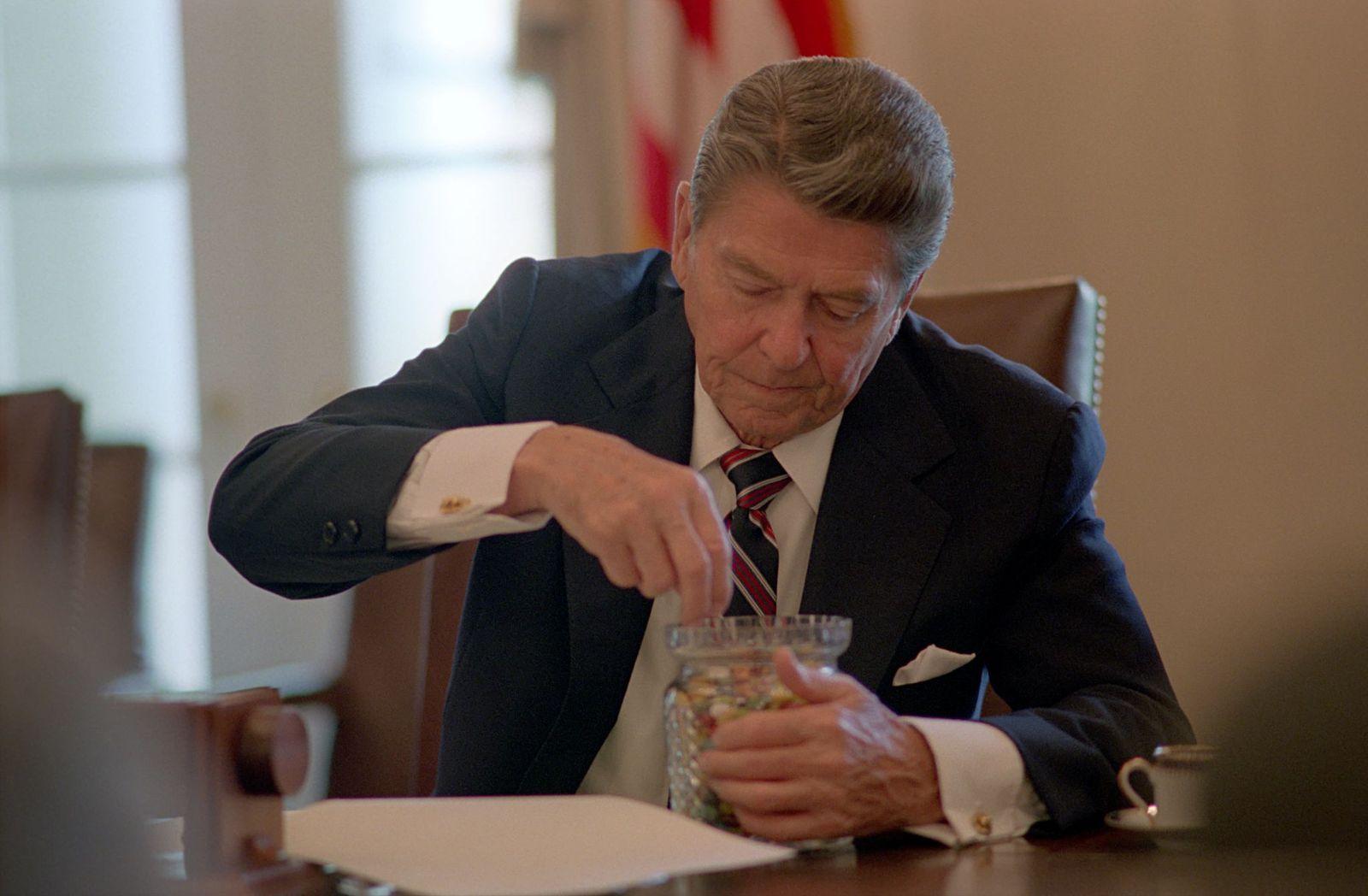
Image: National Archives and Records Administration, Public domain, via Wikimedia Commons

Grab a bag of Jelly Belly beans today, and you'll likely find blueberry among the flavors, a color that didn't exist until one president requested it.

Ronald Reagan started eating jelly beans in 1966 to help quit pipe smoking, and by the time he reached the White House, he kept jars in the Oval Office and Cabinet Room alike. For his 1981 inauguration, Reagan wanted a patriotic red, white, and blue display . Jelly Belly already made Very Cherry for red and Coconut for white, but nobody had ever needed a blue bean before, so there wasn't one. The company invented the blueberry flavor specifically for the occasion and shipped three and a half tons of beans to Washington for the celebration. More than 40 years later, blueberry remains one of Jelly Belly's most popular flavors.

10
Hoover-ball, a new sport
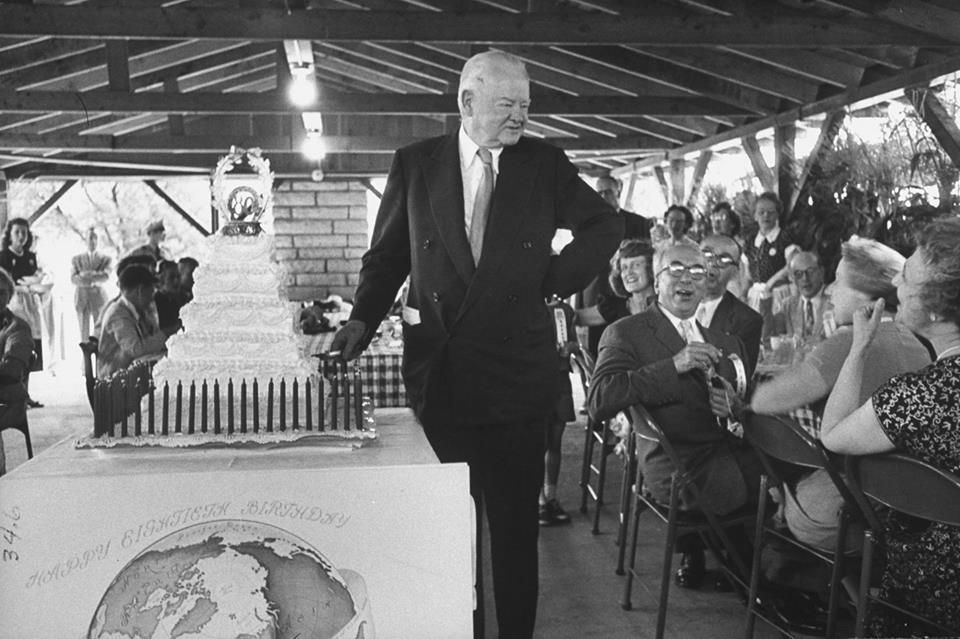
Image: English: NPGallery, Public domain, via Wikimedia Commons

Presidential influence is not to be denied. And one former president even gave Americans a new sport. When Herbert Hoover entered office in 1929, his doctors were concerned about his weight and lack of exercise. His physician, Joel T. Boone, came up with an answer that was considerably more fun than a daily walk.

Boone adapted the game from medicine-ball exercises and tennis , creating a sport in which players stood on opposite sides of a net and threw a heavy medicine ball back and forth. The game quickly became a regular activity on the White House grounds, and players even earned a nickname: the "Medicine Ball Cabinet." Although it never became mainstream, the sport lived on through local competitions in Hoover’s hometown of West Branch, Iowa.

History History 4 min read

Olympic legacy

United States at the Olympics: Gold, Glory and Greatness

Image: Anna Shvets

Team USA has dominated the Olympics for over a century. Our athletes have racked up medals, broken records, and hosted the most events. From teen champions (do you know how old the youngest athlete was?) to historic gold medal sweeps, American athletes have made their mark. From swimmers to gymnasts to track stars, they have brought speed, skill, and power to the Olympic Games. We're here to explore some of the coolest records and achievements that make the US an Olympic powerhouse!

1
The US: The ultimate Olympic host

Image: Obed Hernández

If hosting the Olympics were a sport, the US would take home the gold medal, as America has welcomed the Games eight times —more than any other country.

The Summer Olympics have taken place in St. Louis (1904), Los Angeles (1932, 1984), and Atlanta (1996), while the Winter Olympics have been held in Lake Placid (1932, 1980), Squaw Valley (1960), and Salt Lake City (2002).

And that’s not the end—Los Angeles is gearing up for 2028, so it’s safe to say the torch never stays away for too long!

2
Winning more medals than anyone else

Image: Ethan Wilkinson

If there’s one thing Team USA knows how to do, it’s win medals—a lot of them. As of 2024, the US has claimed a staggering 2,765 Summer Olympic medals (including 1,105 golds) and 330 Winter Olympic medals . No other country even comes close.

Whether on the track, in the pool, or on the ice, American athletes have consistently outperformed the competition.

3
Dominating track, field, and the pool

Image: Austris Augusts

Certain sports just seem to bring out the best in American athletes . From Jesse Owens on the track to Katie Ledecky in the pool to Carl Lewis soaring through the air, American athletes have rewritten the record books time and time again.

In track and field, for example, the US holds the record for the most gold medals, with over 400.

When it comes to swimming, Team USA has made an even bigger splash, earning more than 570 total Olympic medals—the most in any single sport.

4
Michael Phelps: The GOAT of the Olympics

Image: Braden Egli

Speaking of rewriting the record books, we need to talk about Michael Phelps—the most decorated Olympian of all time.

With 28 medals (23 gold, 3 silver, 2 bronze) , the legendary swimmer dominated the pool across five Olympic Games. His eight gold medals at Beijing 2008 were a record-breaking feat, proving that when it comes to Olympic greatness, no one comes close. Phelps didn’t just set records—he shattered them, leaving behind a legacy that may never be topped.

5
Winter Games greatness: Apolo Ohno’s record run

Image: Filip

While the Summer Olympics have clearly brought in the most medals, the US has had its fair share of Winter Olympic heroes.

The most decorated of them all? Apolo Ohno , the short-track speed skating sensation. Ohno raced to eight Olympic medals, cementing his place as America’s greatest Winter Olympian. You simply had to watch him dodge crashes, make last-second moves, and celebrate with his signature goatee.

6
When the US brought home 83 golds in one year

Image: Viktor Forgacs

The 1984 Los Angeles Olympics marked a golden era for Team USA—and we mean that quite literally.

With the Soviet Union and several other countries boycotting the Games, American athletes dominated, winning 83 gold medals —the most ever at a single Summer Olympics.

7
The only time the US won just one gold

Image: Matthew Fournier

But it wasn’t always like that—there were times when the story went differently for Team USA. While 1984 was all about collecting golds, 1980 was a different story.

That year, Team USA won only one gold medal… but what a gold it was! The US men’s hockey team, made up of young college players, pulled off the famous "Miracle on Ice , " defeating the heavily favored Soviet team before going on to win gold. One gold medal? Sure. But it was one of the greatest moments in Olympic history.

8
A medal sweep like no other

Image: Mia de Jesus

The 1904 St. Louis Olympics were unlike any other—and not just because it was the first time the Games were held in the US.

Due to travel difficulties and a lack of international participation, Team USA won over 80% of all medals awarded . While it wasn’t exactly a fair fight, it still stands as the biggest medal sweep in Olympic history. Sometimes, just showing up is half the battle, you know?

9
Youngest US champion: A 13-year-old diving prodigy

Image: Austrian National Library

Most Olympic champions train for years before making their mark—but that wasn’t the case for Marjorie Gestring , who won a gold medal in diving at just 13 years and 268 days old at the 1936 Berlin Olympics. While most kids her age were just starting middle school, she was standing atop the Olympic podium. To this day, she remains the youngest US Olympic champion ever.

10
Simone Biles: The queen of US gymnastics

Image: Brian Wangenheim

When it comes to American gymnastics, Simone Biles is in a league of her own. With 11 Olympic medals (7 gold, 2 silver, 2 bronze), she is the most decorated US female gymnast in history.

Her powerful routines, gravity-defying skills, and unmatched mental toughness have made her an icon, inspiring future generations of gymnasts. Whether she’s flipping, twisting, or making history, Biles continues to raise the bar—literally.

History History 3 min read

What would you take?

You'll never believe the things we've sent into space

Image: Pixabay / karen_la_banda

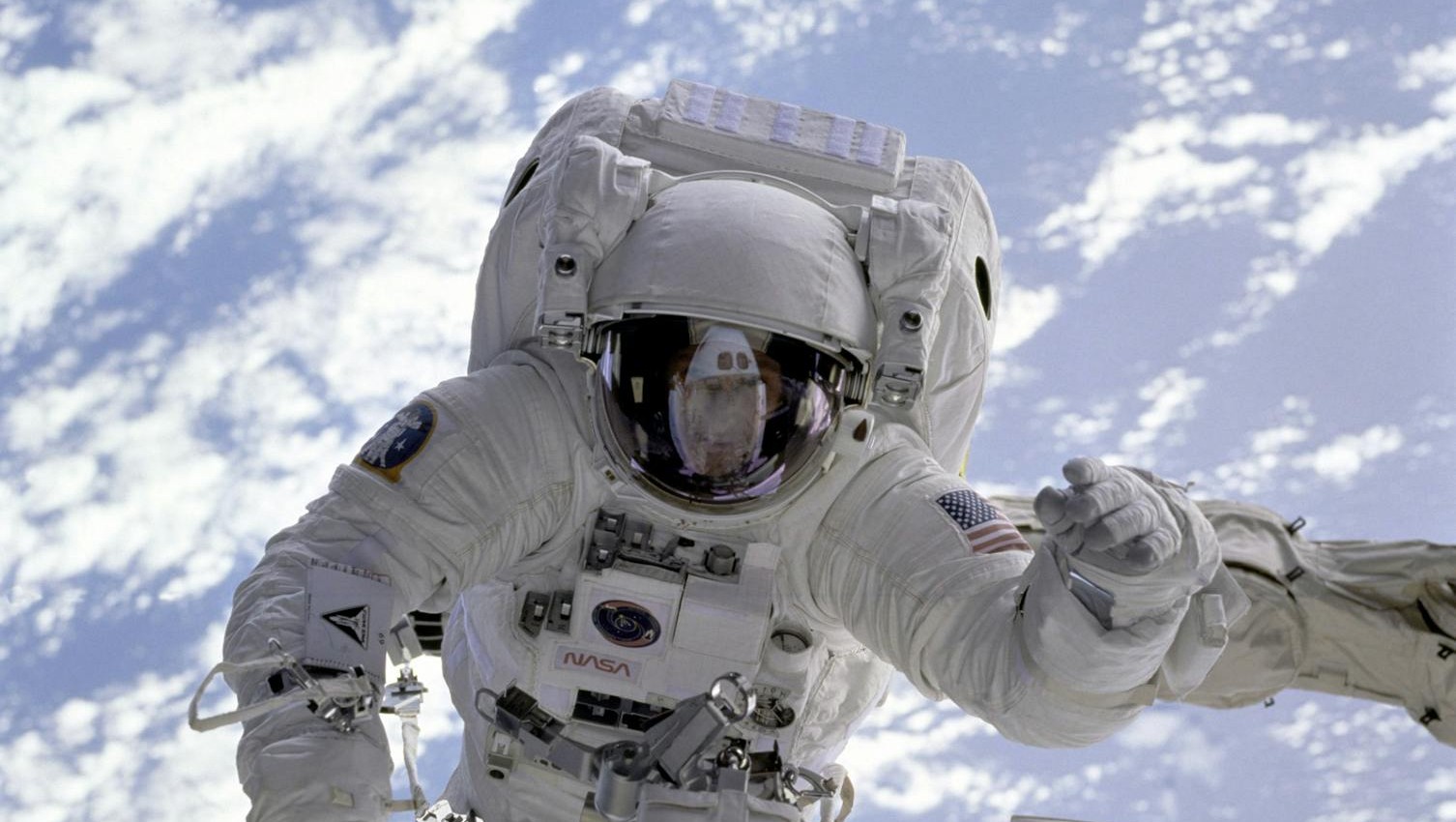
NASA has strict rules about non-essential items. And yet, over the decades, astronauts have managed to bring along all sorts of odd objects in their Personal Preference Kits. Sure, some may have been marketing stunts—like the time Pizza Hut delivered a meal to the International Space Station—but others were personal caprices, like David Walker’s gorilla suit smuggled onboard in 1984. Read on to discover the full list!

1
A gorilla suit

Image: ARTISTIC FRAMES

Space can get boring. It got a little more entertaining for astronaut Scott Kelly in 2016, when his twin brother, Mark Kelly, sent him a vacuum-sealed gorilla suit all the way to the ISS for his birthday.

Kelly’s crewmates didn’t know about it, so he had fun pranking them by suddenly appearing in the suit aboard the station. One of the prank videos went viral. As Kelly put it: "How can you not like space gorilla?"

2
Dirt from Yankee Stadium

Image: Chanan Greenblatt

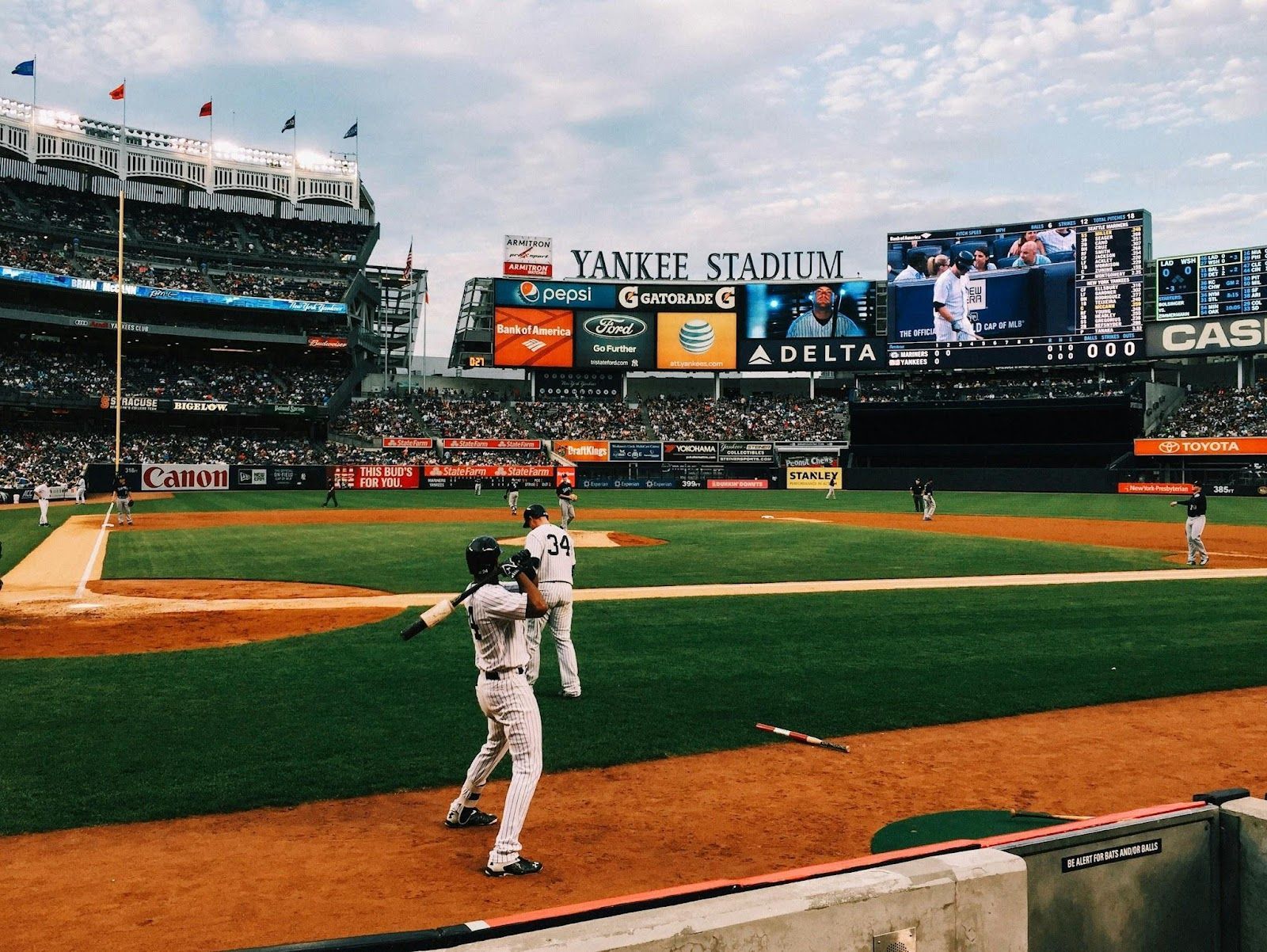
Astronaut Garrett Reisman, a lifelong Yankees fan, of course, took a little piece of the Bronx to orbit . In 2008, aboard Space Shuttle Endeavour on mission STS-123, he brought a vial of dirt from Yankee Stadium’s pitcher’s mound—along with other Yankees memorabilia, including items autographed by players.

3
Amelia Earhart’s watch

Image: Tomas Martinez

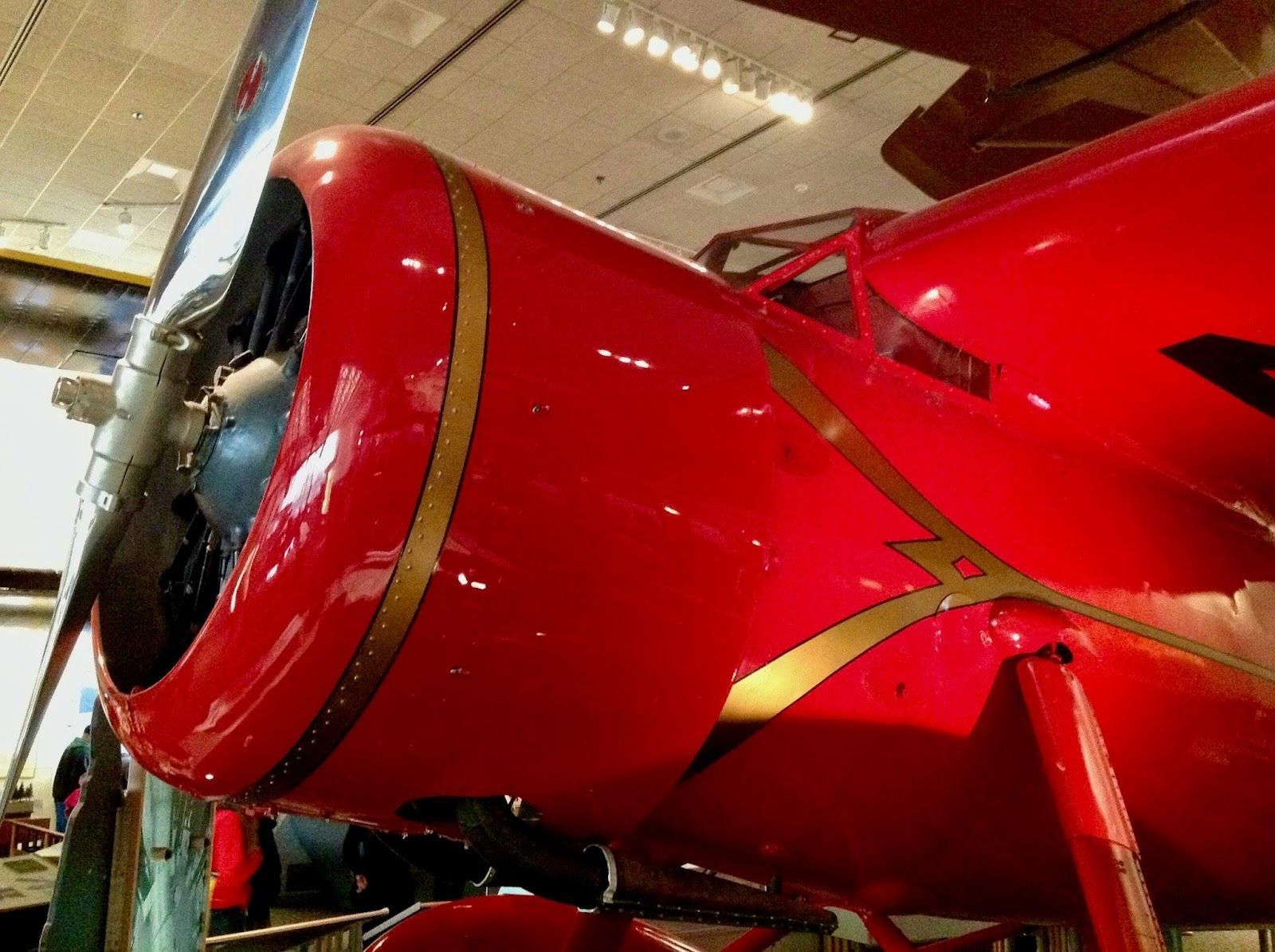
In 2010, astronaut Shannon Walker brought Amelia Earhart’s watch to the International Space Station. The legendary aviator had worn it during two transatlantic flights , and it traveled to space on the 82nd anniversary of her first historic solo flight across the Atlantic.

4
Pizza

Image: Alan Hardman

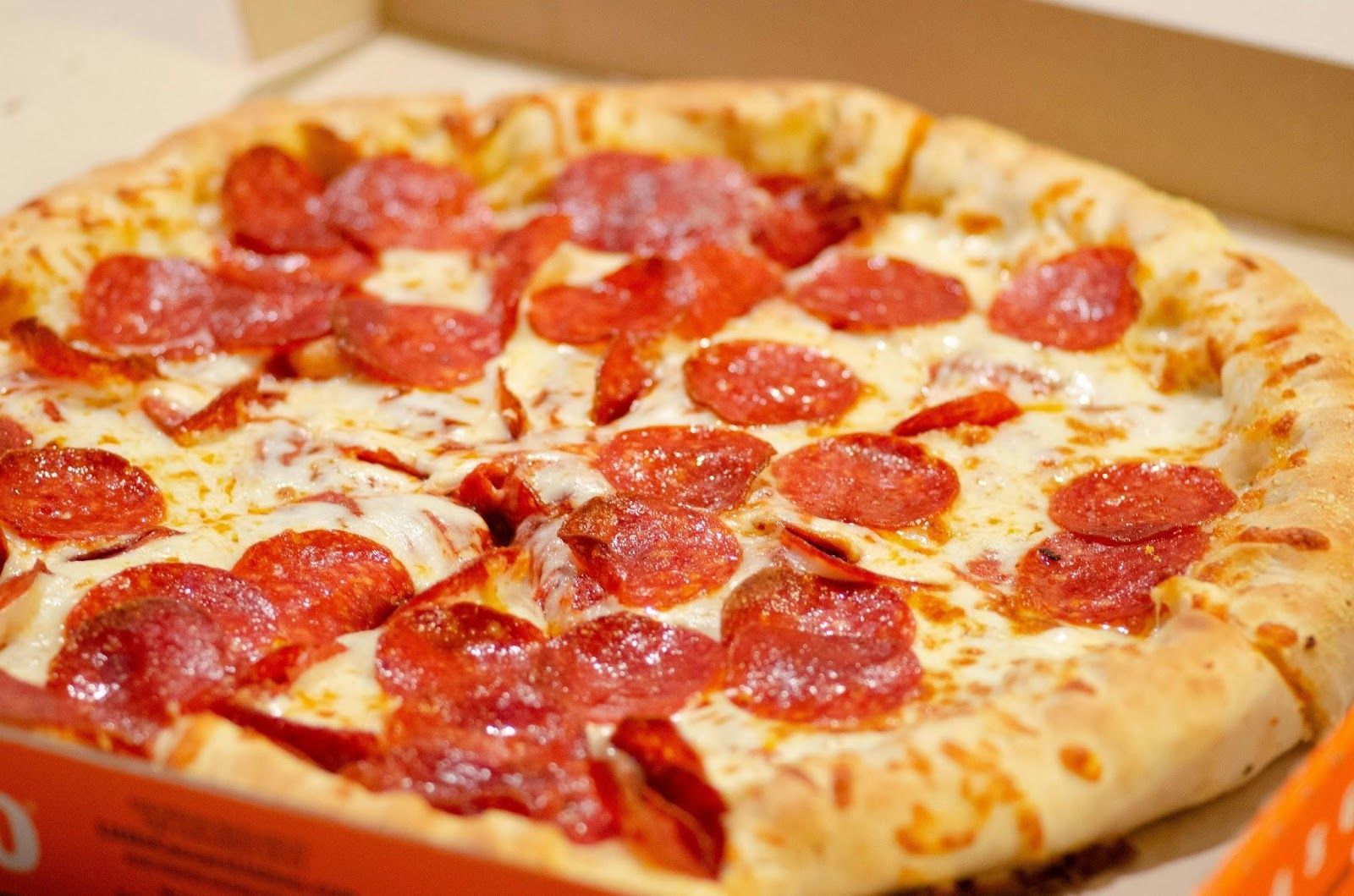
Space pizza finally became a reality in 2001, when Pizza Hut paid millions to deliver a vacuum-sealed pizza to the International Space Station.

It was, quite literally, a publicity stunt out of this world . The pizza—topped with salami to withstand space conditions—was eaten by Russian cosmonaut Yuri Usachov aboard the ISS.

5
Pieces of the Wright Brothers’ first plane

Image: History in HD

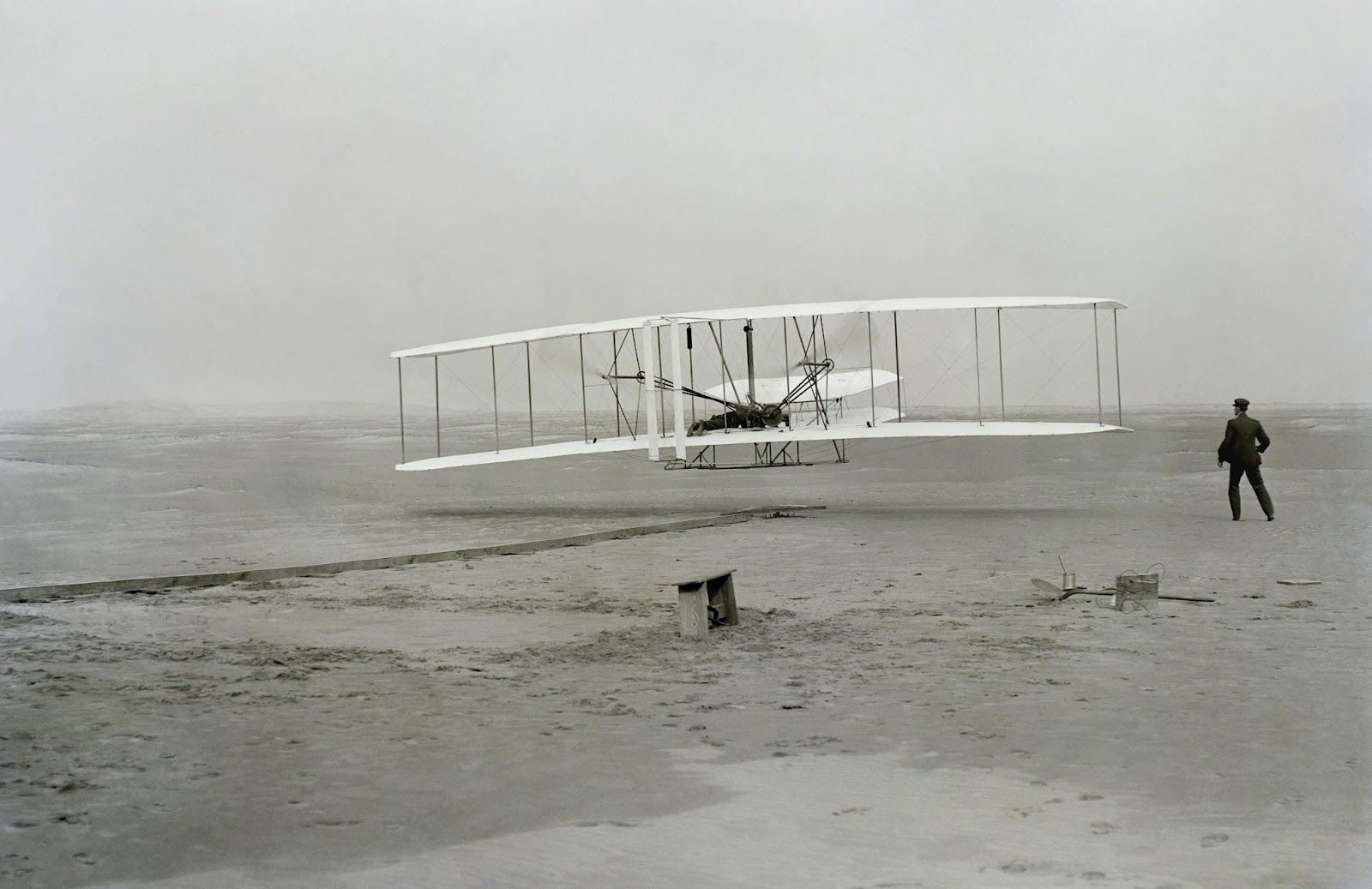
Tucked into Neil Armstrong’s spacesuit was a small piece of fabric and a fragment of wood from the Wright Brothers' 1903 Flyer—carried all the way from Kitty Hawk to the Sea of Tranquility . He took them with him as he became the first person to step onto the Moon in 1969.

6
A set of instruments to play "Jingle Bells"

Image: Ali Rashedi

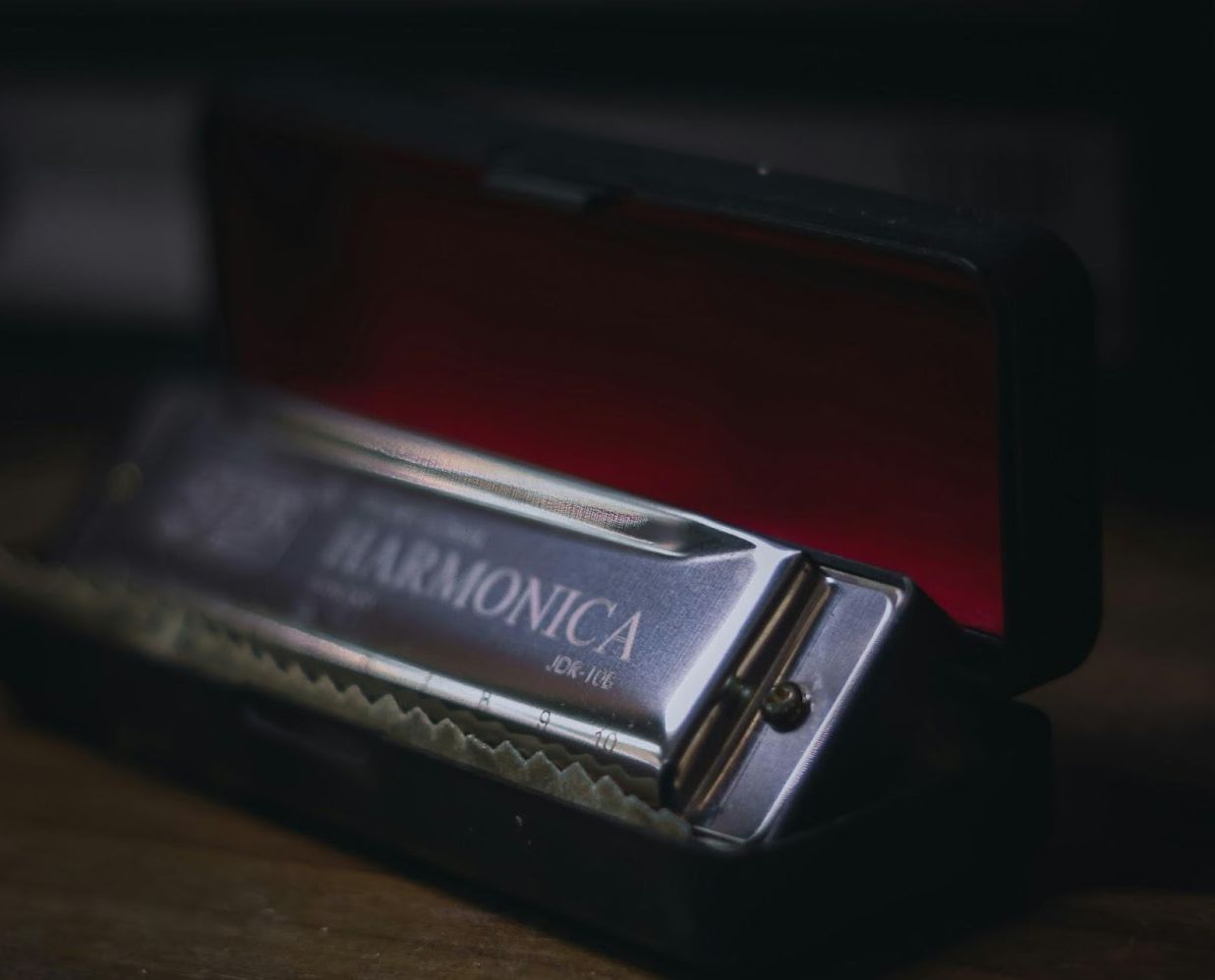
Just before Christmas in 1965, astronauts Wally Schirra and Tom Stafford pulled off a surprise serenade in space.

They had smuggled a harmonica and a set of sleigh bells aboard their Gemini 6A mission and played "Jingle Bells" for Mission Control—creating the first musical performance ever in space . The instruments are now on display at the Smithsonian Institution.

7
Several LEGO pieces

Image: Eugene Chystiakov

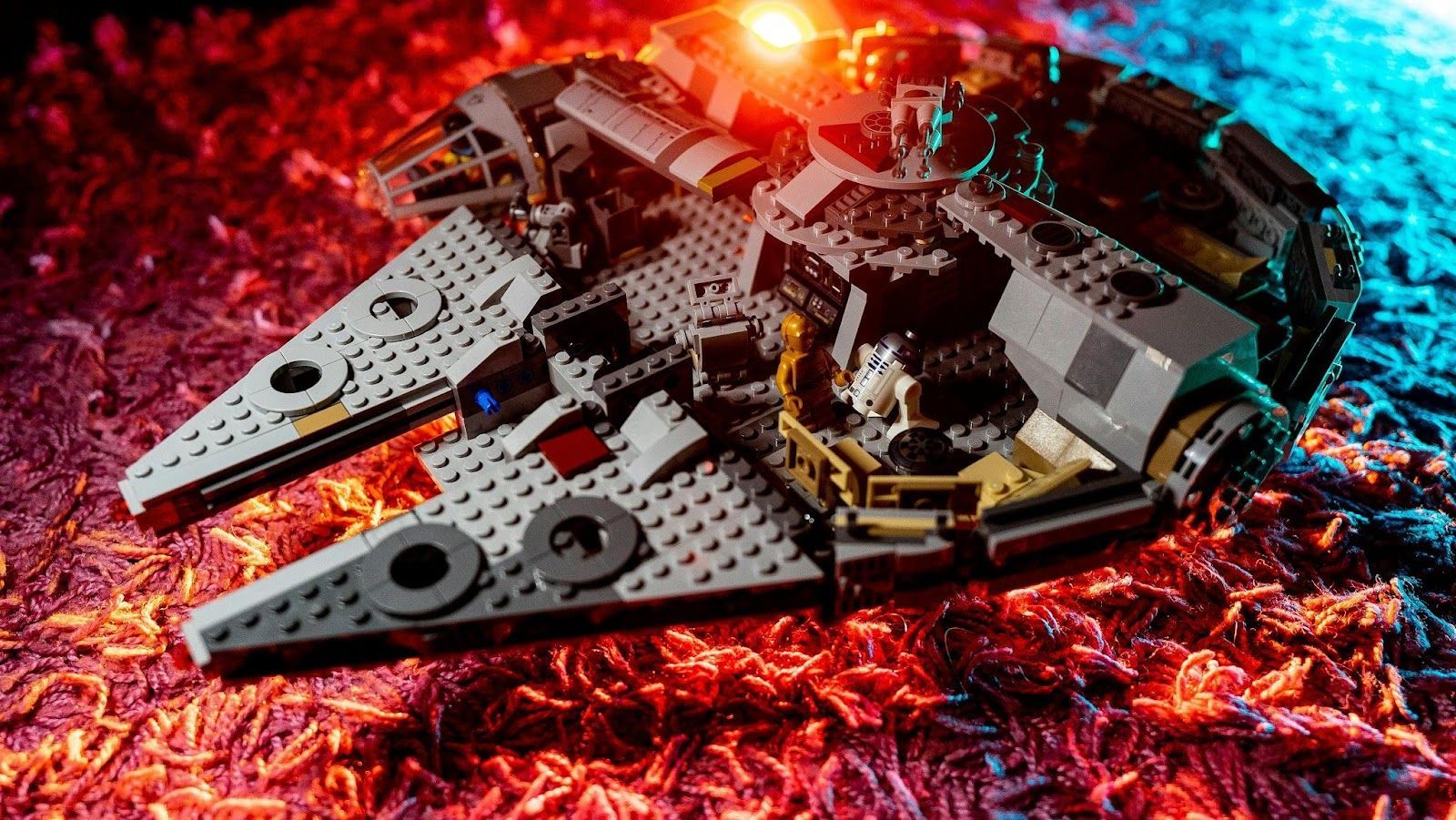
NASA's collaboration with LEGO took a literal leap when, in 2011, sets of LEGO bricks were sent to the International Space Station aboard mission STS-133.

Astronauts assembled models—such as the Hubble Space Telescope—in microgravity, engaging students around the world in STEM education.

8
A Buzz Lightyear toy

Image: Brian McGowan

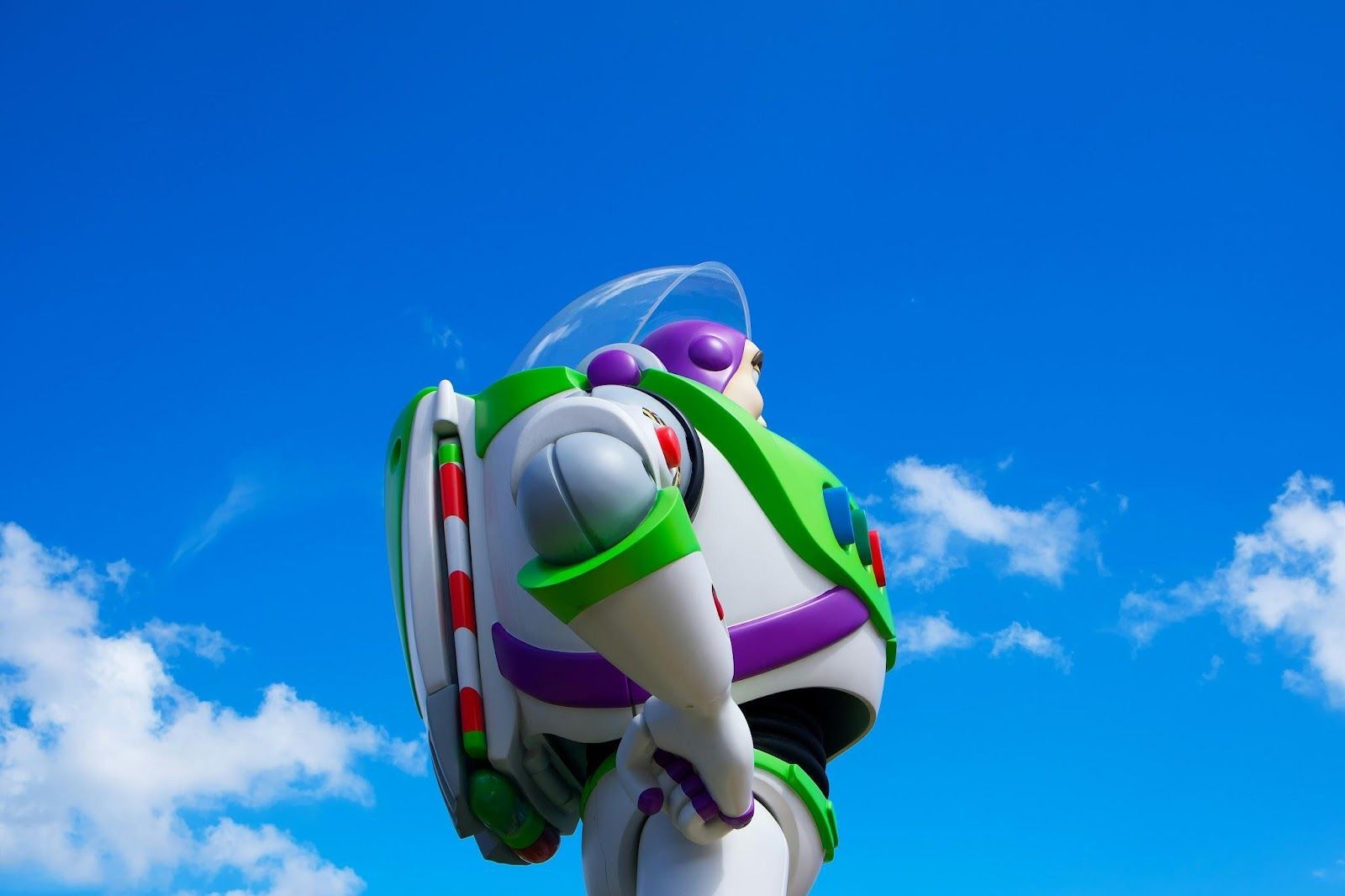
Buzz Lightyear truly went " to infinity and beyond " when a 12-inch action figure flew aboard Space Shuttle Discovery in 2008. Spending 15 months on the International Space Station, Buzz was part of NASA’s educational outreach efforts.

Upon return, he was honored with a parade at Disney World and now resides in the Smithsonian’s National Air and Space Museum.

9
A lightsaber

Image: superneox lightsaber

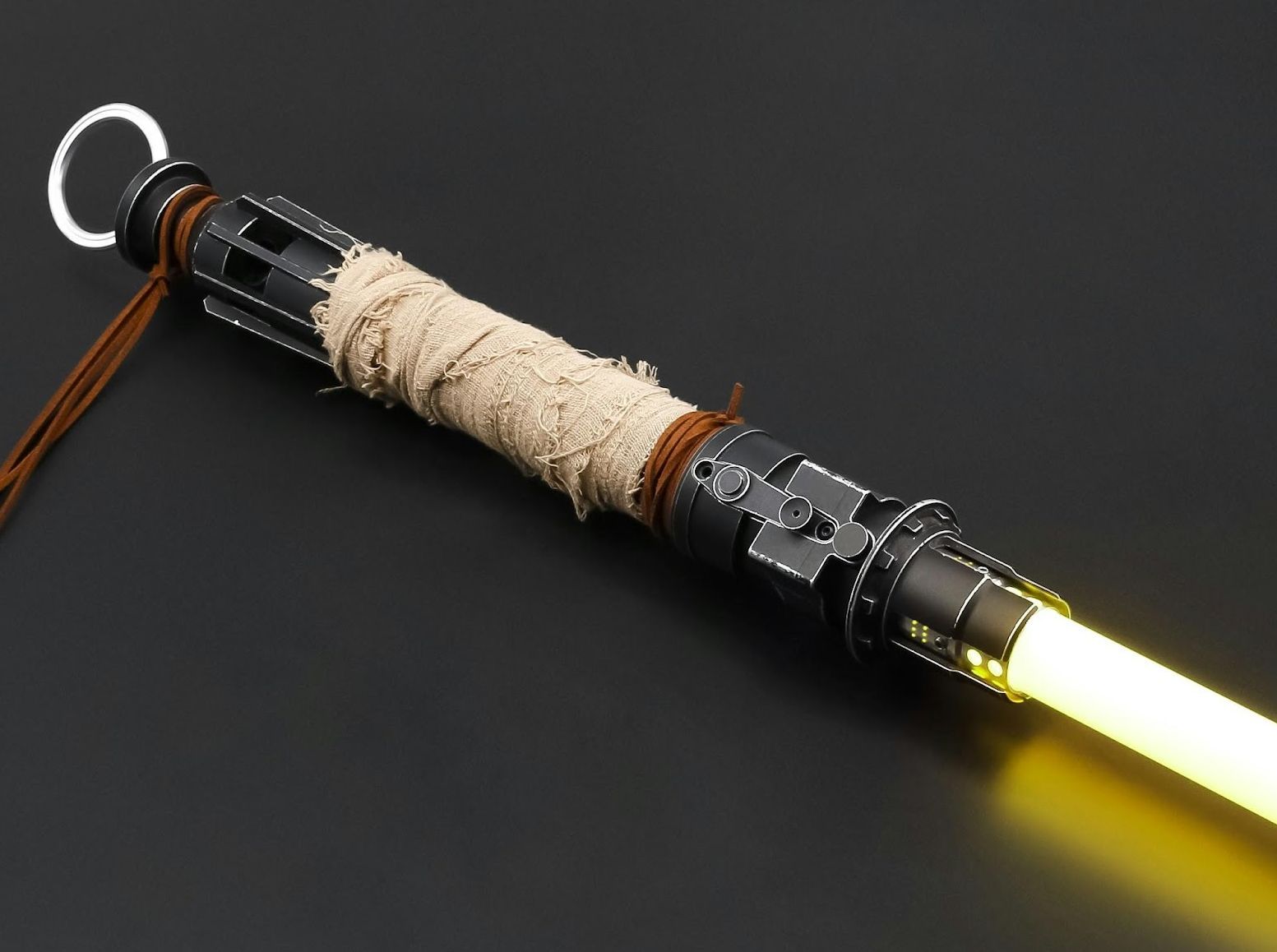
In a nod to sci-fi fandom, a lightsaber prop used by Mark Hamill in Return of the Jedi journeyed to space aboard Space Shuttle Discovery in 2007.

The initiative celebrated the 30th anniversary of Star Wars , symbolizing the intersection of science fiction and real-world space exploration.

10
Dinosaur bones

Image: Jesper Aggergaard

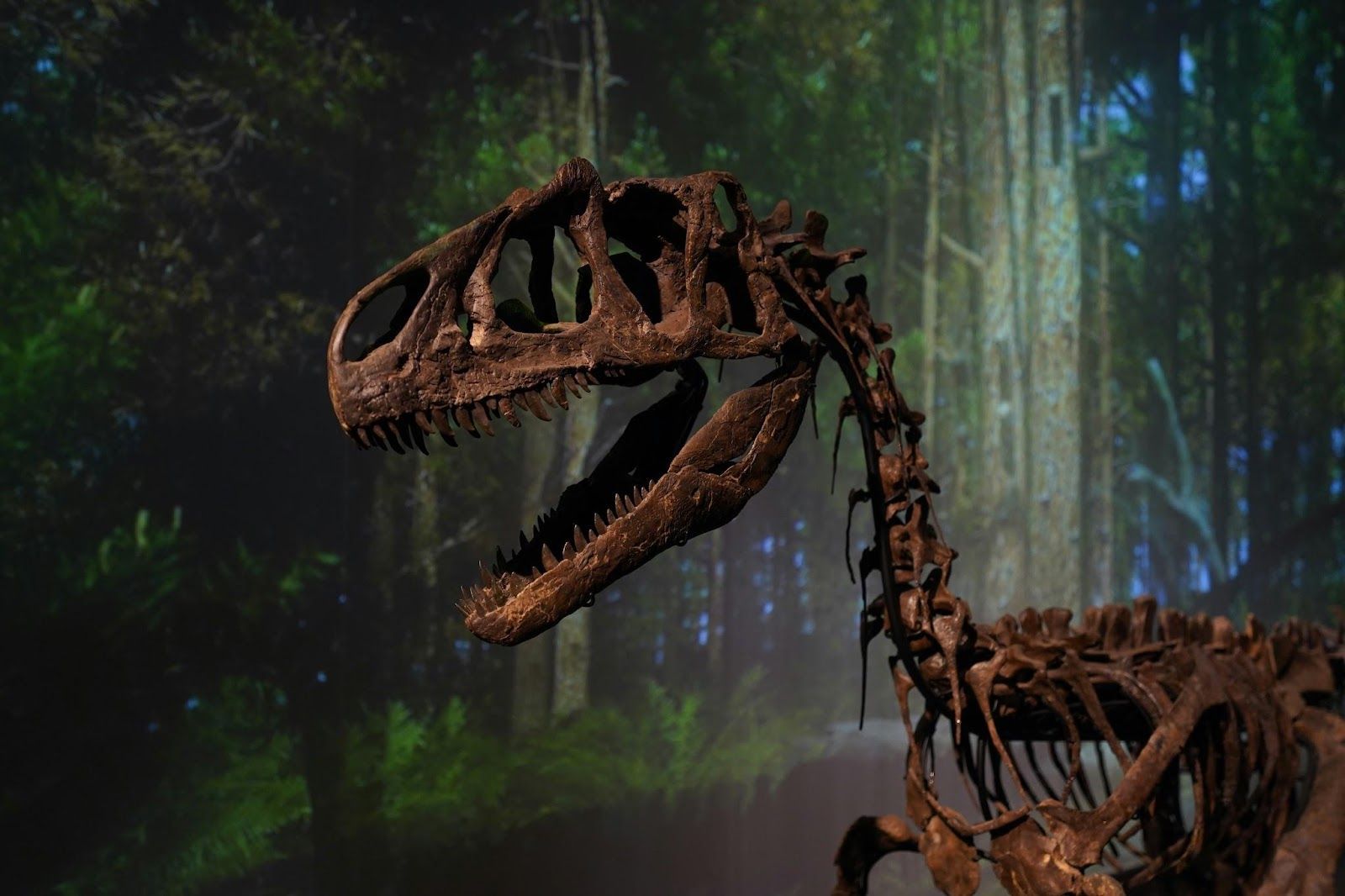
In 1985, during NASA's SpaceLab 2 mission, astronaut Loren Acton brought aboard a fossilized bone and a piece of eggshell from Maiasaura peeblesorum , a dinosaur species known for nurturing its young.

These fossils, discovered in Montana , were sent to space to symbolize the connection between Earth’s prehistoric life and space exploration.​

11
Communion bread and wine

Image: James Coleman

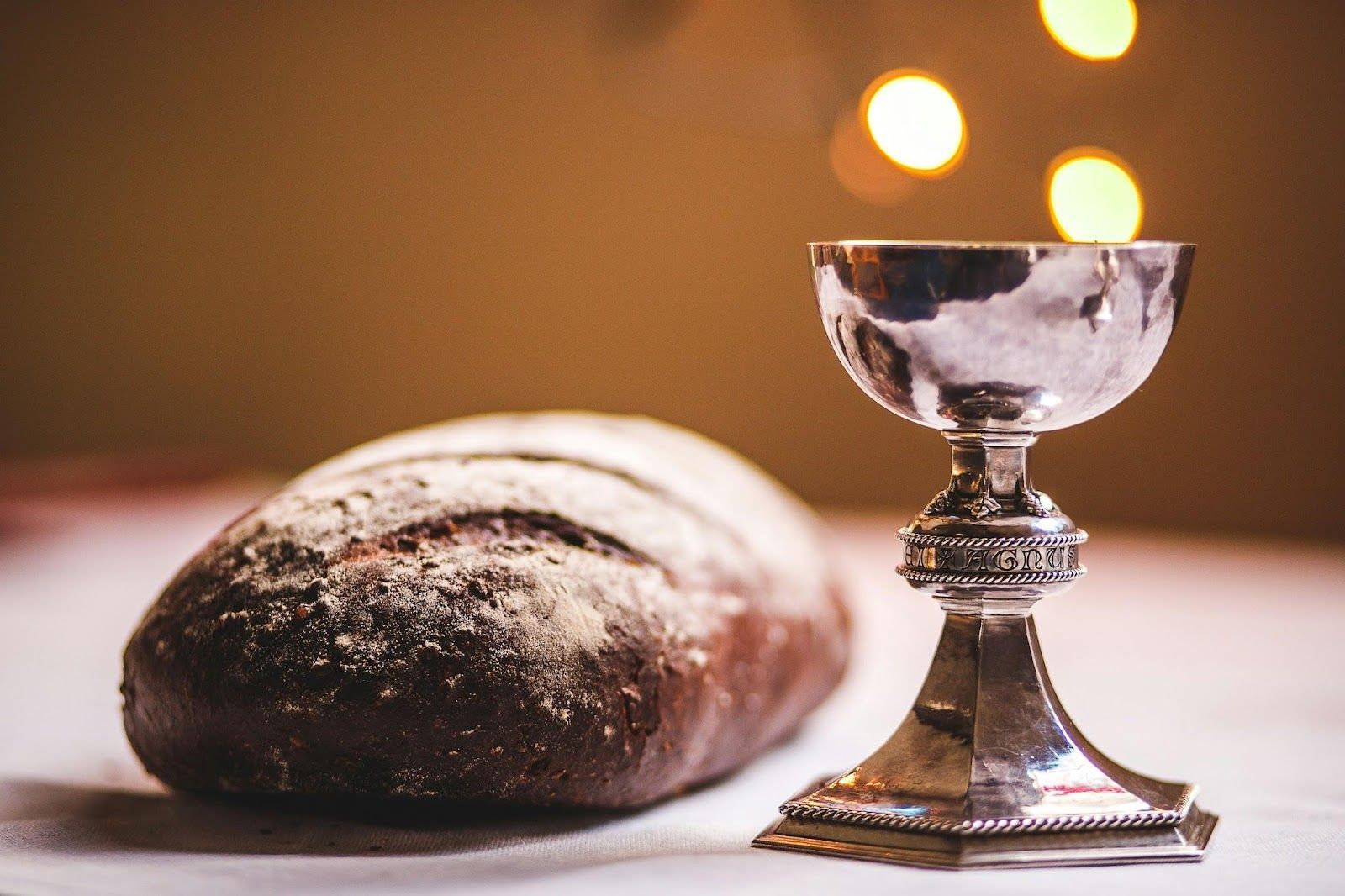
In a very profound gesture, Buzz Aldrin privately took Christian communion aboard Apollo 11. As a Presbyterian elder , he carried a tiny wafer and a small pouch of wine, blessing them while orbiting the Moon shortly after the lunar landing.

12
Golf clubs (and golf balls)

Image: Peter Drew

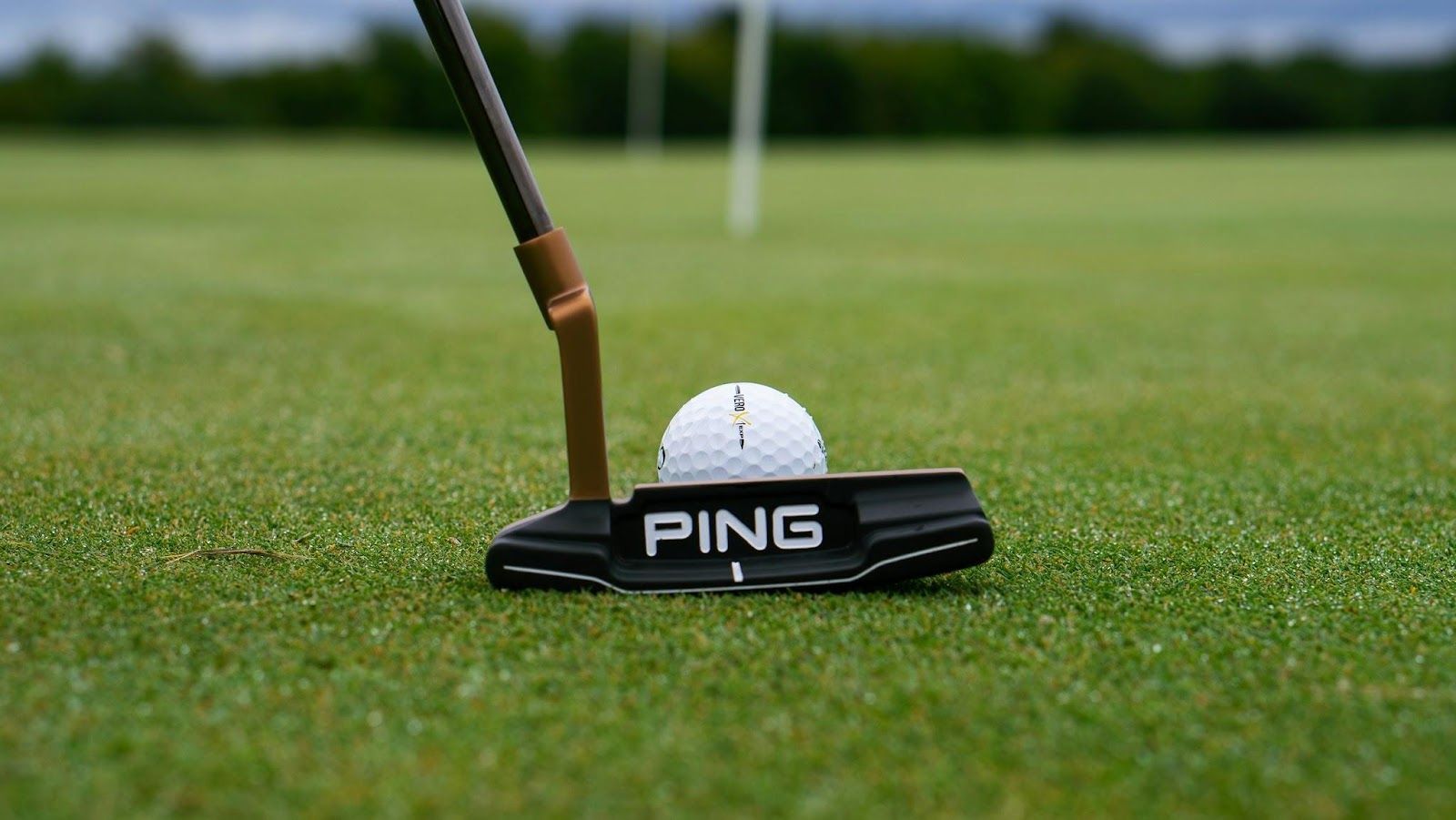
During Apollo 14, Alan Shepard secretly packed a makeshift 6-iron —a golf club head duct-taped to a lunar tool—and two golf balls.

On live TV, he took a couple of awkward, one-handed swings while wearing his stiff spacesuit. The first ball flopped; the second soared "miles and miles," Shepard joked. It actually traveled about 40 yards, which is quite impressive in lunar terms.

Explore more American facts

Choose your favorite category!

General
General

As American as apple pie—the very best America has to offer!

Culture
Culture

Delve into the astounding richness of American lore.

Geography
Geography

Hop in and explore vast and diverse American landscapes.

History
History

Discover the key moments that shaped the United States.