Geography Geography 3 min read

Carved in stone

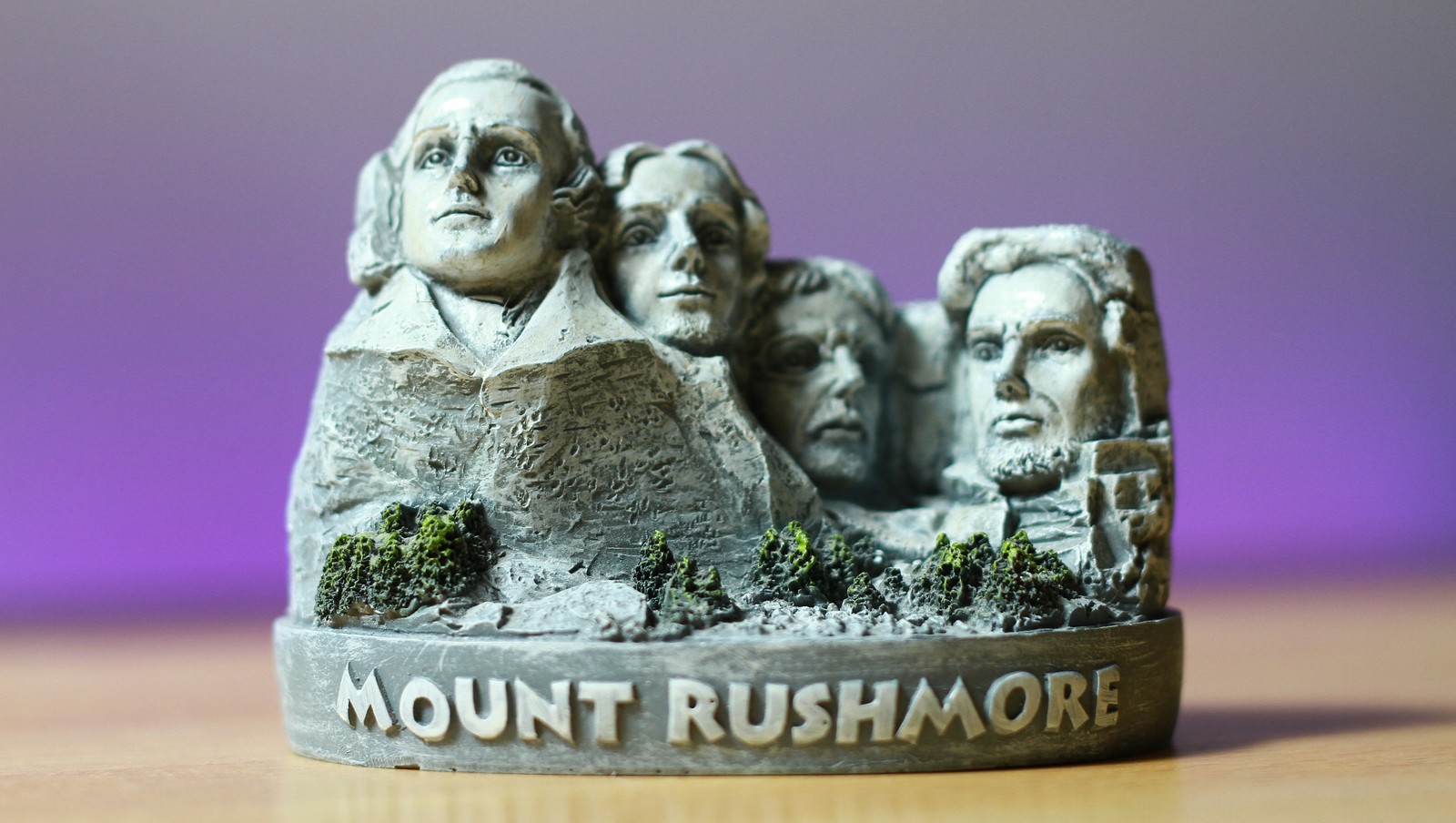
Who nearly replaced Roosevelt? 10 truths about Mount Rushmore!

Image: Takefreebies

We've all seen Mount Rushmore, whether in person or on screen. But this monumental landmark is more than just four giant heads carved into granite. If you want to discover some surprising facts they don't teach in schools, read on!

1
A tough decision

Image: Spencer James Lucas

While the first three figures —Washington, Jefferson, and Lincoln— were almost unanimously agreed upon, there was some debate over who should be the fourth face on Mount Rushmore. Gutzon Borglum, the sculptor, advocated for Theodore Roosevelt, but others believed Woodrow Wilson should be included. In the end, Borglum stuck with his original choice, and that's why today we see Teddy Roosevelt up there on America's Shrine of Democracy.

2
The original plan

Image: Jon Sailer

While it's hard to picture the Black Hills without the iconic faces of Washington, Jefferson, Roosevelt, and Lincoln, the original idea for Mount Rushmore was actually quite different. At first, Sculptor Gutzon Borglum envisioned a more complex job (yes, even more complicated than it already is!) In his original plan, he imagined not just the presidents' heads but their upper bodies as well! There was even talk of including other key figures from American history, like explorers Lewis and Clark.

3
14 long years

Image: piotr sawejko

We can assume that carving the giant heads of 4 presidents into the granite was no easy task. But do you know how long it took to complete the monument we see today? 14 years! That's right; 14 years of hard work, 400 men, and a whole lot of dynamite went into bringing this colossal project to life.

4
The first

Image: Spencer James Lucas

As the first President of the United States and widely known as the "Father of His Country," George Washington was a must for this incredible monument. In fact, his face was the first to be completed and was officially dedicated in a grand ceremony. In addition, as part of the powerful symbolism behind the work, Washington's sculpture is also the most prominent.

5
Starting over

Image: Raimund Schlager

One of the many unexpected construction challenges involved the placement of Thomas Jefferson's sculpture.

The original plan was to place Jefferson's face to the left of Washington. However, when the dynamiting process began, they found quartz beneath the surface, which made it impossible to continue carving in that spot. After 18 months of work, they "erased" (yes, again, with dynamite) what they had of Jefferson and started over to the right of Washington, where it is today.

6
The secret door

Image: Tommy Bond

Did you know there's a secret room hidden behind the 60-foot-tall heads on Mount Rushmore? The sculptor had big plans for the monument, including a Hall of Records carved into the mountain to store important national documents like the Constitution. And he started to build it! However, when Congress found out that part of the budget was set aside for the Hall of Records, they asked Borglum to focus solely on carving the heads.

7
The last one

Image: caleb weiner

After Washington's, the other faces followed: Jefferson's was dedicated second, and Lincoln's was officially unveiled in 1937. So, which one came last? That's right! The last to be completed was Theodore Roosevelt's, with his iconic mustache included! Of course, members of the Roosevelt family attended the big ceremony.

8
The legacy

Image: Ashim D’Silva

Building Mount Rushmore took many years. Unfortunately, Gutzon Borglum, the mind behind the project, didn't get to see it fully completed, as he passed away just a few months before the work officially ended. However, it was his son Lincoln who stepped in to complete the great work his father had started.

9
An extra foot

Image: Andrew Ling

Borglum believed this monument should stand the test of time, built to inspire and be admired for thousands of years to come. So, how did he achieve that? Some historical sources suggest one of Borglum's techniques was adding extra material to certain angled areas of the sculpture, like Washington's nose, for example. That's right! It's believed that the author added an extra foot to George Washington's nose to help it better withstand erosion over time.

10
The man behind the name

Image: Pamela Huber

Long before the presidents were carved into the Black Hills, a New York lawyer paid a visit to the area, and that visit wouldn't go unnoticed. In 1885, attorney Charles E. Rushmore was at the site for business, and he asked for the name of a particular peak. When they told him it didn't have a name, he jokingly suggested they could call it "Rushmore Peak." Charles E. Rushmore was actually the first person to make a private donation to get the project started: $5,000! And so it was that his name stuck.


Geography Geography 5 min read

Do you know who was the "Father of the National Parks"?

Image: Rakshith Hatwar

Known for its cliffs, waterfalls, and forests, Yosemite National Park holds far more than meets the eye: ancient trees older than empires, rare creatures that survived the Ice Age, and natural phenomena so strange it feels like magic. Whether you climb its tall granite walls or trace misty trails through hidden valleys, Yosemite invites you into a world where history, wonder, and wilderness meet. Here are ten facts that prove why this iconic park remains one of Earth’s true treasures.

1
Father of the National Parks

Image: Amaury Gutierrez

John Muir was a Scottish-born naturalist who devoted his life to protecting the wilderness, especially the Yosemite Valley area. He wasn’t content to simply admire the towering cliffs and ancient trees; he wrote tirelessly, crafting essays, letters, and articles that stirred both the hearts of ordinary readers and Congress representatives.

Muir’s words painted Yosemite not just as a landscape, but as a sacred treasure worth safeguarding. His relentless advocacy culminated in 1890 with the creation of Yosemite National Park, a triumph that earned him the nickname "Father of the National Parks". Even today, his legacy whispers through the valleys, reminding visitors that one person’s dedication can change the course of history.

2
A hike for every adventurer

Image: Nick Herasimenka

Some trails are built to challenge your limits, while others seem designed to comfort your soul. For those hungry for adrenaline, the Half Dome hike is the crown jewel: a 14-mile round trip of punishing switchbacks, dizzying cliffs, and cables that pull you toward a summit where sky and earth blur into one endless horizon.

Yet, Yosemite is just as generous to the quiet wanderer. The Mirror Lake Trail offers a soft stroll through shaded forest, ending in still waters that hold Half Dome’s reflection like a painting on glass. Here, courage and calm walk side by side—proof that in Yosemite, the trail you choose always leads to wonder.

3
Sunshine and rain: the perfect mix

Image: Joshua Earle

Think of California as a desert with endless sunshine? Yosemite tells a different story! Yosemite Park’s climate shifts dramatically with the seasons, offering a rhythm as dynamic as its landscapes. Winter storms roll in with steady rains feeding rivers, swelling waterfalls, and covering the higher elevations in snow.

Summer, on the contrary, arrives almost bone-dry. This contrast creates the park’s natural pulse: meadows explode with wildflowers, waterfalls thunder with fresh snowmelt, and clear blue skies stretch endlessly above hikers and climbers. The result is a cycle that ensures Yosemite is alive and ever-changing, no matter the season.

4
Carved by ice

Image: Colin + Meg

Nearly a million years ago, colossal glaciers crept through the Sierra Nevada like rivers made of ice, reshaping everything in their path. Some towers of ice reached heights four times taller than the Empire State Building, grinding, carving, and polishing the granite beneath them.

Their patient work sculpted the valley into the sweeping U-shape we see today, framed by jagged peaks, polished domes, and sheer cliffs that rise like walls in a cathedral. What appears like it was always there is, in truth, the breathtaking result of nature’s artistry in motion.

5
Sequoias that look like giants

Image: Adrián Valverde

Yosemite is home to some of the most awe-inspiring trees on Earth. The giant sequoias tower over the landscape, sometimes growing taller than 250 ft and stretching over 30 ft across at the base.

Among these living giants, the Grizzly Giant in Mariposa Grove stands out as a true ancient marvel, estimated to be nearly 3,000 years old—making it older than many human civilizations and a silent witness to millennia of history. Walking among these colossal trees feels like stepping into a natural cathedral, where every trunk tells a story of time, endurance, and the sheer power of nature.

6
Waterfalls that reach for the sky

Image: Jeremy Lwanga

Picture yourself at the base of a waterfall so immense it could swallow nine Statues of Liberty stacked on top of each other. That’s Yosemite Falls, one of the tallest cascades in North America, plunging a mind-blowing 2,425 feet.

But that’s not all. In springtime, Yosemite transforms into a symphony of rushing water: Ribbon Fall hurls its silvery stream, Horsetail Fall shimmers like molten glass, and Nevada Fall thunders with unstoppable force. Each waterfall plays its own note, and together they turn the valley into a grand amphitheater, where water takes center stage and every visitor is swept up in the drama, power, and beauty of nature’s performance.

7
A camping trip that changed the park forever

Image: Underwood & Underwood, Public domain, via Wikimedia Commons

Sometimes, a single night spent in the outdoors can reshape the course of history. In 1903, naturalist John Muir invited President Theodore Roosevelt to a campout in Yosemite—no ceremony, no politics, only the crackle of fire, the chill of mountain air, and the vast sky overhead.

Immersed in the park’s untamed beauty, Roosevelt saw for himself what words alone could never capture. When he returned to Washington, with the beautiful scenery forever carved in his heart, he decided to place Yosemite Valley and the giant sequoias of Mariposa Grove under federal protection, securing a legacy of wild wonder that millions still experience today.

8
Rocks that catch fire at sunset

Image: Leo_Visions

It might seem like something conjured from a legend, yet Yosemite’s cliffs truly blaze with light. As the day draws to a close, the sun paints El Capitan and Half Dome in fiery shades of orange and crimson, giving their granite walls the illusion of burning from within.

But the park saves its most dazzling event for mid-February, when Horsetail Fall transforms into the legendary "firefall." For a few fleeting evenings, the angle of the setting sun ignites the waterfall into a glowing torrent of liquid flame. Photographers, travelers, and dreamers gather from all corners of the country to witness this ephemeral wonder. It lasts only moments, but its brilliance lingers in memory long after the light fades out.

9
A home for the rare red fox

Image: Ray Hennessy

Tucked away in the remote heights of Yosemite lives one of the park’s most extraordinary residents— the Sierra Nevada red fox. Rarely seen and shrouded in mystery, this small but resilient predator has roamed California’s high mountain ranges since the Ice Age. With a lineage stretching back thousands of years, it is both a living relic of the past and a symbol of survival in harsh alpine conditions. Its elusive behavior and ancient roots make every confirmed sighting feel like a glimpse into a secret chapter of natural history.

10
A nighttime rainbow

Image: Karl Anderson

If a daytime rainbow feels too normal, Yosemite unveils a secret reserved for the night: the moonbow. On crisp spring evenings, when the sky is clear and the moon is bright, its silvery light bends through the fine spray of the waterfalls. The result is a faint, shimmering arc —delicate, ghostly, and glowing against the darkness. This phenomenon is so rare that catching it almost feels like stumbling into a hidden doorway, where the ordinary world slips away and nature reveals one of its most magical illusions.

General General 4 min read

10 things you won’t believe are banned in the U.S.

Image: Tara Winstead

America is famous for its love of freedom, yet a few peculiar and oddly specific rules survived in dusty town codes and old state books. Some were written to solve long-forgotten problems; others simply remained by accident. What they all have in common is that they are a reflection of our quirks and contradictions. From outlawed snowballs to forbidden confetti, these 10 real bans prove that, in the land of the free, common sense sometimes just goes and take a coffee break.

1
Snowball fights

Image: Arina Krasnikova

It may sound like the premise for a coming-of-age comedy film, but it’s absolutely true: in Wausau, Wisconsin, throwing a snowball is technically against the law. The city once grouped snowballs in the same category as "stones and missiles," as if every kid with a pair of mittens were a potential threat to public safety. Of course, local police don’t patrol sledding hills looking for offenders anymore. The rule mostly lives on as a charming reminder that even winter fun can end up in the law books.

2
Camel hunting

Image: Shaun Danny

Camels in Arizona? Well, technically. Back in the mid-1800s, t he U.S. Army brought camels to the Southwest, hoping their strength and stamina would make them the perfect means for desert transport. The experiment didn’t last—soldiers preferred their mules—but the camels did, wandering off into the wild. To protect the survivors, the State of Arizona outlawed camel hunting, a law that still stands today. So if you ever spot one, grab your camera, not your hunting license!

3
Texting while walking

Image: Elizabeth Woolner

Crossing the street with your eyes glued to your phone is the 21st century’s twist on jaywalking. In Honolulu, Hawaii, that nasty habit can cost you up to $99, thanks to a local ordinance meant to curb "distracted walking." Officials say it’s about protecting pedestrians from accidents; residents jokingly call it "the eyes-up law." Whether you see it as common sense or overreach, the rule makes one thing clear: the text, meme, or emoji can wait until you’re safely on the other side.

4
Apple pie must come with ice cream

Image: Patrick Fore

Here’s a rule everyone can get behind. Vermont, proud home of rolling orchards and autumn harvests, officially crowned apple pie as its state dessert. But lawmakers didn’t stop there; they added a charming twist, recommending that each slice be served "in good faith" with a scoop of vanilla ice cream, a piece of sharp cheddar, or a glass of cold milk. It’s less a regulation and more a warm invitation to enjoy a simple American treat. Yes, the law can sometimes be fun and downright delicious!

5
Bear wrestling

Image: Florian Schindler

Believe it or not, there was a time when people thought wrestling a bear was a good idea. Traveling shows and roadside attractions once featured men squaring off against hulking bruins for cheers and pocket change. Eventually, Alabama decided it was a spectacle best to leave it in the past. In 1996, the state officially banned bear wrestling, making it illegal to train, promote, or even sell tickets to such events. Today, the law stands as a small but noble victory for animal welfare. As for the bears? They walked away undefeated, every single one of them.

6
Password sharing

Image: cottonbro studio

Before Netflix made it official, Tennessee was already ahead of the curve. Back in 2011, the state passed a law making it illegal to share passwords for paid streaming services. The rule was originally meant to stop hackers from selling stolen logins, but it ended up being a cautionary tale for the streaming wars to come. Technically, lending your password to a friend could cost you $2,500 and even land you a year in jail. What once seemed overcautious now feels oddly prophetic, almost like Tennessee read the fine print of the future.

7
Dueling

Image: Leon Kohle

If you’ve ever challenged someone to a duel—yes, the kind with pistols and a handshake at dawn—you can forget about running for office in West Virginia. The state’s constitution, written in the 1800s, includes a clause that permanently bars any duelist from holding public office. The idea was to keep gentlemen of "honor" from turning government into a shooting gallery. More than a century later, the law remains untouched, a relic of a time when reputations were defended at ten paces.

8
Roller-skating

Image: Harrison Haines

Can you imagine roller-skating being banned in your town? Back in the 1930s in Biddeford, Maine, sidewalks were sacred ground for Sunday strolls, not racetracks for daredevils on wheels. So, the city downright prohibited skating and biking on sidewalks. Believe it or not, the rule, established in a slower era when the biggest traffic hazard downtown wasn’t a speeding car, but a kid on skates, still lingers in the city code today.

9
Fishing with your hands

Image: Patti Black

Think you’re tough enough to catch a catfish with your bare hands? In Indiana, that risky stunt—known as "noodling"—will earn you more than bragging rights; it could get you fined. The practice involves reaching into murky holes and hoping the fish bites, but lawmakers decided it was safer for everyone if they didn’t. The ban protects catfish during breeding season and probably saves a few bold fishermen’s lives. So, if you’re visiting Indiana and are feeling adventurous, bring a rod instead!

10
Confetti

Image: jameson wu

Mardi Gras in Mobile, Alabama, bursts with color, music, and flying beads, but there’s one thing you won’t see floating in the air: confetti or silly string. The city banned both to keep its historic streets clean after the celebrations. The rule might sound like a party pooper, but locals don’t mind. They’ve turned cleanup into an art form, celebrating with floats, jazz bands, and smiles instead of streamers. After all, the joy of Mardi Gras isn’t in what you toss but in the rhythm, the laughter, and the sparkle that doesn’t need sweeping up.

Explore more American facts

Choose your favorite category!

General
General

As American as apple pie—the very best America has to offer!

Culture
Culture

Delve into the astounding richness of American lore.

Geography
Geography

Hop in and explore vast and diverse American landscapes.

History
History

Discover the key moments that shaped the United States.