Culture Culture 5 min read

The Sound of History

10 artists who changed music forever

Image: strike009

Where would we be without the King of Rock and Roll, the Queen of Pop, the Queen of Soul, the Purple One or Ol’ Blue Eyes? Born with once-in-a-generation talent, impossible-to-fake charisma and boundless ambition, the ten artists on this list transformed music history and pop culture forever — one song at a time. Revisit their legendary origins, discographies, and global influence now.

1
Elvis Presley

Image: Stefano Chiacchiarini '74

Born and raised in Tupelo, Mississippi, with early dreams of music stardom, Elvis lived a short life that was nothing short of a miracle for music . His first career breakthrough came in 1954 when he recorded the single "That's All Right," fusing country, blues, and gospel to create a revolutionary new sound . Elvis’s unique music and tremendous popularity led him to achieve his first No. 1 hit, "Heartbreak Hotel," in 1956.

Elvis’ catalog is packed with absolute classics known and loved worldwide, such as "Can't Help Falling in Love," "Burning Love," and "Jailhouse Rock," among many others. Elvis’ image remains one of the most recognizable symbols of Rock and Roll, and his music inspired countless artists.

2
Bob Dylan

Image: Stefano Chiacchiarini '74

Bob Dylan is one of those artists whose cultural influence is quite difficult to explain because of how much he has achieved. He’s been frequently credited as the creator of folk-rock and is a member of three different Halls of Fame: the Songwriters Hall of Fame, the Rock and Roll Hall of Fame, and the Nashville Songwriters Hall of Fame.

His music is a defining element of American culture, with memorable classics such as "Blowin' in the Wind," "Like a Rolling Stone," "Knockin' on Heaven's Door," and "The Times They Are a-Changin'." And in 2016, he became the first songwriter to receive the Nobel Prize in Literature "for having created new poetic expressions within the great American song tradition."

3
Frank Sinatra

Image: Erman Gunes

Frank Sinatra is the quintessential male vocalist. Who hasn’t sung at the top of their lungs some of his legendary songs like "My Way," "Fly Me to the Moon" or "Strangers in the Night." Born in 1915, Sinatra rose to fame in the 1940s as the lead singer for Harry James and Tommy Dorsey. But he would reach stratospheric heights of fame when he launched his solo career.

Sinatra sold more than 150 million records worldwide, won 11 Grammy Awards, starred in over 50 films, and even nabbed an Academy Award for Best Supporting Actor for From Here to Eternity (1953) . But his greatest achievement goes beyond numbers and metrics; he shaped generations of singers through his unmistakable voice.

4
Chuck Berry

Image: Erman Gunes

It’s impossible to talk about Rock and Roll without naming its father, Chuck Berry. With his music, he created the blueprint for the genre , delivering a number of all-time classic songs like "Johnny B. Goode," "Roll Over Beethoven" and "Sweet Little Sixteen."

Chuck Berry’s guitar riffs and his one-of-a-kind live performances went on to define some of the main elements of rock, and his signature "duck walk" became iconic and endlessly referenced in pop culture over the years. A fascinating detail about his music is that "Johnny B. Goode" was selected for the Voyager Golden Record music collection that was sent into space on NASA's Voyager spacecraft in 1977 to represent Earth's culture.

5
Dolly Parton

Image: Jack Fordyce

3,000 songs written, more than 100 million records sold, and 11 Grammy Awards are just some of the achievements Dolly Parton has racked up throughout her impressive career. Born in Sevierville, Tennessee, Parton went on to become one of country music’s greatest ambassadors .

Her music catalog is filled with gems like "Jolene," "9 to 5," "Coat of Many Colors" and "I Will Always Love You," which gained international recognition when Whitney Houston recorded it for The Bodyguard (1992). Parton famously wrote both "Jolene" and "I Will Always Love You" in one day. She also had a successful Hollywood career and was inducted into the Country Music Hall of Fame and the Rock and Roll Hall of Fame.

6
Bruce Springsteen

Image: Ben Houdijk

Famously hailing from New Jersey, "The Boss" rose to international fame with Born to Run in 1975 and became the voice of working-class America . Songs like "Born to Run," "Born in the U.S.A.," and "Dancing in the Dark" spoke to everyday people, their hopes, struggles, and the coveted American dream.

Springsteen has sold more than 140 million records worldwide and has won 20 Grammy Awards, an Academy Award, and a Tony Award. He was added to the Rock and Roll Hall of Fame in 1999, and in 2016, he received the Presidential Medal of Freedom. To this day, Springsteen remains one of the most respected American songwriters.

7
Madonna

Image: yakub88

It’s impossible to make a list of the greatest artists in history without including the Queen of Pop . Madonna was (and is) a sensation. She took the world by storm with Like a Virgin (1984) and transformed pop music by constantly reinventing her image, her music, and her provocative performances.

We all remember her from the MTV era and how she redefined the role of music videos and used them as a platform for artistic expression and cultural commentary. Throughout her successful career, she has reinvented her musical style, transitioning between pop, dance, electronic, Latin, and R&B without losing relevance, selling over 400 million records worldwide.

8
Prince

Image: Northfoto

Few artists in history could ever embody versatility quite like Prince did. An incredibly talented person, he not only revolutionized popular music but also created a whole new style that was his own .

He would write, produce, arrange, and perform much of his music himself, and though he’s best known for his guitar, piano, and vocals, Prince could play more than 20 instruments . An absolute music genius! His album Purple Rain (1984) is one of his greatest and best-selling creations, and it earned him several Grammy Awards and an Academy Award for Best Original Song Score.

9
Michael Jackson

Image: Woodan

A single white glove, a black fedora, military-inspired jackets, and the moonwalk: Michael Jackson’s visual identity is one of the most recognizable images in music history . From his beginnings as a child in The Jackson 5 to conquering the world as the "King of Pop," Michael’s career is marked by an unparalleled string of hits.

It’s no surprise that his most massive album was Thriller (1982), which still holds the record as the best-selling album of all time , with more than 70 million copies sold worldwide. And his total record sales are over 500 million worldwide.

10
Aretha Franklin
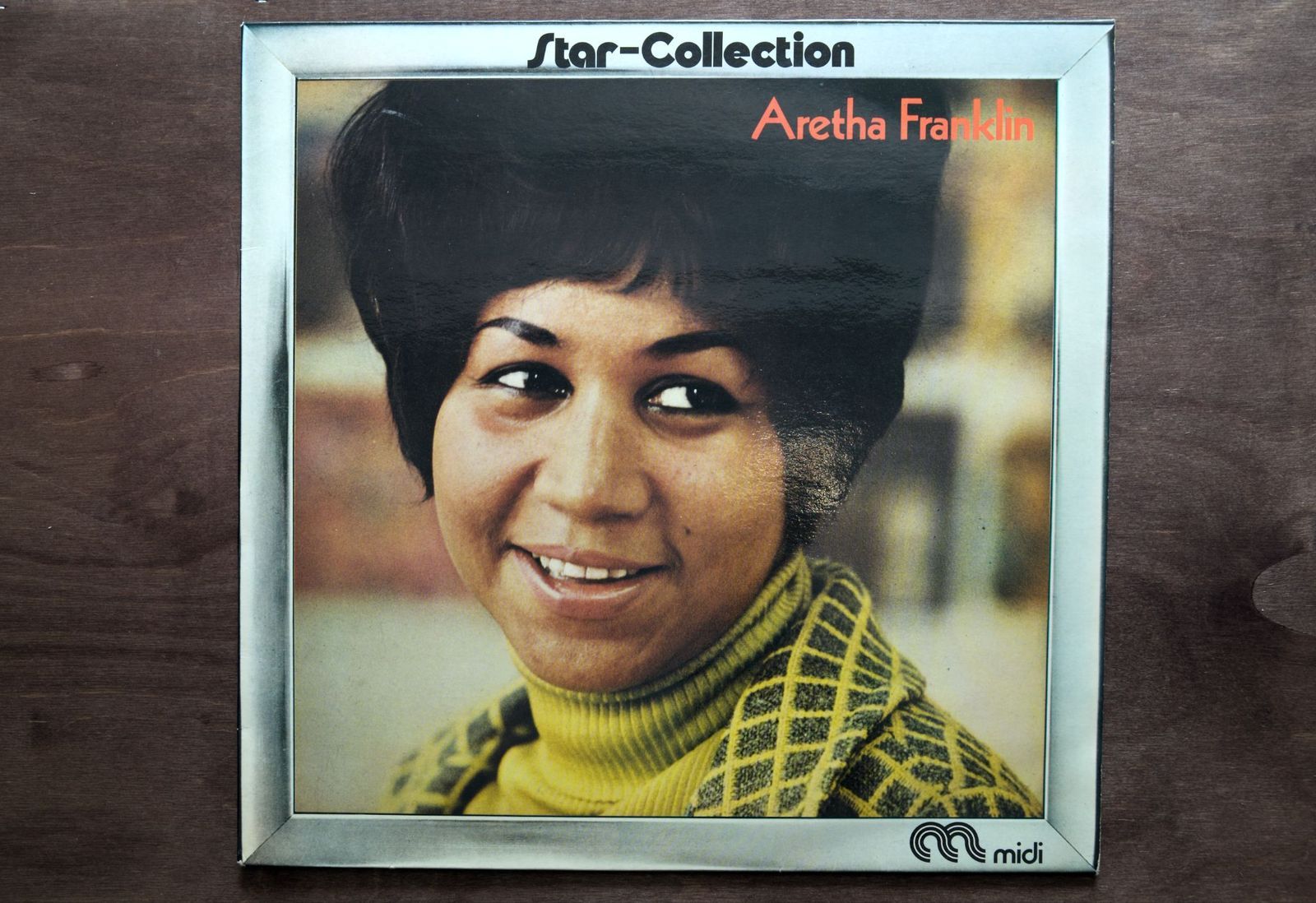
Image: Dorota Szymczyk

Often hailed as the greatest singer of all time, "The Queen of Soul" started singing gospel music in her father’s church before achieving international fame in 1967 with the release of "Respect," her signature song. Aretha’s powerful voice is unmistakable, and her energy on stage will forever be remembered .

Some of her most famous songs are "(You Make Me Feel Like) A Natural Woman," "Chain of Fools," "Think," and "Freeway of Love." On top of her Grammy Awards and millions of records sold, Aretha became the first woman inducted into the Rock and Roll Hall of Fame and received the Presidential Medal of Freedom in 2005.


Geography Geography 3 min read

Natural wonders

These are the 10 most visited national parks in America

Image: Nate Foong

America’s first national park, Yellowstone, was created in 1872 with the intention of protecting the unique landscape and all its environment for future generations. Nowadays, the National Park System includes 63 officially designated national parks among its 433 units (which include recreation areas, monuments, and historic sites as well).

National parks are a popular choice for those who want to enjoy nature, interact with wildlife, and enjoy recreational activities such as hiking, skiing, or kayaking. Let’s have a look at the top ten national parks by the yearly number of visitors.

1
Olympic National Park, Washington (2.9 million visitors)

Image: Jachan DeVol

Located in Washington state, in the Pacific Northwest, this park offers a mix of glaciated mountains, lush rainforests, lakes, rivers, and more than 70 miles of coastline . Established as a national monument in 1909, it was designated a national park in 1938 by President Franklin D. Roosevelt.

2
Joshua Tree National Park, California (3.2 million visitors)

Image: Cedric Letsch

Famous for the Joshua trees that give it its name, this area was designated a national monument in 1936 and a national park in 1994. The park encompasses part of two California deserts —the Mojave and Colorado deserts—and is lined by the Little San Bernardino Mountains in the southwest.

3
Grand Teton National Park, Wyoming (3.4 million visitors)

Image: Toan Chu

Did you know that most of this national park exists thanks to an oil magnate? The park was established in 1929, but it was enlarged when John D. Rockefeller Jr. —who also contributed to many other national parks— secretly purchased surrounding land to be established as a monument. The park gets its name from the tallest peak of the Teton mountain range , and it's famous for its pristine lakes and abundant wildlife.

4
Acadia National Park, Maine (3.8 million visitors)

Image: Ran Ding

Located on the Maine coast, this park was established as a national monument in 1916 and a national park in 1919. Besides the beautiful Atlantic shoreline, Acadia National Park offers granite mountain peaks, forests, lakes, and islands .

5
Yosemite National Park, California (3.8 million visitors)

Image: Aniket Deole

Famous for both its granite peaks and its tall sequoias, Yosemite National Park is located in the Sierra Nevada range in California . Established in 1890, some of its popular features are the El Capitan —a tall rock formation— the Cathedral Peak, and the Sentinel dome.

6
Rocky Mountain National Park, Colorado (4.1 million visitors)

Image: Sonja Wilkinson

Located within the Front Range of the Rocky Mountains, it was established in 1915 by President Woodrow Wilson. Besides its stunning mountain views and alpine lakes, the park is home to the Trail Ridge Road , one of the highest paved routes in the country.

7
Yellowstone National Park, Wyoming, Montana, and Idaho (4.5 million visitors)

Image: Meina Yin

Considered to be the first national park in the world, Yellowstone was established in 1872 and covers part of three different states —Wyoming, Montana, and Idaho. Besides its wildlife and mountain scenery, it is famous for being located in a volcanic caldera and having many geothermal features. The most famous among them is the Old Faithful geyser.

8
Zion National Park, Utah (4.6 million visitors)

Image: Rich Martello

Located in Utah, where the Colorado Plateau, the Great Basin, and the Mojave Desert meet, this national park boasts a hugely diverse ecosystem , with varied plants and animals. Its geography includes mountains, canyons, buttes, mesas, and monoliths, including the famous Zion Canyon. The park was established in 1919.

9
Grand Canyon National Park, Arizona (4.7 million visitors)

Image: Quinn Nietfeld

Centered around one of the most famous landmarks in America , this national park was established in 1908 as a national monument and designated a national park in 1919. The Grand Canyon, carved by the Colorado River in the Arizona desert, was designated a World Heritage Site by UNESCO.

10
Great Smoky Mountains National Park, North Carolina and Tennessee (13.2 million visitors)

Image: A n v e s h

Straddling the North Carolina-Tennessee border, this national park not only includes part of the Great Smoky Mountain range, but also the Blue Ridge Mountains and the Appalachian rainforest. Established in 1934 by Franklin D. Roosevelt, this park is the home of some of the tallest mountains of eastern North America , such as Kuwohi or Mount Guyot.

General General 4 min read

Wave them with pride

Honoring the states: learn about the history of 10 state flags

Image: Tina Chelidze

From the 13 colonies to the consolidation of the 50 states, America’s journey of growth and unity is remarkable. Each state is unique, with distinctive features, mottos, and, of course, flags. Each flag tells a story and honors the rich history and heritage of the state it represents. Among the 50 state flags, we’ve chosen 10 state flags to learn about their design, elements, and the history they represent.

1
New York

Image: Clker-Free-Vector-Images

New York was one of the 13 original colonies and is one of the most populated states today. Its flag, with a vibrant blue in the background, features a sun symbol, one supporter on each side, and the state’s inspiring motto "Excelsior," meaning "ever upward."

The scene in the coat of arms paints a picture of the Hudson River flanked by Liberty on the left, and Justice on the right. Topping it all off is a bald eagle, always majestic, perched atop the world. Powerful, isn’t it?

2
California

Image: Clker-Free-Vector-Images

California was the 31st state to be admitted to the Union (1850) and the history behind its flag has elements present in previous models of banners used by what we know today as Mexico.

This flag was first hoisted in 1846 after American settlers in the territory fought for its independence. Finally, it was recognized as official in 1911.

The flag depicts a grizzly bear —also the official state animal— and a lone red star symbolizing previous attempts to gain independence.

3
Indiana

Image: Clker-Free-Vector-Images

Indiana’s flag was designed by Paul Hadley and approved as the state flag in 1917 after the Daughters of the American Revolution held a flag design contest.

Over the dark blue flag stands a golden torch surrounded by 19 stars . The 13 stars on the outer circle represent the 13 original colonies, while the five stars in the inner circle were added to symbolize the next five states that joined the union, Indiana being the 19th.

The torch? You guessed it right, it represents liberty and enlightenment.

4
Louisiana

Image: Clker-Free-Vector-Images

Blue background abounds among the official state flags and it’s no surprise since it’s one of the national colors. Louisiana’s flag is not the exception.

This flag is the only one to depict a pelican nurturing its offspring in a nest. What is curious about it is that the pelican, an animal that symbolizes devotion to progeny, is crying tears of blood, which represents sacrifice. Underneath, belted in a white ribbon, the state’s motto: "Union, Justice, and Confidence".

5
New Jersey

Image: Clker-Free-Vector-Images

New Jersey’s flag is the only state flag to have a buff background , although it is wrongly depicted as yellow most times. This background color represents the uniform worn by soldiers from New Jersey’s regiments in the Revolutionary War.

In the center of the flag, there is a coat of arms supported by Liberty and the goddess Ceres, representing agriculture. Above the coat of arms, a horse’s head that stands for strength, and, below it, a helmet that symbolizes sovereignty.

6
Arkansas

Image: Clker-Free-Vector-Images

Arkansas’s flag depicts a complex symbolism using well-known elements: a diamond shape, with 25 stars on the outer part, the state’s name in the middle, one star above, and three stars below.

Arkansas was the 25th state to join the union, hence the stars around the diamond. The star over the word "Arkansas" represents the Confederacy to which it was admitted in 1861. The three stars below represent different things: the nations Arkansas belonged to, the Louisiana Purchase, and the fact that it was the third state formed after such purchase. A simple design, yet a complex meaning, don’t you think?

7
Colorado

Image: Clker-Free-Vector-Images

Colorado’s flag is quite simple in its design, although it represents many state elements . For example, the name, a Spanish word that means "red", is symbolized by the red C in the middle. But that’s not all, the letter C also means "columbine" the state flower, represented by the colors blue, yellow, and white. These two last colors also stand for the gold and silver present in the area.

Last, but not least, the letter C stands for "Centennial State" as Colorado became a state in 1876, when the nation was celebrating a century of its independence.

8
Washington

Image: Clker-Free-Vector-Images

Washington is the only state to have a flag with a green background. At the same time, it is the only one to depict a real person . George Washington’s picture is surrounded by a golden ring that reads "The Seal of the State of Washington 1889," the year in which the territory became a state.

The background color refers to the "Evergreen State" while the golden ring represents the wheat areas of the Eastern part of the state.

9
Wyoming

Image: Clker-Free-Vector-Images

This flag was also chosen during a flag design competition held in 1916. It consists of a dark blue background bordered by white and red and, in the center, the silhouette of a bison with the state seal that reads "Great Seal of the State of Wyoming."

Within the seal, the state motto "Equal rights," since Wyoming was the first state to grant women the right to vote. Below the ribbon, a farmer and a cowboy, the main occupations in the state, and two pillars that read "Livestock, mines, grain, oil." And that’s not all, at the bottom, a bald eagle and a star with the number 44, the order of admission to the union.

10
New Mexico

Image: Clker-Free-Vector-Images

Let’s finish this list with what may be the simplest flag of all the 50 states: New Mexico’s. With colors that symbolize the Spanish ruling over the territory, this state flag was adopted in 1925 and it consists of a yellow background with the Zia sun in the center.

The Zia sun is an ancient interpretation of the sun and its design consists of four rays, a sacred number of the Zia. Beautiful, isn’t it?

Explore more American facts

Choose your favorite category!

General
General

As American as apple pie—the very best America has to offer!

Culture
Culture

Delve into the astounding richness of American lore.

Geography
Geography

Hop in and explore vast and diverse American landscapes.

History
History

Discover the key moments that shaped the United States.