Culture Culture 4 min read

Echoes from History

Who said, "I'm losing"? Discover the last words of American figures!
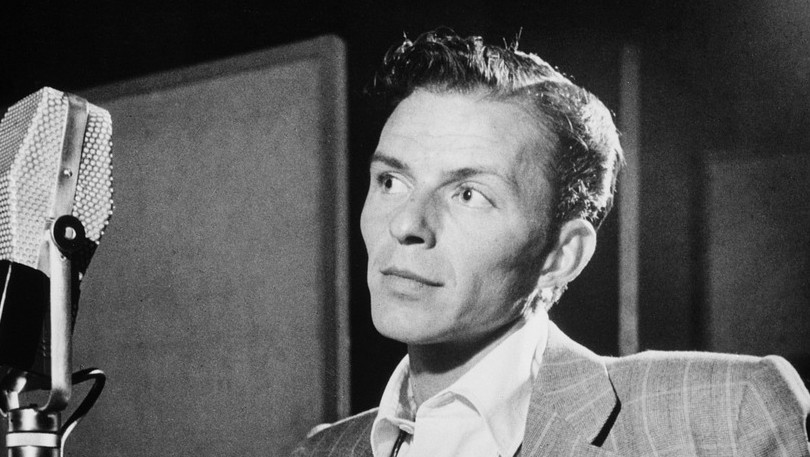
Image: WikiImages

Some icons in our history stood out for their wisdom or wit, even in their final moments. And their clever, wise, profound, funny, or unexpected last words are proof of that. Read on to discover the final words of American figures that will definitely leave you thinking!

1
Frank Sinatra

Image: Dushawn Jovic

Frank Sinatra was one of America’s—and the world’s—most recognized artists, and even today, his name remains an unmistakable icon. We’ll never forget hits like "New York, New York," "My Way," "Fly Me to the Moon," and many others. And his last words were no less poetic than his life: "I'm losing," he allegedly said.

2
Groucho Marx

Image: Alan Hardman

They say humor follows comedians in all aspects of their lives—even to the very end. This was true for the great Groucho Marx, who passed away in 1977 at the age of 86 after bringing laughter to millions during his lifetime. As for his last words, there are two versions of the story, and both are funny! One version claims he said, " Die, my dear? That’s the last thing I’ll do! " while the other has him exclaiming, "This is no way to live!"

3
Buddy Rich

Image: Katherine Hanlon

Bernard "Buddy" Rich was a legendary American drummer renowned for his unique improvisational ability. He passed away at age 69 after brain surgery. Reportedly, his last words were a witty response to a nurse who asked if he was allergic to anything: "Yeah, country music," he said.

4
Donald O'Connor

Image: Nikko Balanial

Some artists never separate themselves from their work. Perhaps that’s what was going through the mind of dancer, singer, and actor Donald O’Connor—famous for his role in Singin’ in the Rain —when heart failure caused his death. His last words were, "I'd like to thank the Academy for my lifetime achievement award that I will eventually get." He still hasn’t received one.

5
George Washington

Image: Priscilla Gyamfi

George Washington will always be remembered as the Father of his Country, who led the Continental Army to victory in the Revolutionary War and served as the first president of the United States. In 1799, George Washington fell ill with respiratory infections that grew more severe over time. He passed away that year at the age of 67 at his Mount Vernon estate. According to historical accounts, his last words were an expression of acceptance: "Tis well."

6
T.S. Eliot

Image: anotherxlife

T.S. Eliot, the famous Missouri-born writer known for works such as The Waste Land and Four Quartets, passed away on January 4, 1965, at the age of 76. It's said that, in his last moments, the poet was reflective and serene, and his last word was the name of his love: "Valerie."

7
Joan Crawford

Image: Noom Peerapong

The great American actress Joan Crawford was much more than a pretty face. Her talent and complex personality were evident throughout her fruitful career, which was crowned with films such as Mildred Pierce . She died in 1977 of a heart attack. According to a biography, while a nurse was praying at her bedside, the actress exclaimed her last words: "Don't you dare ask God to help me!"

8
Humphrey Bogart

Image: JOSHUA COLEMAN

Say Casablanca, The Treasure of the Sierra Madre, and The Maltese Falcon, and one face automatically comes to mind: the iconic Humphrey Bogart. He was 57 years old when he died of cancer in 1957. According to sources, his wife, Laura, was leaving the hospital to pick up their children from school when he uttered his last words: "Goodbye, kid. Hurry back."

9
Eugene O'Neill
Image: Gwen King

Eugene O'Neill, the celebrated American playwright, faced numerous health issues throughout his life, which worsened in his later years. He passed away in 1953 at the age of 65. As one might expect from a talented playwright, his dramatic last words were full of intensity: "I knew it, I knew it! Born in a goddamn hotel room and dying in a hotel room."

10
Emily Dickinson

Image: Gülfer ERGİN

The famous poet Emily Dickinson is one of our country’s literary prides, known for beautiful works such as "Because I could not stop for Death" and "Hope is the thing with feathers." She was born in 1830 and died in 1886 in Massachusetts. Her last words were as poetic as her life: "I must go in, the fog is rising."

History History 4 min read

America through songs

10 songs that preserve America’s greatest stories

Image: Anmol Arora / Chris Robert

Music has always been a way for Americans to reflect on their shared history, both struggles and victories. From heartfelt anthems about our most beautiful landscapes to bittersweet reflections on failed dreams, there is no shortage of melodies that place America at their center. Hum along with us through these 10 unforgettable songs that blend art and history, making us reflect on what was gained and lost along the way.

1
"Born in the U.S.A." – Bruce Springsteen

Image: Jose Antonio Gallego Vázquez

This 1984 anthem by "The Boss" captures the struggles of Vietnam veterans returning to a country that seems to have forgotten them. While often mistaken as a patriotic rally cry, its verses lament economic hardship and societal neglect.

Springsteen's raw vocals and gritty lyrics juxtapose against its rousing melody, making it one of America’s most misunderstood yet powerful songs. The album was a commercial success, solidifying its place in rock history.

2
"American Pie" – Don McLean

Image: Priscilla Du Preez

Released in 1971, McLean’s eight-minute epic recounts America’s loss of innocence following Buddy Holly’s death in 1959. The song’s nostalgic tone and layered storytelling made it an instant classic, with its complex lyrics referencing a myriad of cultural and political events of the 1960s.

While the song is known for its deep, almost cryptic lyrics, McLean chose not to explain its meaning for many years, allowing listeners to interpret it as they saw fit. When asked about the song’s significance, McLean humorously responded, "It means I never have to work again."

3
"We Didn’t Start the Fire" – Billy Joel

Image: Matt C

Another hit song known for its rapid-fire, name-dropping lyrics, "We Didn’t Start the Fire" chronicles major American events and figures from 1949 to 1989—a true history lesson packed into a pop hit.

According to Joel, the idea came from a conversation with a younger friend, who suggested that no era could have been more chaotic than the one they were living in. This prompted Joel to write a song demonstrating that every era has its own share of turmoil, showing that there’s nothing new under the sun.

4
"Take Me Home, Country Roads" – John Denver

Image: Mario Scheibl

This 1971 ode to West Virginia celebrates the beauty of rural America. Denver’s tender vocals and vivid imagery perfectly capture the essence of small-town life and evoke a sense of nostalgia for simpler times.

In the chorus, Denver depicts the roads to West Virginia as a guiding force, leading him back to a place where he truly belongs, affectionately calling the state "Mountain Mama." The song has since become a symbol of Appalachian pride, performed at countless events, and even adopted as an official state anthem.

5
"Paradise" – John Prine

Image: Albert Hyseni

Prine’s 1971 bittersweet ballad tells the story of a small Kentucky town destroyed by coal mining. Although Prine was from Chicago, his family hailed from the Appalachian region, specifically the town of Paradise, Kentucky.

Large-scale strip mining from the 1950s to the 1970s wiped Paradise off the map, as thousands of acres were stripped. During that time, regulation of strip mining was minimal at best, and even today, the environmental and societal scars of this practice are still visible.

6
"Casey Jones" – Mississippi John Hurt

Image: Tim Wildsmith

"The Ballad of Casey Jones," also known as simply "Casey Jones," is a traditional American folk song about railroad engineer Casey Jones and his death while driving the train he was operating.

Although Mississippi John Hurt isn’t the only artist to cover this subject, his version neatly and beautifully sums up the story of this almost forgotten American hero — a heroic railroad engineer who sacrificed his life to save passengers during a train crash in 1900.

7
"Pancho and Lefty" – Townes Van Zandt

Image: Cemrecan Yurtman

Though originally written by Van Zandt, Willie Nelson and Merle Haggard’s 1983 rendition made this tale of two outlaws iconic. It tells the mysterious story of Pancho, a legendary gunslinger betrayed by his partner Lefty.

One reason the song remains so enduring may be its open-ended lyrics, which invite listeners to imagine the untold parts of the story. Plus, who doesn’t love a song about outlaws on the run in the good old days?

8
"The Night They Drove Old Dixie Down" – The Band

Image: Rick Lobs

This 1969 song tells the story of a Confederate soldier reflecting on the fall of the South during the Civil War. Its deeply human perspective makes it stand out, resonating with empathy on the subjects of war and its aftermath.

One of the group's most successful songs, its carefully crafted lyrics bring an overwhelming human sense of history, reminding us of the suffering of those who were quickly forgotten after the war.

9
"Pastures of Plenty" – Woody Guthrie

Image: Samantha Sheppard

This 1941 song tells the story of Dust Bowl migrants seeking work in California. Guthrie's soulful lyrics seek to capture their resilience amid poverty and displacement.

Written as a tribute to these migrant workers, the song evokes the world described in John Steinbeck’s The Grapes of Wrath . Curiously, the tune is based on the ballad "Pretty Polly," a traditional folk song from the British Isles that was also popular in the Appalachians.

10
"Wabash Cannonball" – Roy Acuff

Image: Paul Arky

An anthem of railroad culture, "Wabash Cannonball" follows the predicaments of a mythical train of the same name. There are many theories about the origin of "The Wabash Cannonball." Some believe it originated in American hobo culture, serving as a "death coach" that appeared at the death of a hobo to carry his soul to its reward.

Another theory suggests the song is based on a popular tall tale about Cal S. Bunyan, Paul Bunyan's brother, who supposedly constructed a railroad so the train could travel so fast it arrived at its destination before it even departed.

Culture Culture 6 min read

From pages to heart

Jay Gatsby or Tom Sawyer? 10 unforgettable American literary characters!

Image: Chris Lawton

Whether you're a book lover or not, there are certain books that everyone has read, and they've touched the hearts of many Americans. Between meticulous descriptions, unique stories, and unforgettable dialogues, these books have something that particularly stands out: their characters . From classics like Huckleberry Finn and Tom Sawyer to iconic names such as Jay Gatsby and Atticus Finch, these literary characters have become a fundamental part of American culture , and for excellent reason. Today, we're celebrating 10 beloved characters from American literature!

1
Huckleberry Finn

Image: Pedro Forester Da Silva

Mark Twain has given us some of the most iconic characters in our country's literature, and Huckleberry Finn is one of them.

He stole our hearts as the main character of The Adventures of Huckleberry Finn (1884), where his experiences and charm made him unforgettable. Adventurous, independent, rebellious (rightly so), and very smart, "Huck," as he is called in the novel, surprises us with reflections and critiques on the society of his time.

Huck not only escapes an abusive home but also makes an incredible journey down the Mississippi River in search of freedom. Along the way, he forms deep connections with those he meets, making it impossible not to feel attached to him.

2
Atticus Finch

Image: Scott Graham

When discussing classics of American literature, it is impossible not to include in the list the Pulitzer Prize-winning novel To Kill a Mockingbird (1960) by Harper Lee.

And if there's one thing this novel has to offer, it's some unforgettable characters. At the center of it all is none other than Atticus Finch. Atticus is described as an honorable lawyer with a profound commitment to justice and equality, serving as a moral beacon in a society defined by its lack of both. He always stands up for his principles , even when they go against the dominant norms.

One of his most iconic lines in the novel is a phrase that defines him very well: "The one thing that doesn't abide by majority rule is a person's conscience."

3
Holden Caulfield

Image: Hiroyoshi Urushima

J.D. Salinger's novel The Catcher in the Rye (1951) is undoubtedly a landmark of American literature. And one name that has stayed with us forever is Holden Caulfield, the novel's unforgettable protagonist.

With his characteristic red hat , Holden Caulfield is the definitive teenager: rebellious, curious, somewhat cynical , selfish, and mischievous. As he roams New York City after being expelled from several prep schools, we are witnesses of his intense and often smartly critical thoughts and experiences. However, despite his disillusionment with the world, Holden demonstrates a deep sensitivity .

4
Jay Gatsby

Image: Hardini Lestari

Published almost 100 years ago, F. Scott Fitzgerald's The Great Gatsby (1925) has become one of our classics , portraying life during the Roaring Twenties and inspiring many film adaptations. Jay Gatsby, with his ambition, idealism, and charisma, gets all the attention in this novel as an enigmatic character who is proof of the majesty of its author.

Much like Dante's Beatrice, the character of Daisy Buchanan inspires in Jay Gatsby an almost obsessive love that drives him to make key decisions and take powerful actions throughout the novel. It is this passion that fuels his rise to wealth and eventually leads to his downfall.

5
Tom Sawyer

Image: Lawrence Chismorie

Endlessly reproduced in other art forms, Tom Sawyer by Mark Twain is one of the most representative characters of American literature.

The first and most famous book featuring the Missouri boy is, of course, The Adventures of Tom Sawyer (1876), but we also see him in the sequel named after his friend, a character we have already talked about: The Adventures of Huckleberry Finn (1884).

Despite his mischievous nature and penchant for getting into trouble with his tricks and pranks, Tom is a clever and independent boy who constantly seeks out new adventures.

6
Scarlett O'Hara

Image: Lizelle De Wit

Gone with the Wind (1936) by Margaret Mitchell is a title everyone has heard of, whether you've read the book or not. Its characters have also become famous beyond the pages of this iconic novel.

One of them is none other than Scarlett O'Hara, the central character of this story. The novel portrays the American South during and after the Civil War , where Scarlett O'Hara, shaped by her circumstances, appears as a self-centered and spoiled character. However, as the story progresses, Scarlett evolves, showcasing her tenacity , determination, and protective spirit when she sets her mind to something. You probably remember the iconic line, "Tomorrow is another day."

7
Dean Moriarty

Image: Rémi Jacquaint

A fundamental member of the so-called Beat Generation , Jack Kerouac gifted us with one of the most famous novels in American literature: On the Road , published in 1957.

One of his most remembered characters is Dean Moriarty, who was based on a real person , Neal Cassady, a close friend of the author. Moriarty embodies some of the most outstanding characteristics of the Beat Generation, portraying an enthusiastic, adventurous, free-spirited, energetic, and charismatic character. With such a personality, it's no surprise that Dean Moriarty creates unforgettable moments and becomes an important figure in the story.

8
Hester Prynne

Image: Chris LaBarge

Hester Prynne, from Nathaniel Hawthorne's acclaimed novel The Scarlet Letter (1850), is undeniably one of the earliest and most significant female characters in our country's literature.

Hester defies the norms of her time by having an illegitimate child, making her a target of dramatic criticism and punishment from her contemporaries. Set in 17th-century Puritan Massachusetts, the story unfolds in a society defined by strict rules and oppression. In this context, Hester Prynne appears as a strong woman who endures the severe judgment of her time with courage.

Despite her harsh circumstances, Hester Prynne is described as a powerful, dignified, and empathetic character with extraordinary sensitivity.

9
Santiago

Image: Anastasiya Chervinska

Another undisputed classic is Ernest Hemingway's The Old Man and the Sea , published in 1952.

Santiago is the central character in this novel, which explores various aspects of the human condition in depth. Santiago, the old man of the title, is a fisherman who has gone many days without catching a single fish. Faced with diverse challenges and, above all, his own physical limitations , Santiago is described as a strong character of great constancy , dignity, and resilience who has a strong bond with the sea and its mysteries.

The character's perseverance shines through in his battle with the giant marlin , which stands as one of the most important moments in this story.

10
Ishmael

Image: Richard Sagredo

Continuing our journey along the sea, let's talk about one of the most iconic narrators in American literature: Ishmael. His name is perpetuated in the very first line of Herman Melville's great novel, Moby-Dick (1851). Who could forget the iconic opening: "Call me Ishmael" ?

Ishmael serves as the first-person narrator of one of the most memorable tales in literature, a sailor distinguished by his profound, analytical, and reflective personality.

Though he shares few details about his background or appearance, Ishmael masterfully narrates the events aboard Captain Ahab's whaling ship , giving us a unique perspective on the events.

Explore more American facts

Choose your favorite category!

General
General

As American as apple pie—the very best America has to offer!

Culture
Culture

Delve into the astounding richness of American lore.

Geography
Geography

Hop in and explore vast and diverse American landscapes.

History
History

Discover the key moments that shaped the United States.