General General 4 min read

A guide to America's most unconventional museums

The bizarre American museums you never knew existed (but need to visit)
Image: Flickch

Forget the Louvre and the Smithsonian. If you're craving something a little more... unusual on your next museum outing, America has you covered. From pickles to parasites, these wonderfully weird institutions prove that literally anything can be museum-worthy if you're passionate enough about it.

1
The Museum of Bad Art (Massachusetts)

Image: Jerry Wang

Founded in 1994, MOBA showcases art "too bad to be ignored," featuring paintings so spectacularly awful they circle back to being captivating . We're talking off-kilter portraits, baffling subject matter, and techniques that defy explanation.

The collection includes masterpieces like "Lucy in the Field with Flowers," featuring a grandmother dancing in a meadow while wearing what might be a nightgown. Each piece comes with a tongue-in-cheek description that treats these disasters with the same reverence the Met gives to Rembrandts.

2
The International Banana Museum (California)

Image: Deon Black

This museum holds the Guinness World Record for the largest collection of banana-related items . With over 25,000 banana things crammed into one yellow-painted space, it's exactly as bonkers as it sounds. Banana phones, banana lamps, banana art—if you can slap a banana on it, it's here.

The museum's motto is "Yes, we have no bananas... we have more!" which pretty much sums up the gloriously ridiculous vibe.

3
The Museum of Broken Relationships (California)

Image: Kelly Sikkema

This surprisingly poignant museum displays donated objects from failed romances , each accompanied by a brief story from the heartbroken donor. Started in Croatia and now with an outpost in Los Angeles, it transforms personal pain into shared human experience. You'll find everything from wedding dresses to an actual prosthetic leg, each item representing a relationship that didn't quite make it.

What could be depressing is actually oddly uplifting: there's humor, anger, relief, and occasionally shocking pettiness on display. One exhibit features an axe someone used to destroy their ex's furniture, piece by therapeutic piece.

4
The International Cryptozoology Museum (Maine)

Image: Jon Sailer

This Portland museum is dedicated to creatures that may or may not exist , from Sasquatch and the Loch Ness Monster to the Chupacabra. Founded by cryptozoologist Loren Coleman, it houses hair samples, plaster casts of mysterious footprints, and endless speculation about what's lurking in our forests and lakes.

5
The Mustard Museum (Wisconsin)

Image: Pedro Durigan

Wisconsin's National Mustard Museum celebrates that yellow squeeze-bottle staple with 6,000+ varieties of mustard from all 50 states and over 70 countries . Curator Barry Levenson started collecting after his beloved Boston Red Sox lost the World Series in 1986, and a voice in a grocery store told him to pursue mustard instead. As one does.

The museum offers free tastings because, apparently, there's a whole world of mustard beyond French's that many of us have been missing. From champagne mustard to chocolate mustard to varieties with names you can't pronounce, it's a full-on condiment education.

6
The Museum of Clean (Idaho)

Image: JESHOOTS.COM

Spanning 75,000 square feet, it chronicles the history of cleaning from ancient times to modern day . It features vintage vacuum cleaners, washing machines, and cleaning products that would horrify today's safety inspectors.

The museum makes a compelling case that cleaning technology has shaped civilization more than we realize. You'll see how our ancestors scrubbed, swept, and sanitized before electricity, and gain a weird appreciation for your Swiffer.

7
The Mutter Museum (Pennsylvania)

Image: Tibor Dányi

This Philadelphia institution houses medical oddities, anatomical specimens, and antique medical equipment that can look more like torture devices. Think preserved organs, skeletal anomalies, and a wall of skulls that's both educational and nightmare-inducing.

The museum's most famous resident is the "Soap Lady," whose body turned into a soap-like substance after burial. There is also a sample of Albert Einstein’s brain tissue on display, because why not?

8
The American Toby Jug Museum (Illinois)

Image: agmclellan

Toby jugs are those quirky ceramic pitchers shaped like people's heads and bodies, usually depicting jolly characters in tricorn hats. This Evanston museum houses over 8,000 of them, representing the world's largest collection of these peculiar drinking vessels .

The collection spans centuries and includes rare jugs worth thousands of dollars alongside kitschy modern versions. You'll learn that Toby jugs have depicted everyone from Winston Churchill and Sherlock Holmes to characters from literature and politics.

9
The Spam Museum (Minnesota)

Image: ZHIJIAN DAI

This 14,000-square-foot museum in Austin, Minnesota, celebrates the canned pork product that fed armies and annoyed email users everywhere . Interactive exhibits let you pretend to work on the Spam production line, and you'll learn more about processed meat than you thought possible.

10
The International UFO Museum and Research Center (New Mexico)
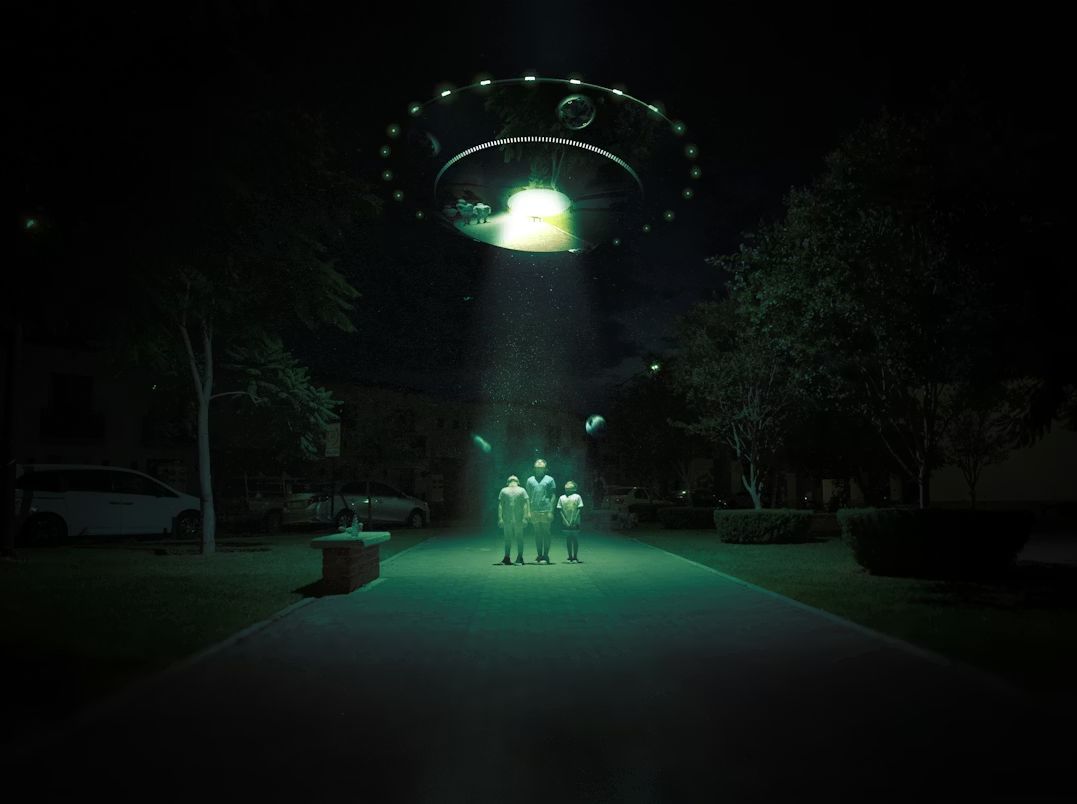
Image: Danie Franco

Located in Roswell, the site of the most famous alleged UFO crash in history, this museum is ground zero for alien conspiracy theories. Founded by people who claim firsthand knowledge of the 1947 incident, it presents eyewitness accounts, declassified government documents, and enough speculation to keep you wondering all night .

Beyond Roswell, the museum explores UFO sightings worldwide, alien abduction stories, and government cover-up theories that range from plausible to completely bonkers.

Geography Geography 5 min read

Streets ahead

City hearts: The 10 most iconic neighborhoods in America

Image: Breno Assis

America’s history comes alive in its bustling streets and ever-expanding urban landscapes. But what truly pumps life into the heart of these vibrant cities are their neighborhoods—where people meet, live, work, and thrive. These communities are as diverse as our nation's cultural roots, offering a window into the inclusiveness and energy that define American society. From the jazz beats of New Orleans to the legendary avenues of Harlem, let’s take a journey through 10 iconic American neighborhoods that—each in its own way—embody the spirit of our country!

1
French Quarter – New Orleans, LA

Image: João Francisco

Also known as the Vieux Carré ("Old Square" in English), the French Quarter is the oldest neighborhood in New Orleans. Established in 1718 by the city’s founders, the neighborhood is now famous for its vibrant music scene—particularly jazz, which was born in its streets and clubs.

Architecturally, the French Quarter is characterized by a blend of Spanish and French colonial influences, with wrought-iron balconies and colorful buildings lining the streets. Jackson Square and St. Louis Cathedral remain central landmarks, standing as reminders of the city’s rich European history.

2
Harlem – New York City, NY

Image: John Money

Harlem is a neighborhood in Upper Manhattan known for its African American culture and rich immigration history. Originally founded as a Dutch settlement around 1658, it was named after the city of Haarlem in the Netherlands. Harlem's complex history has been defined by a series of economic boom-and-bust cycles, with significant population shifts accompanying each cycle.

Successive waves of immigration populated its streets with people from all over the world, including Jewish and Italian Americans in the 19th century and African American residents in the 20th century. The Harlem Renaissance of the 1920s and 1930s cemented the neighborhood's fame, giving rise to figures like Louis Armstrong and Duke Ellington, and helping to shape American popular culture.

3
Beverly Hills – Los Angeles, CA

Image: David Vives

Although technically a suburb of Los Angeles, with distinct neighborhoods of its own, Beverly Hills is still a somewhat closed-knit community, known for its opulent homes and celebrity residents. Originally settled in 1828, the area began as an agricultural community centered around Rancho Rodeo de las Aguas, a Mexican-era land grant.

In 1914, a group of investors, initially searching for oil, discovered water instead and decided to develop the area into a town. By the 1920s, Beverly Hills had become synonymous with wealth and luxury, attracting movie stars like Douglas Fairbanks and Mary Pickford, who built lavish estates and cemented the area as a celebrity haven.

4
North End – Boston, MA

Image: Zoshua Colah

Boston's North End is the city’s oldest residential neighborhood, dating back to the 1630s. It played a crucial role in the American Revolution, with notable figures like Paul Revere building their homes there. The Old North Church, where the famous "One if by land, two if by sea" signal was sent, also stands as a landmark of the city’s revolutionary heritage.

The narrow streets and historic buildings offer visitors a glimpse into colonial America, making it one of Boston’s top tourist destinations. The North End is also renowned for its Italian heritage, which took root in the early 1900s, and for hosting the annual Feast of St. Anthony, a tradition dating back over a century.

5
Hollywood – Los Angeles, CA

Image: Jeremy Bishop

Hollywood is arguably the world’s most famous neighborhood when it comes to film and entertainment. Founded in the late 1800s, it quickly became the movie capital of the world with the establishment of the Nestor Film Company in 1911, the first of many studios to call Hollywood home.

Its most iconic landmark, the Hollywood Sign, was originally created in 1923 as an advertisement for a real estate development but has since evolved into a universal symbol of the film industry. While many production studios have relocated over the years, Hollywood remains synonymous with celebrity and filmmaking. Each year, millions of visitors flock to the Hollywood Walk of Fame and explore the streets where countless film legends started their careers.

6
Little Italy – New York City, NY

Image: Alex Haney

Little Italy, located in lower Manhattan, was established in the late 19th century by Italian immigrants who brought their culture, cuisine, and traditions to New York. The neighborhood quickly became a vibrant center of Italian-American life , with bustling markets, restaurants, and festivals.

Though urban development has reduced the original neighborhood to just five blocks, Little Italy still retains its old charm. Iconic spots like Lombardi’s, America’s first pizzeria, continue to draw crowds, while the annual Feast of San Gennaro—a tradition since 1926—celebrates the rich heritage of the community.

7
Chinatown – San Francisco, CA

Image: Kevin Vision

San Francisco’s Chinatown is not only the oldest but also one of the largest Chinese enclaves in North America —and even outside of Asia. Established in 1848, it holds significant historical and cultural importance, playing an important role during the California Gold Rush and the construction of the Transcontinental Railroad.

Today, Chinatown is celebrated for its vibrant markets, distinctive pagoda-style architecture, and lively Chinese New Year festivities. Spanning 24 blocks, it remains a crucial cultural and commercial hub, drawing both tourists and locals with its authentic cuisine and historic landmarks.

8
Hyde Park – Chicago, IL

Image: Manta X

Best known as the home of the University of Chicago, Hyde Park has long been a hub for intellectuals, politicians, and social movements on Chicago’s South Side. Originally developed as a retreat for the city's affluent residents, the neighborhood is also known for its numerous museums and religious institutions, including the famous Museum of Science and Industry.

Hyde Park was also the site of the 1893 World's Columbian Exposition, where millions of visitors were introduced to groundbreaking innovations, such as the first Ferris wheel. Today, it remains one of Chicago’s most diverse neighborhoods, having been home to notable figures like President Barack Obama.

9
Beacon Hill – Boston, MA

Image: Leslie Cross

Beacon Hill is one of Boston’s most picturesque neighborhoods, known for its Federal-style row houses and gaslit streets. Established in the early 1800s, it quickly became a haven for the city's elite, featuring homes designed by notable architects of the era, including Charles Bulfinch.

Beacon Hill also played a significant role in the abolitionist movement, with prominent figures like Frederick Douglass residing in the area. Adding to its architectural charm, the Massachusetts State House, also designed by Bulfinch, crowns Beacon Hill with its stunning golden dome.

10
Little Havana – Miami, FL

Image: Kian Lem

Little Havana in Miami is the heart of Cuban-American culture in the United States. Home to Cuban exiles and Latin American immigrants, the neighborhood's main street, Calle Ocho, is famous for its colorful murals, Cuban cafés, and lively music. Each year, the Calle Ocho Festival, part of the larger Carnaval Miami celebration, draws thousands of visitors.

A symbol of cultural integration, Little Havana features several significant landmarks, including the historic Tower Theater, which has served as a cultural bridge for newly arrived immigrants by offering films in both English and Spanish.

General General 4 min read

Do you enjoy walking?

A trekker's paradise: Explore 10 amazing American trails

Image: Holly Mandarich

German philosopher Friedrich Nietzsche once said: "All truly great thoughts are conceived by walking." And, while this might be a bit of a metaphorical statement, there is some practical truth to it, as any hiker can testify. With an almost infinite array of trails, America is filled with opportunities to wander through its natural parks and ponder about life or simply enjoy it. The following ten are but a small sample of these trails and we encourage you to look for one near your area and, if possible, maybe even go for a hike yourself!

1
Appalachian Trail, Shenandoah National Park, Virginia

Image: Wes Hicks

Yes, the entire Appalachian Trail is extremely long. Actually, it is over 2,190 miles long. But, the Shenandoah National Park, 75 miles from Washington, D.C., has over 500 miles of hiking trails, including more than 100 miles of the Appalachian Trail ; You can tackle a small section in a day’s hike.

The park is the perfect place to explore the great outdoors in Virginia and it consists of 200,000 acres of protected land that are home to animals like deer and songbirds.

2
Burroughs Mountain Trail, Mount Rainier National Park, Washington

Image: Scott Longerbeam

More than 260 miles of maintained trails lead visitors through peaceful old-growth forests, river valleys, and subalpine meadows on the Mount Rainier National Park in Washington state.

The park is home to one of the most iconic mountains in the world: Mount Rainier rises 14,410 feet above sea level straight into the clouds. Check out the Burroughs Mountain Trail for stunning views of mountain peaks and the alpine landscape.

3
Rim Trail, Bryce Canyon National Park, Utah

Image: Tim Golder

Bryce Canyon National Park in Utah is home to the largest collection of odd-shaped pillars of rock left standing from the forces of erosion, known as hoodoos. Many of them can be viewed from the 5.5-mile Rim Trail .

The park also offers hikes for all levels, including backcountry options for those looking for a little added adventure and guided Full Moon Hikes for night-owl explorers.

4
Upper Emerald Pools Trail, Zion National Park, Utah

Image: Jamie Hagan

A park filled with hiking trails for all experience levels, Zion National Park, Utah's first national park , is famous for its massive cream, pink, and red sandstone cliffs, and freestanding arches.

Hikers should attempt to visit at sunrise and sunset to enjoy the breathtaking views of sunlight splashing off the cliffs and into the rivers below. And if it is an approachable trail they’re looking for, the Upper Emerald Pools Trail is an easy hike leading to sparkling waterfalls.

5
Grinnell Glacier Trail, Glacier National Park, Montana

Image: Aaron Clinard

Over 700 miles of hiking trails, including more than a dozen options around the Many Glacier area , like the popular Grinnell Glacier Trail , can be found at the Glacier National Park.

Lucky visitors can spot some of the park's varied wildlife, including 71 species of mammals, from the tiny pygmy shrew to one of the largest remaining grizzly bear populations in the country.

6
Charlies Bunion Hike, Great Smoky Mountains National Park, Tennessee and North Carolina

Image: Leslie Cross

The Great Smoky Mountains are world-renowned for its animal and plant life diversity, as well as for its miles of official and backcountry trails with views of waterfalls and old-growth forests.

The Great Smoky Mountains National Park spreads across two states and offers plenty of activities for hikers. For a particularly breathtaking vista, hike to Charlies Bunion, a popular outcropping along the Appalachian Trail.

7
Billy Goat Trail, Chesapeake and Ohio Canal National Historical Park, Maryland

Image: Eduardo Gutierrez

Considered a moderate-difficulty trail, Maryland's Billy Goat Trail has three sections totaling eight miles, though portions are strenuous and challenging . Outdoor enthusiasts can experience the raging Potomac River and the rocky crags of Great Falls. The hike is very popular, so early hours are advisable to beat the crowds.

8
Chautauqua Trail, Chautauqua Park, Colorado

Image: Leslie Cross

An old park, Chautauqua Park in Boulder, Colorado, has been around since 1898. The 80-acre park has miles of hiking, much of which are uphill . But there are less strenuous hikes, too, like the Chautauqua Trail, which offers views of the Flatiron mountains and Boulder.

9
Canyon to Rim Loop, Smith Rock State Park, Oregon

Image: Alex Diaz

Hikers of every level can find an appropriate trail at Smith Rock State Park, in Oregon. These vary in length and difficulty, but they all offer beautiful views of the Central Oregon landscape**.**

The park offers hundreds of miles of hiking and biking trails, and visitors may spot golden eagles, prairie falcons, river otters, and beavers throughout the day.

10
Petroglyph Wall Trail, Red Rock Canyon National Conservation Area, Nevada

Image: Kristin Melville

As visitors to the Red Rock Canyon National Conservation Area can testify, not all short-distance hikes are the same. Many are labeled difficult, and it can take four to five hours to complete a five-mile hike.

Along the different routes, desert wildlife can be spotted, including lizards, toads, and hawks. One of the park's most beginner-friendly hikes is the 0.2-mile Petroglyph Wall Trail , where centuries-old rock art can be appreciated.

Explore more American facts

Choose your favorite category!

General
General

As American as apple pie—the very best America has to offer!

Culture
Culture

Delve into the astounding richness of American lore.

Geography
Geography

Hop in and explore vast and diverse American landscapes.

History
History

Discover the key moments that shaped the United States.