General General 4 min read

What if it rains?

Retro but modern: 10 great drive-in theaters in America

Image: Jeff Watson

Few things are as quintessentially American as the drive-in theater. While it was born in the early 1930s, these venues exploded in the 1950s and are deeply associated with that era. Though these establishments have dwindled since their heyday, many are still going strong all over the country—and even the world. From the second-oldest drive-in theater in the country to a venue that invites viewers to watch Jaws from a huge pool, outdoor cinema continues to attract new and old audiences every night. Take a look at the following 10 and decide if you want to visit one!

1
Stars & Stripes Drive-In, Texas

Image: Josh Sanabria

The first entry on our list is a drive-in located in New Braunfels, Texas , that brings a breath of fresh air to the industry, having opened its doors as recently as 2003. It features three screens, all of which play double features on weekends, as well as a ’ 50s-themed café snack bar with an extensive menu, serving everything from Frito Pie and Funnel Cakes to Mexican sandwiches and box dinners, such as steak fingers served with fries, corn fritters, and gravy.

2
Shankweiler’s Drive-In Theatre, Pennsylvania

Image: David Clode

The oldest operating drive-in theater in the country, Shankweiler’s opened in 1934 in Orefield and operates year-round—even in those tough Pennsylvania winters. The theater shows double features on weekends, has a decent snack bar, and even offers visitors two drive-up party rental spaces , each of which holds about 15 people, in case you were wondering if such a thing was possible.

3
Harvest Moon Twin Drive-In Theatre, Illinois

Image: Tim Mossholder

Don’t let its 70 years of existence fool you, the Harvest Moon Twin Drive-In has one of the most modern and environmentally friendly features you could possibly find in an establishment of this kind: it is the country’s only wind-powered drive-in theater. The wind turbines power the theater’s screens, speakers, projectors, and snack bars. Additionally, the venue uses LED lighting and encourages recycling among its visitors.

It’s not often that one sees such a commitment to future generations from an establishment as old as this one!

4
Fairlee Motel, Vermont

Image: Manuell Tony

Imagine going to the movies and being able to sleep right there if you are too tired. That’s exactly what the Fairlee offers. A combination drive-in and motel, this venue lets you watch a show and then stay overnight. The theater and the roadside motel have both been open since 1950.

The snack bar comes especially recommended by locals for its burgers made with beef raised on the property owners’ farm.

5
Park Place Drive-In Theater, Virginia

Image: Pixabay

If you’re in Marion, Virginia , and have a craving for a round of mini-golf, the Park Place Drive-In is a sure bet. This one-stop shop for family entertainment offers not only a night out at the movies but also access to an ice cream shop and a mini-golf course . Play 18 holes of putt-putt, grab a scoop or two of Hershey’s Ice Cream, and then head over to the theater for a movie.

6
Rubidoux Drive-In, California

Image: RDNE Stock project

If a 1948 Art Deco-themed screen wasn’t appealing enough, the Rubidoux Drive-In also featured a petting zoo and a miniature railroad , among other family-oriented attractions. Alas, those two features have closed for the time being. Still, the drive-in theater offers plenty of amenities for families to enjoy on their visits.

The theater features two additional screens, aside from the Art Deco one, each of which plays double features on weekends.

7
Bengies Drive-In Theatre, Maryland

Image: Jeremy Yap

If you’ve ever wondered how big the biggest drive-in cinema screen in the country is, this one takes the prize. Bengies Drive-In has a screen that measures 52 by 120 feet, making it the largest in the United States.

This is an important feature, not just because of the cool factor, but also because it means movies can be shown at their full theatrical size, allowing viewers to see all the details in the corners of the screen, just as the filmmakers intended.

8
Wellfleet Drive-In, Massachusetts

Image: Maxim Benkendorf

A flea market, an 18-hole mini golf course, a cocktail bar, and the biggest screen in the New England area await you at Cape Cod’s Wellfleet, a local institution that has been entertaining moviegoers since 1957.

In recent years, the projection system was upgraded to digital with Dolby Digital sound, making the experience even more enjoyable for moviegoers.

9
Alamo Drafthouse Cinema, Texas

Image: Noom Peerapong

This one is special, even among drive-in theaters. Alamo Drafthouse offers a unique screening of the classic thriller Jaws , where moviegoers watch the film from inner tubes on Lake Travis . This annual tradition provides a creative and immersive way to rewatch this iconic movie from a truly unique perspective. Would you dare to try it?

10
The Mahoning Drive-In Theater, Pennsylvania

Image: Christian Wiediger

Embracing the idea that drive-in theaters are a nostalgic experience, the Mahoning dedicates its three screens to weekend-long themed festivals . For example, Zombie Fest takes place over three nights and screens cult horror films, with overnight camping allowed.

Second Chance Weekend features critically panned films that deserve a closer look, such as a pairing of Howard the Duck with Masters of the Universe . Last but not least, Bite Night showcases 35mm prints of Jaws and Jurassic Park , and in July, the theater celebrates Christmas in July with holiday films.
General General 4 min read

What were you thinking?

Appalling misconceptions: Facts about the US that many people get wrong

Image: Mick Haupt

Some people believe that the Liberty Bell cracked upon its first toll. That would speak of a very poorly built bell, don’t you think? Others believe that the Declaration of Independence was signed by all 56 delegates on the same day. Another common misconception! And can you believe that some people thought the faces on Mount Rushmore were random profiles carved naturally by some wind? Let’s look into myths about the US, ranging from understandable to appalling, and see if you fell for any of these!

1
There are 52 states in the U.S.

Image: Chris Lawton

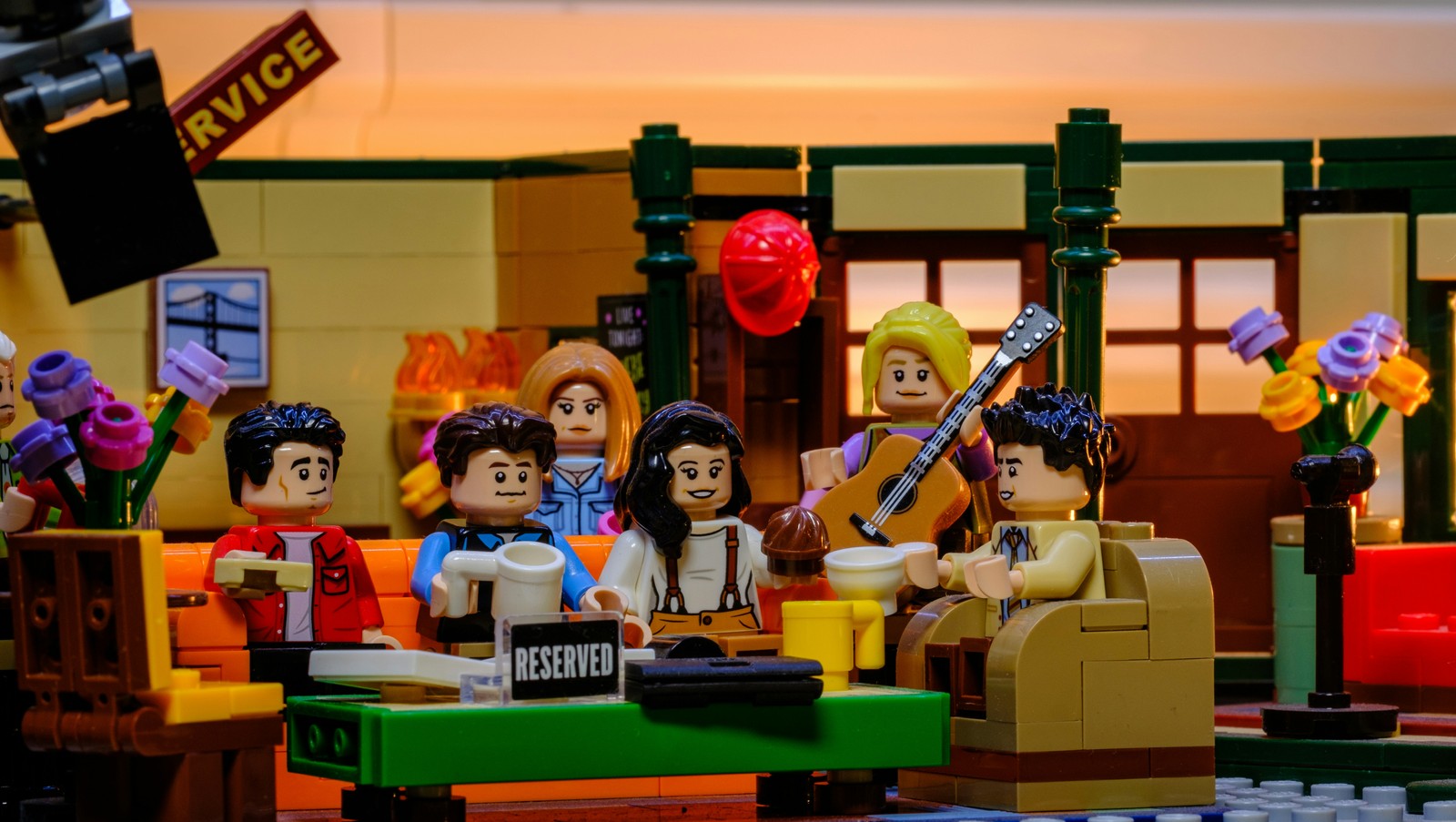
Remember that Friends episode where the characters were racing to write down as many state names as they could? When they asked Joey how many he’d gotten, he leaned back and proudly announced: "Fifty-six."

While not many Americans would share Joey’s confusion, believe it or not, some people are lost about the exact number . Many, when asked, reply that the country contains 52 states! Nope, it’s still just 50. People often mistakenly include Puerto Rico and Washington, D.C. as states.

2
The Declaration of Independence was signed by everyone on July 4th, 1776

Image: Ryan Wallace

You’ve seen the paintings—quills raised, scroll unfurled, patriotic ambiance in full bloom. You probably pictured the famous document (scribbled on dramatically aged paper) being passed around the table and filled with names.

But reality was less cinematic . While July 4, 1776, is when the Declaration was adopted, only a few signatures made it on the page that day. Most of the 56 signers added their names over the course of weeks, and some not until August... or even later!

3
The Founding Fathers were all old men with powdered wigs

Image: The New York Public Library

You’d think the Founding Fathers were all 60-something aristocrats in wigs , sitting by candlelight. But many were in their twenties and thirties—Alexander Hamilton was just 21, and James Madison 25. Wigs weren’t as common as Hollywood would have you believe. Most preferred their natural hair, styled with a bit of 18th-century flair.

4
The U.S. Constitution was signed on July 4th, 1776

Image: Tara Winstead

It’s easy to jumble up America’s important dates , but this one’s a whopper. July 4th marks the adoption of the Declaration of Independence, not the Constitution. The Constitution came along in 1787, over a decade later, and was signed on September 17.

5
The Statue of Liberty belongs to New Jersey

Image: Avi Werde

You’d be right to observe that Lady Liberty is surrounded by Jersey’s waters. But there’s a caveat: Liberty Island itself is federal property administered by the National Park Service. And while the island is closer to the shores of New Jersey, it remains under the sovereignty of New York State .

6
Benjamin Franklin was a U.S. president

Image: Adam Nir

No! He may have earned his place on the $100 bill, but it wasn’t for being the POTUS. He will always remain, however, one of the most recognizable Founding Fathers . He flew kites in storms, and he founded institutions like it were a hobby. He was a diplomat, inventor, philosopher... basically everything but president.

7
The Liberty Bell cracked on the first ring

Image: Joe Richmond

Not exactly. But it sounds poetic, right? A symbol of freedom breaking as it sounded its first call. Except... not true. The Liberty Bell didn’t crack on its first ring. It cracked years after its arrival and was recast twice before the famous fracture, which likely developed in the early 1800s, during a routine toll.

8
The Grand Canyon is visible from the moon

Image: Tim Hart

The Grand Canyon is not visible from the moon. At least not to the naked human eye! Neither is the Great Wall of China, as great as it may be. In fact, no man-made structure or geological feature is visible from the moon with the naked eye.

9
Walt Disney is cryogenically frozen

Image: Steve DiMatteo

Disney was cremated in 1966, and his ashes rest at Forest Lawn Memorial Park in Glendale. No secret cryo-labs under Disneyland. Just a very enduring urban legend. But the myth persists ; some even think he's buried under Disneyland's Pirates of the Caribbean ride.

10
Hawaii is the westernmost state

Image: Roberto Nickson

Alaska is officially considered the westernmost state, even when counting Hawaii. That’s because the Aleutian Islands stretch so far west that some cross the 180th meridian, which is the line that separates the Eastern and Western Hemispheres. And here’s the twist: since those islands wrap around the globe’s edge, they also make Alaska the easternmost state.

11
Hollywood is a city

Image: De'Andre Bush

It might feel like its own world (glamorous, chaotic, full of paparazzi), but Hollywood isn’t its own standalone city. Sure, it has its own sign and red carpet events, which led people around the globe to believe it was independent from L.A., but "Tinseltown" is technically a neighborhood within Los Angeles

12
Mount Rushmore is a natural formation

Image: VERONICA LIVESEY

Finally, the unbelievable one. Some tour guides from Mount Rushmore report that tourists have, indeed, looked them straight in the face and asked about the natural phenomenon that carved those profiles into the mountains. Nope —Gutzon Borglum and his team spent 14 years blasting the four former presidents into the rock.

History History 4 min read

History class is in session!

Follow this red line in Boston and end up in history class!

Image: BookBabe

Wanna take a stroll through the heart of American history? The Boston Freedom Trail is exactly that! With red bricks guiding your way, every step brings you closer to some of the most important moments that shaped the nation. So lace up those walking shoes (comfort is key for this one!), and let’s explore some surprising truths about one of the country’s most iconic trails.

1
Start here, end there: Boston Common to Bunker Hill

Image: Roger Starnes Sr

There’s no official rule about where to begin, but most people kick things off at Boston Common. From there, the trail snakes through the heart of the city and ends at the Bunker Hill Monument in Charlestown. That final stretch leads to one of the most symbolic sites of the American Revolution. Of course, if you’d rather do it backwards, nobody’s stopping you—it’s your patriotic pilgrimage! Either way, the journey between these two iconic spots is packed with stories.

2
Where the trail begins: Boston Common’s surprising start

Image: Yassine Khalfalli

Boston Common might be a peaceful green escape today, but it began with a much more practical purpose. Established in 1634, it’s the oldest public park in the US, and it was originally used for grazing livestock, not lounging on park benches.

The land was purchased from Anglican minister William Blackstone and soon transformed into a communal area by the Puritans. Over time, it has witnessed protests, public speeches, and even British troops setting up camp.

3
Short and sweet: the 2.5-mile trail

Image: Naoki Suzuki

The Freedom Trail may only stretch 2.5 miles, but don’t let that fool you—it’s packed with history. The route winds through downtown Boston, passing 16 official landmarks. Most of the trail is flat and fully accessible, making it friendly for everyone. Just remember to bring comfy shoes!

4
Follow the red-brick road

Image: Yassine Khalfalli

No need for a map or GPS—just follow the red-brick line! That bright path under your feet is the Freedom Trail’s signature feature. It weaves its way from site to site, keeping you on track with zero guesswork.

The trail’s design was first suggested by a local journalist in the 1950s, who wanted to link all the key historical spots. It’s Boston’s version of a historical yellow brick road—minus the flying monkeys, of course!

5
Millions make the trip every year

Image: Aubrey Odom

More than 4 million people walk the Freedom Trail each year—and not just tourists. Locals, history lovers, and school groups all flock to this living museum. It’s one of the most popular attractions in Boston, and for good reason.

From Paul Revere’s House to the Boston Tea Party site, each stop tells a story. Even if you’ve walked it before, there’s always something new to notice. So go ahead—join the crowd.

6
No need to go in order

Image: Vika Chartier

Unlike history books, the Freedom Trail doesn’t follow a strict timeline. It’s organized by geography, not chronology, which means you can hop around without feeling lost. For instance, Boston’s North End has a cluster of must-see sites close together. It’s totally fine to explore them first and double back later. Just follow your curiosity—and your feet—along the red bricks.

7
Oldest this, oldest that, it’s a record-breaker

Image: Kelly Sikkema

The Freedom Trail is a goldmine of American "firsts." You’ll find the country’s oldest public park (Boston Common), its oldest public building (the Old State House), and even the site of the first major battle of the Revolutionary War (Bunker Hill Monument).

Paul Revere’s House is the oldest building still standing in Boston. And the Old North Church? That’s right—it’s the oldest church still standing in the country!

8
Rest in peace, revolutionaries

Image: Wenhao Ruan

Cemeteries might not sound exciting, but on the Freedom Trail, they can be. The Granary Burying Ground is the final resting place of Paul Revere and victims of the Boston Massacre.

Over at Copp’s Hill Burying Ground, you’ll find figures connected to the Salem Witch Trials and shipbuilders like Edmund Hartt. These aren’t just graves—they’re chapters in America’s story. And you’ll be walking right through them.

9
No replicas here

Image: Liubov Ilchuk

Every building and site along the Freedom Trail is the genuine article. Thanks to meticulous preservation, nothing is a recreation or reimagining—you’re standing where revolutionaries stood, seeing what they saw.

There’s something special about touching the same walls and walking the same halls. It’s as close to time travel as you’re going to get. How great is that?

10
Past meets present in every step

Image: Brett Wharton

Sure, you're here for the history, but Boston’s modern charm is hard to miss. Between historic stops, you'll find lively markets, cozy restaurants, and the buzz of city life all around. Grab a cannoli in the North End or sip coffee where patriots once plotted revolts. The Freedom Trail offers a perfect blend of old and new.

Explore more American facts

Choose your favorite category!

General
General

As American as apple pie—the very best America has to offer!

Culture
Culture

Delve into the astounding richness of American lore.

Geography
Geography

Hop in and explore vast and diverse American landscapes.

History
History

Discover the key moments that shaped the United States.