Geography Geography 4 min read

Get behind the wheel!

Motorhome paradise: 10 great spots in the U.S. to visit on wheels

Image: Frankie

Few countries, if any, are more prepared for a motorhome trip than the U.S. Its countless roads, vast and diverse landscapes, and thousands of RV campgrounds offer different types of journeys for every camper profile. Take a look at the following 10 suggestions, ranging from specific places to entire road trips, and see if any of them entices your curiosity!

1
Yellowstone National Park

Image: Johanna Persson

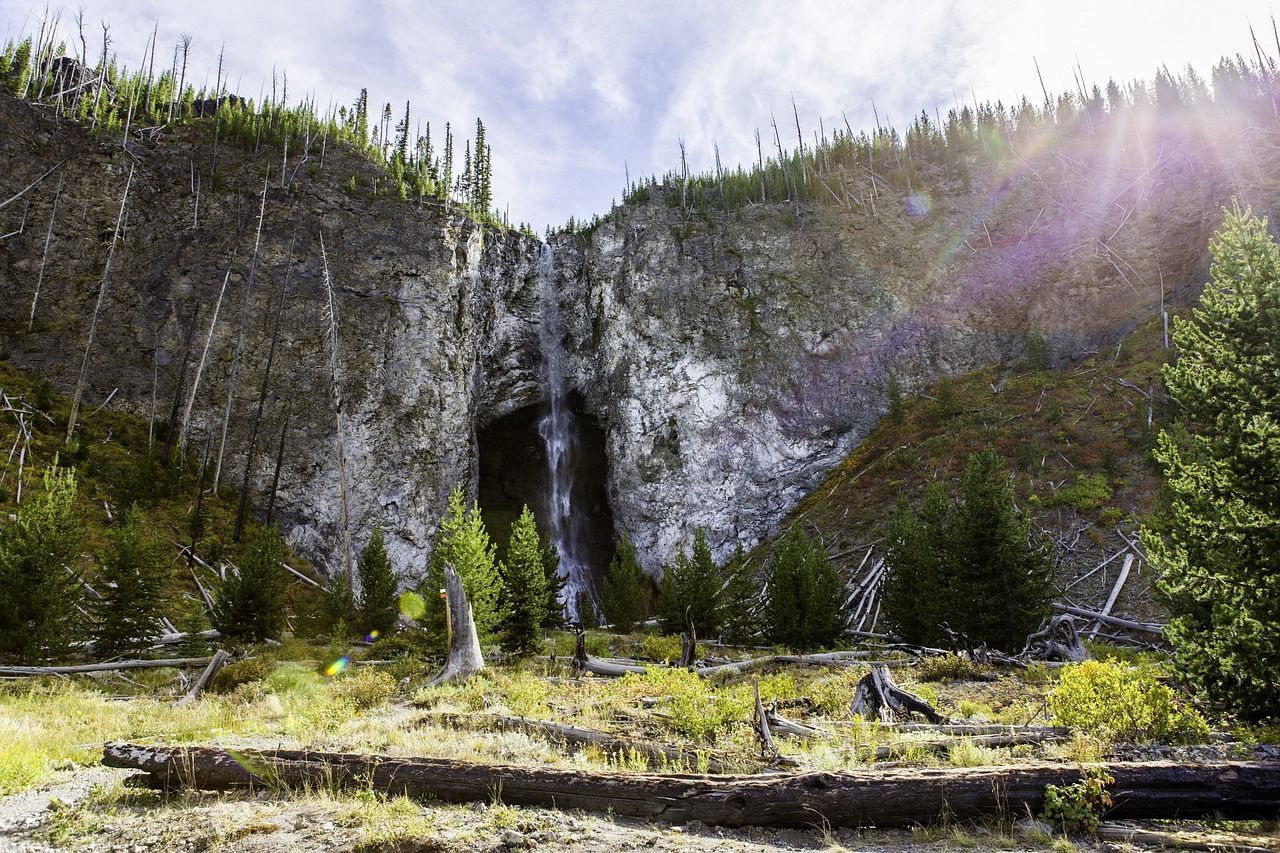
National parks and motorhomes are a match made in America, and no list of this kind would be complete without mentioning Yellowstone National Park, the oldest park in the country and a very popular RV destination for all the right reasons.

The park offers several RV-friendly campgrounds, and there are plenty of options to choose from in the surrounding towns as well. For drivers looking for an amazing scenic drive, take the Beartooth Highway, which will lead you to Yellowstone’s Northeast entrance. This roadway has been dubbed "The most beautiful in America" and is also known as the "Highway in the Sky."

2
Outer Banks

Image: Sergio Martínez

The Outer Banks is a chain of barrier islands off the coast of North Carolina , offering some of the East Coast’s most impressive and scenic beaches. With numerous RV parks throughout the islands, each with its unique charm, this location is an RV paradise.

Hike the largest dune system on the East Coast at Jockey’s Ridge State Park, kayak the peaceful waters of Cape Hatteras National Seashore, or take a ferry ride to Ocracoke Island’s rustic village. The Outer Banks has activities for everybody and infrastructure to provide all the necessary comfort.

3
Acadia National Park

Image: Marek Konopnicki

Acadia National Park is another gem on the RV roadmap of the U.S. Located primarily on Maine’s Mount Desert Island , the largest island off the coast of Maine, the park is sometimes referred to as the "Crown Jewel of the North Atlantic Coast."

Aside from being home to the highest rocky headlands along the Atlantic coastline of the U.S., the park features several different habitats, offering plenty of plants and animals to see. Acadia has four campgrounds within the park, three of which are RV-friendly.

4
California

Image: Fabian

The entire state of California makes for an incredible RV road trip , offering an endless supply of natural beauty, from towering redwood forests to dusty deserts to breathtaking seascapes and shorelines.

RV travelers can start their journey just northeast of San Diego and follow a clockwise loop, visiting the coast first and exploring the state's inner beauties later.

5
Joshua Tree National Park

Image: Mariana Brás

Joshua Tree National Park features some of America’s most beautiful landscapes, set along the sun-blasted frontier of the Mojave and Colorado deserts . That countryside includes remarkable monzogranite formations and boulders, such as Skull Rock, as well as multiple mountain ranges.

Year-round camping is available in this area, although the summer heat may not be for everyone. There are several campgrounds in the park, ranging from well-developed to primitive options and beyond.

6
Rocky Mountains

Image: Luke Porter

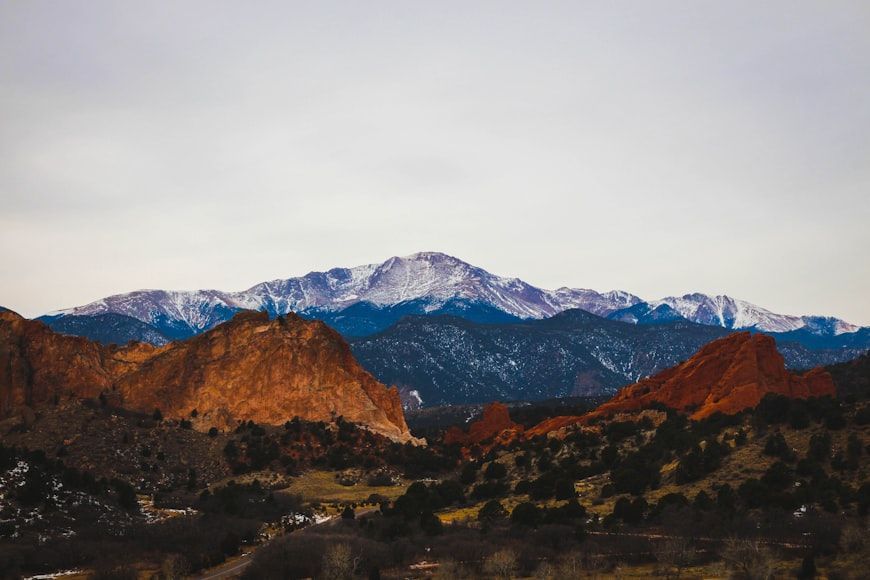
A road trip around the Rocky Mountains in a motorhome is a once-in-a-lifetime experience that any RV camper would love to add to their wishlist. These mountains stretch over 3,000 miles from New Mexico to British Columbia, offering a lifetime's worth of exploration opportunities.

Drivers could spend weeks at Yellowstone and Grand Teton alone, but the entire route is packed with amazing scenery and comfortable RV parks, ranging from primitive sites to lush locations with premium amenities.

7
New England

Image: Rodrigo Curi

New England is an excellent region for an RV road trip. Its balanced blend of forests, rocky seascapes, colonial history, and gorgeous seaside towns offer plenty of opportunities for adventure, sightseeing, relaxation, and more.

A possible route could start in upstate New York, heading east and north into the parks of upper New England, and then heading south along the coast after Acadia for some breathtaking ocean views.

8
Great Smoky Mountains National Park

Image: lucas Favre

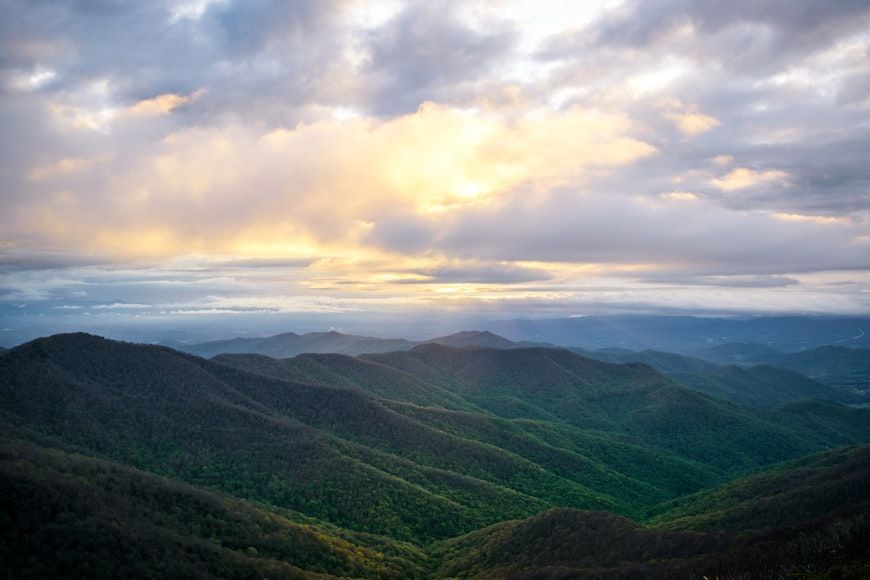
The Great Smoky Mountains National Park spans the borders of Tennessee and North Carolina, containing expansive forests and mountainous terrain . This southern wonder features hiking trails, including parts of the greater Appalachian Trail, and a vast array of plant and animal life to explore.

The area is a popular RV destination, and there is no shortage of camps along the way, offering rest and comfort for happy campers.

9
Black Canyon of the Gunnison National Park

Image: Vladimir Kudinov

The majestic state of Colorado is filled with breathtaking landscapes , and the Black Canyon of the Gunnison National Park is no exception. The Gunnison River sculpted this vertical terrain of rock over thousands of years , creating many picturesque paths for hikers of all skill levels to explore.

During the winter, the sloped hills become a great destination for cross-country skiers. After a long journey in the wilderness, visitors can return to their RV at the South Rim Campground, which welcomes thousands of guests each year.

10
Sedona

Image: Julian Ackroyd

Located where the Colorado Plateau drops down to Arizona’s deserts, Sedona is world-famous for its red rock formations and vibrant communities. RV campers can also visit the Grand Canyon , which is situated not too far to the north .

Sedona is filled with RV parks and campgrounds, and ample public lands in the area offer a multitude of primitive camping opportunities.
General General 3 min read

Say cheese!

Did you know your phone's camera can do this?

Image: César Guadarrama Cantú

Each year, our smartphones’ cameras improve, with superior lenses and new features that allow savvy users to take incredible photos. Many of those same capabilities are already available on your device. How many of these tricks do you know?

1
Clean your lens

Image: Mika Baumeister

We’ll start with probably the most essential—and somehow most overlooked—tip: take a moment to clean your smartphone’s camera lens. Over time, it can accumulate dust and smudges, which can result in hazy or blurry photos.

Give it a quick wipe with a soft, lint-free cloth . It can make a significant difference in the clarity of your shots.

2
Investigate your camera app

Image: Brett Jordan

Almost every single smartphone comes with a default camera app that’s user-friendly and packed with features. Take some time to explore it , learn how to switch between photo and video modes, and familiarize yourself with settings like Portrait Mode, Night Mode for low-light shots, and Panorama Mode for landscapes.

3
Use gridlines

Image: Jonathan Kemper

Gridlines allow you to center your focal points and enhance the visual appeal of your photos. Most mobile camera apps let you turn them on easily. These gridlines strategically divide your screen into thirds , both horizontally and vertically, adding balance and symmetry to your shot .

4
Focus and exposure control

Image: François Genon

Focus and exposure are two of the most important settings you can adjust in a manual camera to achieve different effects in photography. Fortunately, both functions are available on most modern smartphones.

By playing with different focus and exposure points, you can highlight a specific subject against a blurred background or ensure a well-balanced shot in difficult lighting conditions.

5
Lighting

Image: Ben White

Always try shooting in natural light, often referred to as available light, whenever the opportunity arises. Natural light gives a gentle, even illumination that can significantly enhance the quality of your photos.

Avoid harsh, direct sunlight, which can create intense and unflattering shadows, potentially leading to overexposed or underexposed areas. If you're shooting in low light, rest your phone on a flat surface to stabilize it for long exposures.

6
Play with composition

Image: Eaters Collective

Experiment with different angles and perspectives to enhance your subject. Don't be afraid to get low or high for a unique viewpoint. Also, pay attention to what’s in the background and eliminate any distractions that might detract from your subject.

7
Take pictures often

Image: Ferdinand Stöhr

Practice makes perfect. Since your phone is always with you, it’s easy to integrate photography into your daily routine. Whether you snap a selfie or take a few shots on your way to work, there’s no wrong way to be a smartphone photographer. Great photos often come from everyday life.

8
Take many shots

Image: The Free Birds

Long gone are the days when you had only 36 exposures in your camera and had to choose each shot carefully. One of the best things about smartphones is that you can take as many photos as you want, and there is no need to print them to see the results . This makes it much easier to learn and improve as you go.

9
Avoid digital zoom

Image: Redd Francisco

Digital zoom generally produces poor-quality images, even on the best smartphones. Avoiding it is one of the basic photography tips for taking better photos. Instead of using a digital zoom, simply move closer to your subject to maintain image quality.

10
Use HDR

Image: Kote Puerto

HDR stands for High Dynamic Range, and it’s a common feature on many smartphones. It enhances detail in both dark and light areas to provide a more balanced exposure . HDR prevents the sky from becoming too bright or the ground from appearing too dark, making it especially useful for landscape photography.

11
Set a high resolution

Image: TheRegisti

Simply put, the higher the resolution of your photo, the better quality it is . When taking pictures, try to get as close to the subject as possible, rather than zooming in. Take advantage of the higher pixel count.

12
Aspect ratio

Image: Alice Donovan Rouse

The aspect ratio determines the width and height of your photograph . The standard 4:3 ratio is versatile, but you can also choose widescreen 16:9 for a cinematic look or square 1:1 for Instagram-ready shots.

General General 4 min read

Bizarre legal disputes that reached the United States Supreme Court

America's weirdest Supreme Court cases: When justice gets strange

Image: Tim Mossholder

The Supreme Court typically handles weighty constitutional matters, but sometimes the cases that reach our highest court are just plain bizarre . From flying chickens to psychic predictions, these ten real cases prove that truth is definitely stranger than legal fiction. Let's dive into some of the oddest disputes that actually made it all the way to the Supreme Court.

1
The case of the suicidal chickens (1932)

Image: Ben Moreland

In A.L.A. Schechter Poultry Corp. v. United States, a Brooklyn, New York poultry dealer found himself in hot water for selling "unfit chickens" and violating New Deal regulations. The case became known as "the sick chicken case" because Schechter was accused of selling diseased birds that should have been condemned .

The Supreme Court ultimately ruled in favor of the chicken seller, striking down key portions of FDR's National Industrial Recovery Act. The justices decided the federal government had overstepped its authority in regulating local businesses.

2
The tomato identity crisis (1893)

Image: Avin CP

Nix v. Hedden asked the Supreme Court to settle a burning question: Is a tomato a fruit or a vegetable? This wasn't just philosophical pondering—tariff laws taxed vegetables but not fruits, so there was serious money at stake for New York importers bringing tomatoes into the country.

The Court unanimously decided that tomatoes are vegetables for legal purposes, even though botanically they're fruits.

3
The stripper and the sales tax (1991)

Image: Eric Nopanen

In Barnes v. Glen Theatre, Inc., the Supreme Court had to decide whether nude dancing qualified as protected expression under the First Amendment . An Indiana law required dancers to wear at least pasties and a G-string, and adult entertainment establishments in South Bend challenged this as censorship.

The Court ruled 5-4 that states could require minimal clothing without violating free speech rights. Chief Justice Rehnquist argued that the law wasn't targeting expression but public nudity itself. The dissenting justices felt this was government overreach into artistic expression, making this one deeply divided decision about very little clothing.

4
The prisoner who sued over chunky peanut butter (2011)

Image: The Design Lady

Michigan inmate Robert Procup filed a lawsuit that eventually reached consideration by the Supreme Court, claiming that being served chunky peanut butter instead of smooth violated his rights . He argued this constituted cruel and unusual punishment because he had digestive issues and his religious beliefs required smooth spreads.

The Court declined to hear the case, letting lower court rulings stand that dismissed his claims. While prisoners do have constitutional rights, the justices apparently felt that peanut butter texture preferences didn't rise to that level.

5
The monkey selfie dispute (2018)

Image: Jamie Haughton

In Naruto v. Slater, a macaque monkey in Indonesia took selfies with a photographer's camera, sparking a bizarre copyright battle that reached federal courts. PETA sued on behalf of the monkey, arguing that Naruto owned the copyright to his own selfies, while California photographer David Slater claimed ownership.

The Supreme Court declined to hear the appeal, letting stand the lower court's ruling that animals cannot own copyrights under U.S. law. The case was eventually settled, but it raised fascinating questions about who owns creative works when the "creator" isn't human.

6
The psychic and the IRS (1986)

Image: Ksenia Yakovleva

In United States v. Zolin, the case involved a psychic in California who claimed the Church of Scientology had tampered with evidence. But the real weird twist was that it raised questions about attorney-client privilege when the communication involved potential criminal activity —in this case, schemes discussed during what were supposedly confidential legal meetings.

The Court established the "crime-fraud exception" to attorney-client privilege, ruling that lawyers can't help clients plan crimes and then hide behind confidentiality.

7
The case of the stubborn mule (1842)

Image: Jeff King

Swift v. Tyson didn't actually involve a mule, but it dealt with commercial disputes in New York that were about as exciting as watching one stand still. A man bought some land using a promissory note, but the land deal turned out to be fraudulent, and he didn't want to pay.

The Supreme Court created the "Swift doctrine," which allowed federal courts to ignore state court decisions in certain commercial cases. This ruling stood for almost 100 years before being overturned .

8
The singing telegram drama (1988)

Image: Vitaly Gariev

Hustler Magazine v. Falwell stemmed from a parody ad suggesting Virginia televangelist Jerry Falwell's "first time" was with his mother in an outhouse . Falwell sued for emotional distress, arguing the fake interview was defamatory and intentionally hurtful, seeking millions in damages.

The Court ruled 8-0 that parody and satire about public figures are protected speech, even when offensive and outrageous. Chief Justice Rehnquist wrote that public figures can't recover damages for emotional distress without proving actual malice.

9
The hotel that discriminated against dogs (1964)

Image: fatty corgi

In Heart of Atlanta Motel v. United States, a Georgia motel owner challenged the Civil Rights Act, claiming the government couldn't force him to rent rooms to Black customers. While the racial discrimination was a serious issue, the owner's backup argument was truly bizarre: he claimed interstate commerce laws didn't apply because his guests' dogs didn't cross state lines .

The Supreme Court unanimously upheld the Civil Rights Act, rejecting all the motel's arguments, including the dog defense. This landmark case confirmed that businesses serving interstate travelers couldn't discriminate, regardless of where anyone's pets came from.

10
The battle over raisins (2015)

Image: Karyna Panchenko

Horne v. Department of Agriculture involved California raisin farmers who refused to surrender part of their crop to a government "raisin reserve" designed to stabilize prices . The farmers argued this was an unconstitutional taking of private property without just compensation, turning dried grapes into a constitutional matter.

The Court ruled 8-1 in favor of the raisin farmers, saying the government can't just seize personal property without paying for it, even if the goal is market stabilization. This case about wrinkled grapes actually reinforced important Fifth Amendment protections. Sometimes defending your raisins means defending everyone's property rights.

Explore more American facts

Choose your favorite category!

General
General

As American as apple pie—the very best America has to offer!

Culture
Culture

Delve into the astounding richness of American lore.

Geography
Geography

Hop in and explore vast and diverse American landscapes.

History
History

Discover the key moments that shaped the United States.