General General 6 min read

Do you agree or disagree?

Forget the past: 12 reasons life is better today
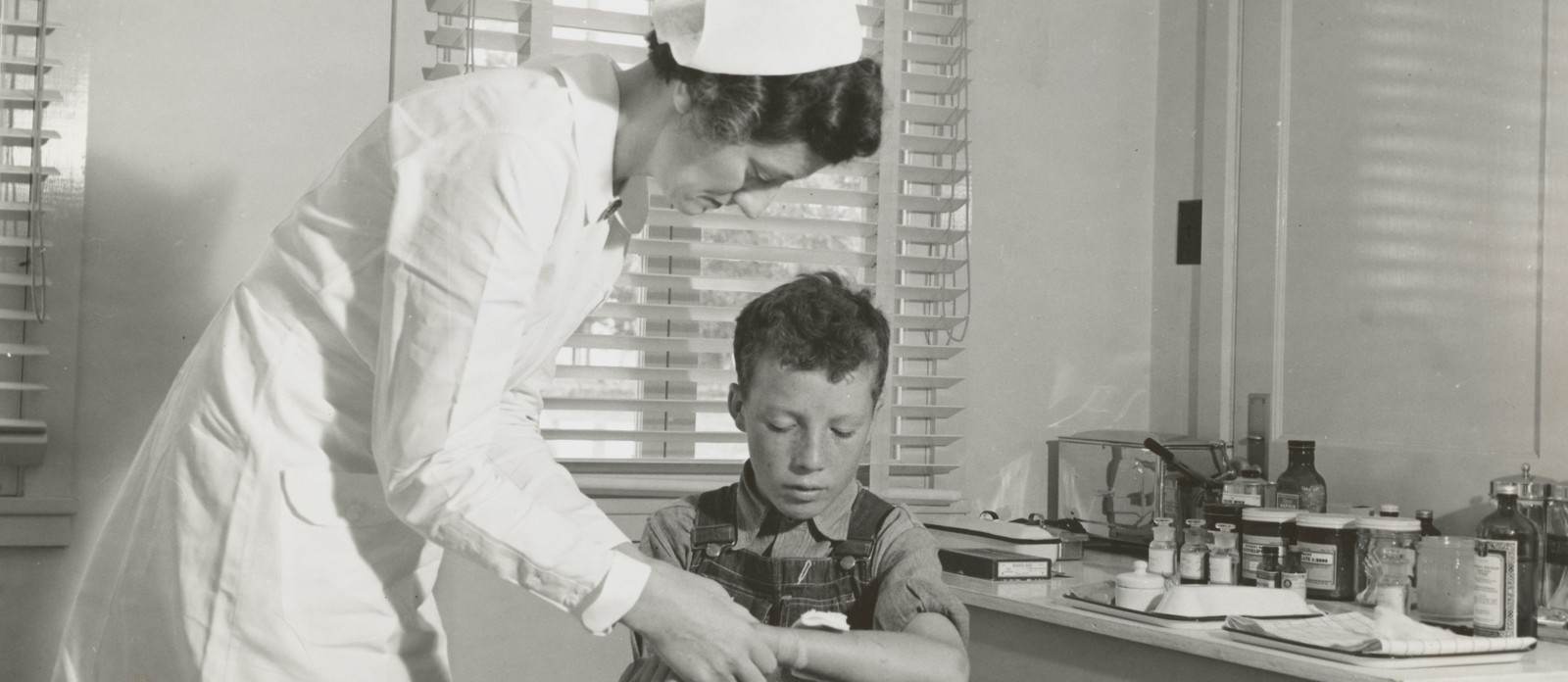
Image: The New York Public Library

Nostalgia has a merciful and funny way of editing out the inconvenient parts. Sure, the past had cheaper movie tickets, fewer passwords, and less screen time. But it also had deadlier cars, smokier rooms, and a lot more waiting around. From air travel to emergency calls, these 12 everyday things have improved so dramatically that even the most nostalgic among us would have trouble arguing otherwise.

1
Cars are dramatically safer

Image: Alexandria Gilliott

Those enormous old cars may look indestructible, but appearances are deceiving. According to the National Highway Traffic Safety Administration, the average vehicle on the road in 2012 posed a 56% lower fatality risk to its occupants than the average vehicle of the late 1950s .

Seat belts, airbags, improved crash structures, electronic stability control, child restraints, and other innovations transformed driving. NHTSA estimates that vehicle safety technologies saved more than 600,000 lives between 1960 and 2012. We may love a beautiful classic car, but we'd rather crash in a modern one.

2
The air is cleaner

Image: Franck V.

If you could travel back a few decades, one difference might hit you in the nose before anything else. Cigarette smoke was once commonplace in restaurants, offices, airplanes, and countless other public spaces. In 1965, an astonishing 42.4% of American adults smoked cigarettes. By 2022, that figure had fallen to 11.6%.

Outdoor air has improved, too. The Environmental Protection Agency reports that combined emissions of six major air pollutants dropped 79% between 1970 and 2024, even as the population, economy, and number of miles driven increased enormously . Whatever stylish old ads tell us, America literally breathes cleaner air today.

3
Medicine saves far more lives

Image: Father - Studio

Modern medicine isn't perfect, but compared with the not-so-distant past, its achievements can seem almost miraculous. In 1900, more than 30% of all American deaths occurred among children under five. Infectious diseases such as tuberculosis, pneumonia, diarrhea, and diphtheria were among the country's leading killers.

Vaccines, antibiotics, sanitation, diagnostics, surgery, and modern drugs changed that landscape. Cardiovascular death rates fell by roughly 60% between 1950 and the end of the 20th century , while treatments transformed diseases such as HIV. Today, the five-year survival rate across all cancers is approximately 70%, up from 20-25% in 1950.

4
Finding information takes seconds

Image: Jonas Leupe

Remember having to actually look something up in an encyclopedia? Before the internet, answering a simple question might involve a trip to the library, a telephone call, searching through reference books, or accepting that you simply weren't going to know the answer.

Today, most of humanity's accumulated knowledge is sitting inside the device in your pocket . By 2023, 95% of American adults were using the internet. A historical date, recipe, translation, weather forecast, repair manual, or explanation can appear within seconds.

5
Getting lost is no longer an option
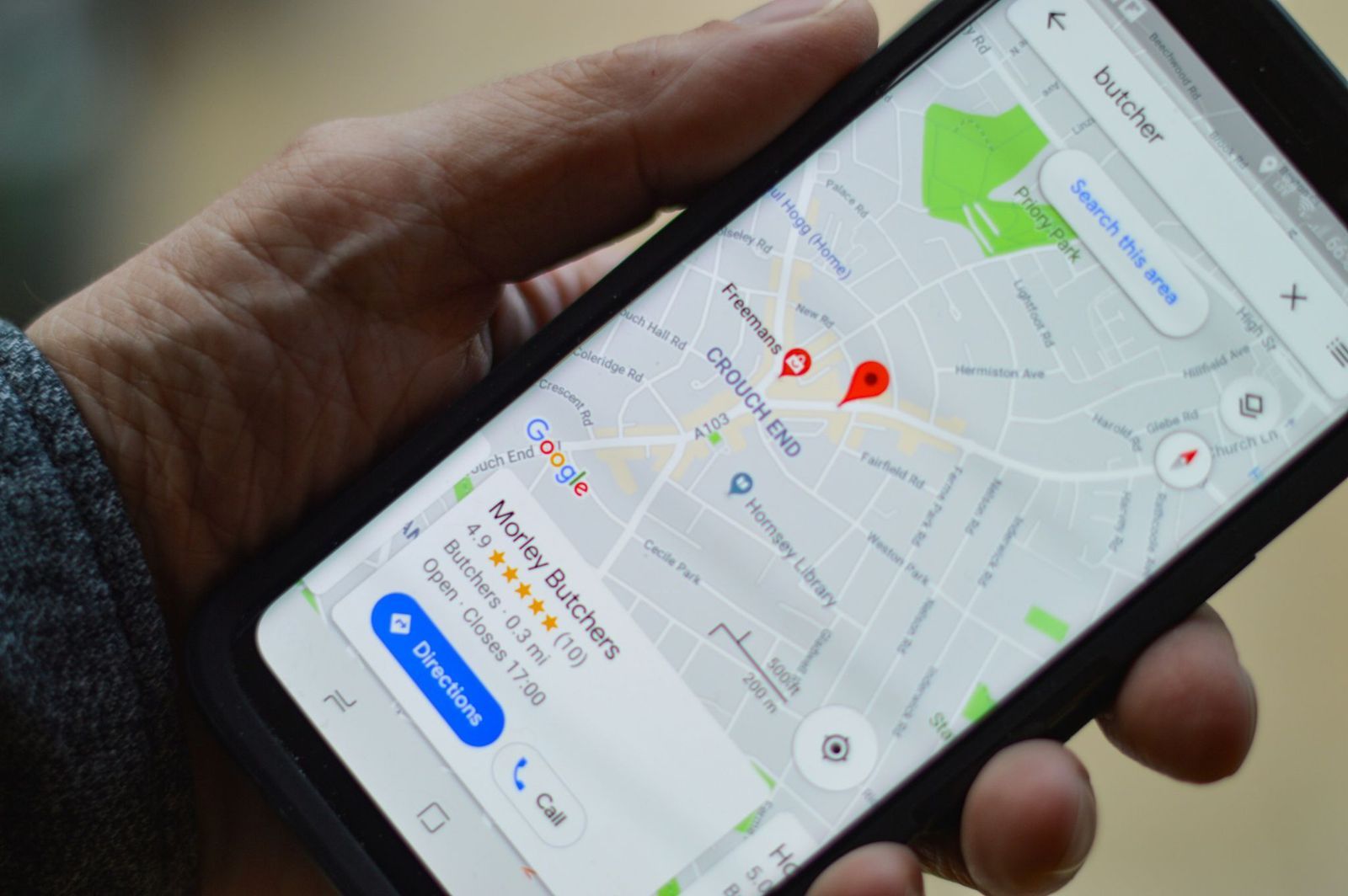
Image: henry perks

Paper maps worked perfectly well: provided you knew where you were. Miss a highway exit, misunderstand someone's handwritten directions, or take one wrong turn in an unfamiliar city, and suddenly you might be pulling into a gas station to ask a stranger for help.

GPS changed all that. A breakthrough came in May 2000, when the U.S. government stopped deliberately degrading civilian GPS accuracy . Navigation eventually migrated into smartphones, adding turn-by-turn instructions, traffic conditions, alternate routes, and arrival estimates. Getting lost hasn't disappeared, but you almost have to work at it now.

6
Banking is almost instant

Image: rupixen

Banking once involved an impressive amount of paper. Checks had to physically move between financial institutions, deposits took time to clear, and many everyday transactions depended on whether your local bank happened to be open.

The transformation happened remarkably quickly. When Check 21 took effect in 2004, 100% of checks processed by Federal Reserve Banks were still handled as paper. By 2010, almost 99% were processed as electronic images. Today, online banking lets customers move money, pay bills, deposit checks, and monitor accounts without visiting a branch . FedNow even allows participating institutions to process payments around the clock, 365 days a year.

7
Buying almost anything is easier

Image: Christian Wiediger

Shopping used to depend heavily on geography. If the stores in your town didn't stock something, your options might involve a catalog, a long drive, a special order, or simply doing without it. Comparing prices could mean physically visiting several stores.

Online shopping demolished many of those limitations. In the first quarter of 2026 alone, Americans spent an estimated $326.7 billion through e-commerce, representing 16.9% of all retail sales. Consumers can now compare prices, hunt down obscure replacement parts, buy products from across the world, and have groceries delivered without putting on their shoes . Whether that's always good for us is another question.

8
Emergency Response is more capable

Image: camilo jimenez

This country didn't even have a universal emergency telephone number until the late 1960s. The first American 911 call was placed in Haleyville, Alabama, in 1968. Early systems did little more than connect callers with an emergency answering point.

Today's systems can automatically provide callback and location information, helping responders find callers who may not even know exactly where they are . Next Generation 911 is expanding those capabilities further, allowing networks to handle digital data, text, and multimedia. Emergency response still varies enormously from place to place, but the technology available to find, understand, and help someone in trouble is worlds ahead of its predecessors.

9
Commercial flying is safer

Image: Josue Isai Ramos Figueroa

Older air travel certainly had glamour: spacious seats, elaborate meals, and passengers dressed for the occasion. It also lacked decades' worth of safety lessons accumulated through engineering, regulation, training, maintenance, and painstaking accident investigations.

The results are dramatic. The Federal Aviation Administration reported that U.S. commercial aviation fatalities fell 95% per 100 million passengers over the two decades it examined . Worldwide, recent statistics put fatal airline accidents at roughly one per several million flights. Modern flying can still be uncomfortable, delayed, and frustrating, but the important part, arriving alive, has become astonishingly reliable.

10
Homes are more efficient, comfortable, and safe

Image: Garun .Prdt

A charming old house can be wonderful, until you discover the drafty windows, questionable wiring, terrible insulation, and complete absence of air conditioning. Nearly 90% of American households were using air conditioning by 2020 , something earlier generations could only have dreamed of during a sweltering summer.

Safety improved as well. Smoke alarms went from relative novelties to standard household equipment, and the death rate in reported home fires is about 60% lower when working alarms are present . Reported U.S. home fires themselves fell from roughly 734,000 in 1980 to about 363,000 four decades later.

11
Communicating with anyone is effortless

Image: Timur Repin

Not long ago, calling someone meant calling a place. If nobody was home, you tried again later. Long-distance calls could be expensive, international communication even more so, and letters might spend days traveling across the country.

Now the person travels with the telephone. Smartphone ownership among American adults climbed from just 35% in 2011 to 91% in 2025. A single pocket-sized device can make calls, send photographs, exchange messages, deliver email, host group conversations, and conduct live video calls across the planet .

12
Entertainment is available whenever you want it

Image: My Agency

Once upon a time, if your favorite television show aired at 8 p.m. on Thursday, you had better be sitting in front of the television at 8 p.m. on Thursday. Miss it, and you might wait weeks, or months, for another chance.

Recording devices began loosening television's grip on the clock, but streaming demolished it. Movies, television series, music, podcasts, games, audiobooks, and decades of archived entertainment are now available almost instantly . By 2026, the U.S. had roughly 593 million online-video subscriptions.

History History 5 min read

Nostalgia alert

Where do bell-bottoms really come from? Flashback to the '70s and '80s!

Image: Rachel Moore

Those of us who grew up during the 20th century know what we mean when we say that some decades had a lot to celebrate. From disco music to the early video game craze, the 1970s and 1980s left behind countless moments, objects, songs, and fads that we still remember today. If you're a true nostalgic like us, this article is for you. Join us as we explore the 10 things we miss most about the 1970s and 1980s. Let's get started!

1
Bell-Bottom Pants

Image: Annie Spratt

If you're attending a 1970s-themed costume party, what would you wear? Beyond your personal style, no '70s wardrobe could be complete without a good pair of bell-bottom pants.

These pants were everywhere back then. Available in all colors and styles, they were worn by young and old alike. While their stardom spanned from the late 1960s to the early 1980s, bell-bottoms actually emerged much earlier. When? In the 19th century!

The first to wear this style of pants were American sailors in the 1800s. But their purpose wasn't to look trendy. Sailors implemented them because the wide design made it easy to roll them up when it was time to get their feet in the water.

2
Polaroid Cameras

Image: Josh Carter

Your current cell phone camera is probably better than the analog cameras of the 20th century. But let's be honest—there's nothing quite like holding a physical photo you just took, right?

Okay, we admit it: nostalgia is kicking in. But still, who can deny that a picture is a beautiful memory that gives a sweet, homey touch to your house? Thanks to Polaroid cameras, those of us who grew up in the 1970s and 1980s know this all too well.

Although Polaroid cameras first emerged in the late 1940s , it wasn’t until 3 decades later that they reached their peak popularity, becoming an unmistakable symbol of the era.

3
Music videos

Image: Jakob Owens

While music videos existed before the 1980s, that decade turned them into a global sensation.

One song marked a major turning point in the world of music videos. You probably already guessed it: we’re talking about Michael Jackson’s "Thriller." Released in 1983, this was one of the first music videos to feature substantial production value and investment, making it worldwide famous and setting a trend that would influence the industry for decades. Other unforgettable examples from the era include the animated masterpiece "Take On Me" by A-ha (1985) and the vibrant aerobic-themed "Physical" by Olivia Newton-John (1981).

While music videos remain a key part of the music industry today, they’ve evolved to be shorter and more dynamic, often prioritizing quick impact over storytelling.

4
Synthesizer Sound

Image: Orkun Azap

One of the most iconic and recognizable features of '70s and '80s music is the use of synthesizers.

First introduced in the 1960s, synthesizers grew in popularity over the following decades, until they became part of nearly every sound of the era—from rock and funk to pop, disco, and electronic music.

A great '70s example is Stevie Wonder 's "Superstition," which showcases the innovative use of synthesizers. By the '80s, the synthesizer sound had reached new heights, thanks to bands like Depeche Mode and Duran Duran , who helped define the decade's musical identity.

5
Disco Balls

Image: Greyson Joralemon

If there's one thing that screams 1970s, that's undoubtedly disco music. With icons like the Bee Gees, KC The Sunshine Band, and Donna Summer, disco emerged in America and quickly got the whole world onto the dance floor.

In addition to platform shoes and satin shirts, one of the objects that went hand in hand with this type of music was the famous mirror ball, also called the disco ball. Discotheques often showcased spectacular disco balls, and famous artists included them in their music videos, making those shiny spheres the stars of the era.

6
Roller Skates

Image: Nick Fewings

Disco wasn’t the only sensation of the era—roller skates were a big deal, too. In fact, the two often combined: during the '70s and '80s, roller discos became a hit, where people danced on wheels!

Roller skates were so popular at the time that they made their way into films and music videos, including the 1980 cult classic Xanadu and Cher’s iconic 1979 music video for "Hell on Wheels."

Although roller skates were invented in the 18th century, it was the 20th century that catapulted them to the height of their fame. Were you lucky enough to strap on a pair and join the fun?

7
Arcade

Image: Carl Raw

If you were young in the '80s, you probably had a joystick or an arcade token in your hands, as arcades were the ultimate hangout spots for teenagers back then.

We bet you remember titles such as "Space Invaders," released in 1978, or the legendary "Pac-Man," which arrived to revolutionize the entire industry in 1980. Other unforgettable classics included "Donkey Kong" and "Frogger," both released in 1981.

So, what was your high score? Did you dominate the leaderboard or keep coming back for just one more game?

8
Atari 2600

Image: Senad Palic

What do you usually do when you're bored at home? For most of us, it's watching a movie or scrolling through our phone screens. But a few decades ago, the entertainment industry looked entirely different.

In 1977, home recreation changed forever with the arrival of the Atari 2600, one of the first home gaming consoles. From that moment on, gamers could enjoy their favorite games without ever leaving the comfort of their homes.

9
Slang

Image: Buse Doga Ay

But it wasn't just about fashion, music, and games. We can't forget the prominence of slang during these two emblematic decades.

One of the first terms that comes to mind is "groovy," remember that one? It was used to describe something cool or excellent. Maybe you remember a friend saying, "I love your outfit, super groovy!" Another memorable expression from the era was "Gag me with a spoon," used to convey disgust or displeasure, as in "That's so cheesy! Gag me with a spoon!"

Other unforgettable slang words included "bummer," "rad," "hip," and "tubular," each capturing the spirit of the '70s and '80s in its own unique way.

10
Cabbage Patch Dolls

Image: silvia trigo

If you didn't have one at home, you probably knew someone who did—or maybe even had more than one. We're referring to the famous Cabbage Patch Dolls, the toy that caused a sensation during the early 1980s.

Launched in 1982, the Cabbage Patch Dolls quickly made their way into most American homes. Their popularity was so massive and abrupt that they are remembered as one of the most iconic trend crazes of the 20th century. People would form long lines outside toy stores just to hug one of these dolls. In fact, the craze was so intense that the media dubbed it the "Cabbage Patch Kid Frenzy."

Culture Culture 5 min read

SPORT HEROES

Only the Best Make it to the Podium: The 10 Greatest American Athletes

With so many sports, disciplines, and exceptional talent, it is really hard to choose the top 10 American athletes. However, some sports stars have consistently stood out, both on and off the field.

Some names probably already came to your mind. The incredible Muhammad Ali and the venerable Michael Jordan are just a few of the amazing figures we have chosen to make up this list of the top 10 American athletes of all time! Let's play!

1
Babe Ruth

Image: Thomas Park

What is considered America's pastime by everyone else was the great passion of Babe Ruth's life.

Born George Herman Ruth Jr. on February 6, 1895, in Baltimore, Maryland, Babe was a child known for his difficult behavior. When he turned seven, his parents made the difficult decision to send him to St. Mary's Industrial School for Boys. The school was a strict and rule-filled environment, but it was there that Babe Ruth's passion for baseball developed.

By his early twenties, he was already known as a talented pitcher. Throughout his career, he won seven World Series Championships, three with the Boston Red Sox and four with the New York Yankees. In 1936, he became one of the first five players to be inducted into the Baseball Hall of Fame.

2
Serena Williams

Image: Ariv Gupta

While many of us can't even remember what we were doing at the age of three, the incredible Serena Williams was already practicing tennis with her sister Venus and her father.

Known globally as one of the greatest tennis players in history, Serena has filled her resume with titles, trophies, victories, and records.

Four Gold Olympic Medals and an impressive 23 Grand Slam singles titles definitely made her a tennis legend. And as if her athletic achievements were not enough, Serena Williams is also a standout businesswoman today.

3
Muhammad Ali

Image: Nelson Ndongala

Louisville, Kentucky, was the birthplace of the man who would become one of the world's greatest sports stars. Born Cassius Marcellus Clay Jr. on January 17, 1942, the man we all remember today as Muhammad Ali began his sporting life at the age of 12 when he started training as an amateur boxer.

The rest is history. With an Olympic Gold Medal, three world heavyweight championships, 56 wins (37 by knockout), and an incredible legacy, Ali is widely and rightly recognized as one of the most important sports figures of the 20th century.

4
Tiger Woods

Image: Robert Ruggiero

If we had to list all of Tiger Woods ' sporting achievements, we'd be here all day, right?

The GOAT of Golf was born Eldrick Tont Woods on December 30, 1975, in Cypress, California, and from a very young age, he showed his great talent for this sport.

After winning several titles in college and as an amateur player, Tiger became a professional player in 1996, and since then, he hasn't stopped winning and winning.

Tiger has gone on to win 15 major championships, including three U.S. Opens, four Masters titles, three Open Championships, and five PGA Championships, and held the world No. 1 ranking for a total of 683 weeks!

5
Michael Jordan

Image: Robin Gislain Gessy

Michael Jordan grew up in Wilmington, North Carolina, and developed a passion for basketball at a young age, largely thanks to his brother, Larry.

In high school, he developed his competitive spirit and sportsmanship, qualities that, combined with his talent, led him to become the star he is today.

While it is hard to list all of his feats, we believe it is necessary to mention some of Jordan's highlights: two Olympic Gold Medals, six NBA championships with the Chicago Bulls (earning NBA Finals MVP honors each time), and five NBA MVP awards. These achievements, among many others, make up the long list of victories of this NBA legend.

6
Michael Phelps

Image: Braden Egli

Michael Phelps , born on June 30, 1985, in Baltimore, Maryland, was a very energetic child. Fortunately, at the age of seven, he discovered a perfect outlet for all that enthusiasm: swimming.

His talent and dedication combined to create a world-class athlete, and by the age of 15, he was participating in his first Olympics!

In 2004, he stood out at the Athens Olympics, winning six gold medals. In 2008, he made history by winning a record-breaking eight gold medals in a single Olympics.

"The Baltimore Bullet" has won a total of 23 gold medals in his career, more than any other Olympic athlete in history!

7
Simone Biles

Image: Brian Wangenheim

One of the youngest on this list, Simone Biles was born on March 14, 1997, in Columbus, Ohio.

Considered by many as the world's greatest gymnast ever , Simone was raised by her grandparents. Her sporting career began as a child when an attentive instructor recognized her talent and suggested she take gymnastics classes.

At the age of 14, she was already competing at high levels and never went unnoticed. In 2013, she won her first of many World Championship titles, demonstrating her incredible talent and ability to perform moves that other gymnasts could not.

8
Tom Brady

Image: Thomas Park

Of course, we can't overlook this legendary figure of American football . We're talking about none other than the great Tom Brady .

Considered by many the greatest quarterback of all time , Brady was born into a sports-loving family, which allowed him to showcase his skills when he was still a young boy.

Brady was selected by the New England Patriots in the 2000 NFL Draft. The Patriots' choice was incredibly wise, as he played for the team for 20 seasons, during which he and coach Bill Belichick formed what became known as the "Patriots dynasty." He also led the Patriots to six Super Bowl victories!

During his last three seasons as a professional, he played with the Tampa Bay Buccaneers, not without winning another Super Bowl with them.

9
LeBron James

Image: Markus Spiske

The great "King James" was born LeBron Raymone James on December 30, 1984 , in Akron, Ohio. Since he was very young, he showed basketball skills, which were highlighted during his time at high school.

LeBron was the first pick in the 2003 NBA Draft by the Cleveland Cavaliers, where he began his career. He later played with the Miami Heat, and finally, he became a legend with the Lakers.

LeBron has a long list of accomplishments in his sports career, making him one of the few who can be compared to Jordan. With four NBA Championships, four NBA Finals MVP Awards, four NBA Most Valuable Player (MVP) Awards, two Olympic Gold Medals, and many other awards and distinctions, LeBron is indisputably one of the best at what he does.

10
Billie Jean King

Image: Valentin Balan

BJK was born Billie Jean Moffitt on November 22, 1943, in Long Beach, California. Her love for tennis began at a very young age when a friend lent her a racket. Her natural talent soon showed: she won her first major junior championship at the age of 14, and from then on, she didn't stop.

With 39 Grand Slam titles, including 12 singles titles, 16 women's doubles titles, 11 mixed doubles titles, and holding the title of world No. 1 for many years, BJK rightfully holds the label of "Queen."

In 1973, Billie won the legendary "Battle of the Sexes," a tennis match against Bobby Riggs , who had challenged her. With this and many other victories, King paved the way for many women in the world of tennis and sports in general, which is why she is considered a pioneer in her field.

Explore more American facts

Choose your favorite category!

General
General

As American as apple pie—the very best America has to offer!

Culture
Culture

Delve into the astounding richness of American lore.

Geography
Geography

Hop in and explore vast and diverse American landscapes.

History
History

Discover the key moments that shaped the United States.