History History 4 min read

Young bright minds

Did you know these 11 things were children's ideas?

Image: Pexels

Do you remember how you spent your free time at age 12? As it turns out, some young creative minds were running around inventing things like popsicles, trampolines, and earmuffs. Sure, most kids come up with new stuff all the time, but today we’re looking at inventions that adults actually paid attention to—and they worked!

1
Swim fins

Image: NEOM

If you don’t know who invented swim fins, this one might startle you! Before he was flying kites in thunderstorms, Benjamin Franklin was just an 11-year-old boy who loved to swim.

He invented early swim fins, but not the kind we wear on our feet. He designed wooden paddles with thumb holes that could be held in the hands to help propel a swimmer through the water faster. He also tried strapping fins to his feet, but found them less effective and even painful.

2
Popsicles

Image: Jill Wellington

The brand Popsicle tells the legendary story: eleven-year-old Frank Epperson left his soda drink with a stirring stick on the porch overnight. When he returned the next morning, he discovered a brilliant idea— frozen juice on a stick !

Originally named the "Epsicle" (after himself), the invention was patented in the 1920s. His children called them "Pop’s ’sicles," and the name Popsicle stuck.

3
Earmuffs
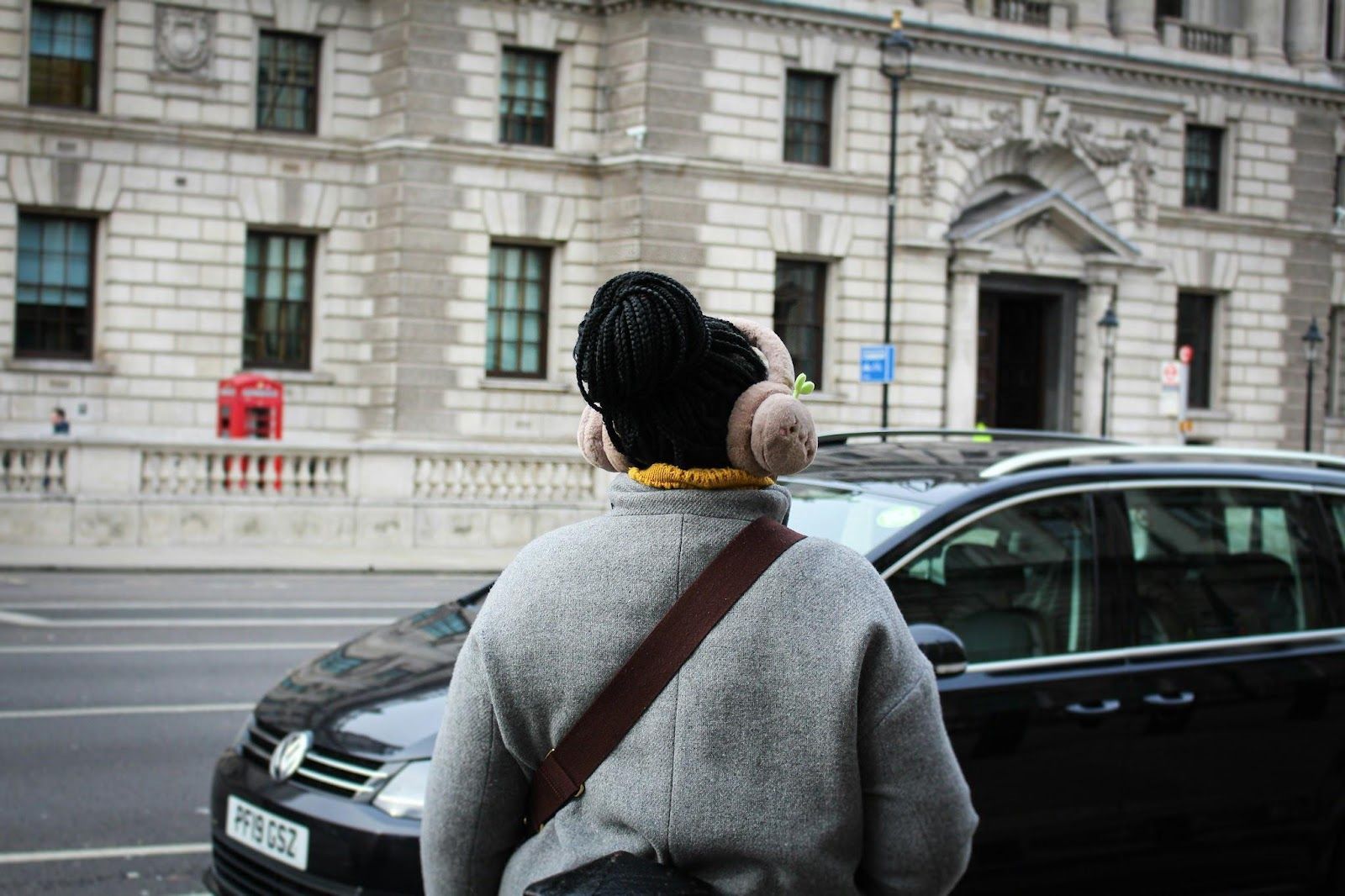
Image: Ellen Kerbey

Chester Greenwood couldn’t endure Maine winters. At 15 years old, his ears got cold, and he didn’t like the feeling of wool hats on his skin. So he devised a creative solution: his grandmother sewed beaver fur onto a wire headband that he shaped into circular ear loops.

That invention was later patented in the 1870s, becoming the world’s first earmuffs, according to historical records.

4
Toy trucks

Image: Allison Astorga

Using bottle caps, cardboard, and ingenuity, Robert W. Patch created a toy truck that could transform into multiple styles: a dump truck, flatbed, or box truck. And he was only 5 years old.

The modular vehicle concept was so compelling that his father, who happened to be a patent attorney, filed for official recognition. By the time Patch turned six, he had been granted a U.S. patent, making him one of the youngest inventors in history.

5
Superman

Image: Esteban López

Jerry Siegel and artist Joe Shuster were both high school students when they came up with the idea for the Man of Steel in 1933.

They created Superman as the ultimate underdog: an alien orphan who fights for justice. The character was sold to Action Comics in 1938, launching the entire superhero genre.

6
Hot seat

Image: Erik Mclean

A heartbreaking story of a baby dying after being left inside a hot car reached Bishop Curry V when he was 10 years old.

This inspired him to design a device he called Oasis (often referred to in the media as the "Hot Seat"). His invention detects rising temperatures in a car, blows cool air, and alerts parents and emergency services.

7
Water skis

Image: Wyatt Harrom

Ralph Samuelson was a teenager when he had an idea: if people could ski on snow, why not on water? In the early 1920s, he took two pine staves , curved the tips using boiling water , and hit the lake with his brother, towing him behind a motorboat.

After many belly flops, he figured out the proper posture and became the first water skier in history. Although he never patented his creation, he spent years performing and became known as the "Father of Water Skiing."

8
Trampolines

Image: Jasper Garratt

Who knew? George Nissen was just 16 when he devised the bouncy fun. In the early 1930s, he watched circus trapeze artists drop and land into safety nets and realized: what if you could bounce back ?

Working out of his parents’ garage, he stretched canvas across a frame and added springs. Initially, trampolines were used for gymnastics training, but even NASA later adopted them to train astronauts.

9
Makin’ Bacon

Image: Polina Tankilevitch

Michigan native Abbey Fleck did not invent bacon itself, but at 8 years old, she had grown tired of soggy bacon and paper towels. She brainstormed a simpler solution: hang the bacon while it cooked, allowing grease to drip away cleanly.

Together with her dad, she built a prototype in the 1990s and earned a U.S. patent for the microwavable "Makin’ Bacon" tray. It became a retail hit .

10
Wristies

Image: Valeriy Borzov

Cold, wet sleeves are a winter misery. 10-year-old Kathryn Gregory grew frustrated with snow slipping between her mittens and coat sleeves, so she sewed together a pair of warm fleece tubes to cover the gap between glove and sleeve .

She called them Wristies. Her invention was such a hit with friends and family that her Girl Scout troop encouraged her to patent it—and she did! Kathryn became one of the youngest inventors to receive a U.S. patent.

11
Crayon holders

Image: AlexanderStein

Ever struggled to hold a crayon that’s worn down to a stub? So did 11-year-old Cassidy Goldstein. She noticed how frustrating tiny crayons could be, especially for kids just learning to grip.

She came up with a simple solution: a plastic cylinder that could hold broken or short crayons , making them easier to use. Patenting the design earned Cassidy the Youth Inventor of the Year Award.

General General 5 min read

20th-century marvels

Architecture in the Jazz Age: 10 Art Deco buildings that shaped America

Image: Kit Suman

Characterized by sleek lines, geometric shapes, and luxurious materials, the Art Deco style was a favorite among American architects during the 1920s and 1930s. They designed opulent skyscrapers and glamorous buildings that celebrated progress and modernity. Join us to learn more about this Jazz Age style, explore its fascinating history, and tour 10 of the most beautiful Art Deco buildings in the United States.

1
Empire State Building, New York City

Image: William Wachter

Undoubtedly, the Empire State is the most famous building in New York City. Every year, about 2.5 million people visit it, and it has been featured in countless movies and TV shows. Designed by American architect William F. Lamb, it was inaugurated in 1931.

For forty-one years, the Empire State Building was the tallest skyscraper in the world. The symmetry, limestone façade, huge windows, and the monumental and luxurious lobby are some of its main features. The design of this Art Deco masterpiece is so spectacular and breathtaking that in 1986 it was designated a National Historic Landmark.

2
The Carlyle, Miami Beach

Image: Luis Erives

Miami has the largest concentration of Art Deco buildings in the world. The city has a remarkable collection of around 800 structures built in this style. Visiting the Art Deco district along Collins Avenue, Ocean Drive, and Washington Avenue is like traveling back in time. And perhaps the Carlyle, for its sophisticated combination of horizontals and verticals, is one of the most emblematic.

It was built in 1939 by German-American architect Richard Kiehnel, and its façade has barely changed since then. Its interior, on the other hand, went from hotel rooms to apartments.

3
Boston Avenue United Methodist Church, Tulsa

Image: Quang Vuong

The Boston Avenue United Methodist Church in Tulsa, Oklahoma, is one of the few examples of an Art Deco church. Beginning in the 1920s, little Tulsa became the oil capital of the U.S., and the sudden influx of resources encouraged investors to build increasingly grandiose buildings. Thus, this church is considered the first ecclesiastical building strictly designed for an emerging automobile culture.

Constructed from Indiana limestone, the church features a steel-frame tower topped with a copper and glass lantern. A seven-pointed star symbolizes seven virtues: patience, purity, knowledge, suffering, kindness, love, and truth. The complex also includes a sanctuary, a small chapel, and offices, while the lobby serves as a social center.

4
Union Terminal, Cincinnati

Image: Fred Copley

Cincinnati Union Terminal in Ohio is one of the finest examples of Art Deco architecture in the United States. Its green terrazzo floors, fine-grained Indiana limestone façade, and vast rotunda adorned with industrial murals by Winold Reiss make the station a true architectural masterpiece. In fact, it is considered the pinnacle work of Alfred T. Fellheimer, who had previously designed Grand Central Terminal in New York.

Unfortunately, Union Terminal began construction in 1928, during one of the worst periods in the country's economic history. The Great Depression was marked by a decline in train travel, and the opulent Union Terminal was considered a white elephant. In 1972, it was finally closed. Years later, however, the building regained its former luster. Today, it is served by Amtrak’s Cardinal line, while the rest of the complex houses several museums.

5
Carbide & Carbon Building, Chicago

Image: Anthony Fomin

The Carbide & Carbon Building, a 37-story skyscraper completed in 1929, is one of Chicago's most striking architectural achievements. A bold example of Art Deco design , the building is clad in black granite and green terra cotta, with genuine gold leaf adorning its tower.

It is so luxurious that the Burnham Brothers architectural firm is said to have designed it to resemble a champagne bottle. In 1996, it was designated a Chicago Landmark, and in 2021, it was renovated and reopened as the Pendry Chicago Hotel.

6
The Guardian Building, Detroit

Image: G + L

This 43-story Art Deco skyscraper is located in downtown Detroit, Michigan. Nicknamed the Cathedral of Finance , it was planned by architect Wirt C. Rowland and completed in 1929. Both the interior and exterior feature numerous modern decorative elements, including mosaics, murals, stained glass, and even a historic Tiffany clock.

Forty craftsmen worked on its design and construction, which required granite, stone, terra cotta, and more than two million distinctive "Union Guardian Orange" bricks. In 1989, the Guardian Building was designated a National Historic Landmark.

7
Chrysler Building, New York City

Image: William Wachter

The Chrysler Building in New York City is one of the greatest examples of the Art Deco style in the world. It was designed by architect William Van Alen at the request of industrial magnate Walter Percy Chrysler and completed in 1930.

The building exhibits great attention to detail, featuring many elements that mimic Chrysler automobile pieces, such as the ostentatious ornamentation of the tower. In the lobby, the ceiling mural—once the largest in the United States—was painted by artist Edward Trumbull. Following the building’s automotive theme, it depicts scenes of progress, transportation, and energy.

8
Eastern Columbia Building, Los Angeles

Image: Jordan Rubin

Located in downtown Los Angeles, this emblematic 1930s building features a striking turquoise terra cotta exterior. The Eastern Columbia Building was designed by renowned architect Claud Beelman, who also created several of the city’s notable Art Deco structures. At the time of its construction, the building was so unique that the city allowed it to exceed the maximum height limit.

Its unique color, majestic vertical lines, iconic clock, and golden ornamentation attracted Hollywood moguls and stars from the beginning. It was first used as office space and was later converted into luxury apartments. In 1985, the Eastern Columbia Building was declared a Historic-Cultural Monument.

9
Circle Tower, Indianapolis

Image: Alejandro, CC0, via Wikimedia Commons

The construction of a 14-story skyscraper in Indianapolis was a major news event in the early 20th century. "Circle Tower Is Rising," declared the Indianapolis Times in 1929. Circle Tower stands as a magnificent example of Art Deco architecture.

Built of ornately carved granite and limestone and decorated with Egyptian figures, Circle Tower has a unique, trapezoidal shape. This unusual silhouette was promoted as an icon of luxurious office space. The interior, on the other hand, features marble and terrazzo floors, bronze elevator doors, geometric flowers, zigzags, and concentric swirls. Details in the lavishly marble-clad lobby exude elegance.

10
Griffith Observatory, Los Angeles

Image: David Vives

The Griffith Observatory is one of Los Angeles’ most important cultural attractions. This Art Deco icon opened in 1935 and was designed with a revolutionary idea in mind: the cosmos should be accessible to everyone, not just astronomers.

Built of reinforced concrete on a 3,015-acre site donated by Colonel Griffith J. Griffith, it is a blend of modern design and Greek and Beaux-Arts influences. The building's most emblematic feature? The planetarium in the central dome!

Explore more American facts

Choose your favorite category!

General
General

As American as apple pie—the very best America has to offer!

Culture
Culture

Delve into the astounding richness of American lore.

Geography
Geography

Hop in and explore vast and diverse American landscapes.

History
History

Discover the key moments that shaped the United States.